1. Home
  2. Phones
  3. Emerging Tech
  4. Mobile
  5. News

California says your cell phone could possibly be dangerous

Add as a preferred source on Google

We love and enjoy using our mobile phones. For years, people have talked about the negative effects of using cellphones; specifically regarding overuse and how it could have an impact on public health down the line. These mobile phones are, after all, emitting radio frequency energy and radio waves, so there was always the potential and possibility to cause some sort of health risks and concerns.

The California Department of Public Health (CDPH) has just weighed in on this debate, releasing information that outlines the multiple studies that have been released on the matter. These studies suggest that the RF signals emitted from mobile phones could cause brain cancer, headaches, memory loss, and even loss of sleep. The guidelines are not calling for the end of cellphones, nor are they outright saying that mobile phones are dangerous. They are simply providing some suggestions as to how one could reduce their exposure to this RF energy.

Recommended Videos

“Although the science is still evolving, there are concerns among some public health professionals and members of the public regarding long-term, high use exposure to the energy emitted by cell phones,” according to CDPH Director and State Public Health Officer Dr. Karen Smith. “We know that simple steps, such as not keeping your phone in your pocket and moving it away from your bed at night, can help reduce exposure for both children and adults.”

The guidelines go on to suggest carrying your mobile device in a backpack, purse or briefcase, as opposed to your pocket, which most people do. Another strategy is keeping the phone just a few feet away from you while you’re using it. For example, if you’re talking to someone on the phone, use a headset or speakerphone option, rather than holding the device to your head. Then there is always the option of texting, which means the phone is away from your face.

The guidelines also mention the avoidance of using your phone when it is sending out high levels of radio frequency energy. There’s a lot of RF energy being emitted when you’re streaming something on your phone or sending large files.

Stephen Jordan
Former Digital Trends Contributor
Stephen is a freelance writer and blogger, as well as an aspiring screenwriter. Working in front of a computer and digesting…
Galaxy Z Flip 8 vs. Motorola Razr Ultra (2026): Samsung’s flip phone is cheaper, but is it better?
One flip phone wins on value. The other wins on hardware.
Electronics, Phone, Mobile Phone

Flip phones have quietly become one of the most competitive corners of the smartphone market. It provides buyers with a satisfying folding snap, reducing the footprint to half the original size, and that’s the entire point. Motorola never really left the format after reviving the Razr name, while Samsung has spent generations treating the Flip line as its scrappy, budget-friendlier sibling to the Fold. 

This year, though, the gap between the two camps has narrowed to the point where picking a winner requires genuinely reading the spec sheet and learning about the phones before putting your money into one. One phone leans hard into raw display firepower, while the other leans into a deeper software ecosystem and a friendlier price tag. 

Read more
Samsung finally switched to silicon-carbon battery on Galaxy Z Fold 8. What’s so special about it?
One of Galaxy Z Fold 8’s biggest upgrade is hiding inside
Galaxy Z Fold 8 Ultra with Fold 8

Samsung has finally joined the silicon-carbon battery race with its latest batch of premium foldables packing the new battery tech. But details for this change were rather hard to spot on the spec sheets. The company has confirmed during media briefings that the Galaxy Z Fold 8 Ultra, Galaxy Z Fold 8, and Galaxy Z Flip 8 all use silicon-carbon batteries.

Even then, the resulting capacities are hardly record-breaking. The Fold 8 Ultra carries a 5,000mAh battery, the regular Fold 8 gets 4,800mAh, and the Flip 8 has 4,300mAh. Rivals from Honor and Motorola have already crossed the 6,000mAh mark. But the figures only tell part of the story.

Read more
I’ve used foldable phones for years. Here’s how to pick the right one between the Galaxy Z Fold 8 and Flip 8
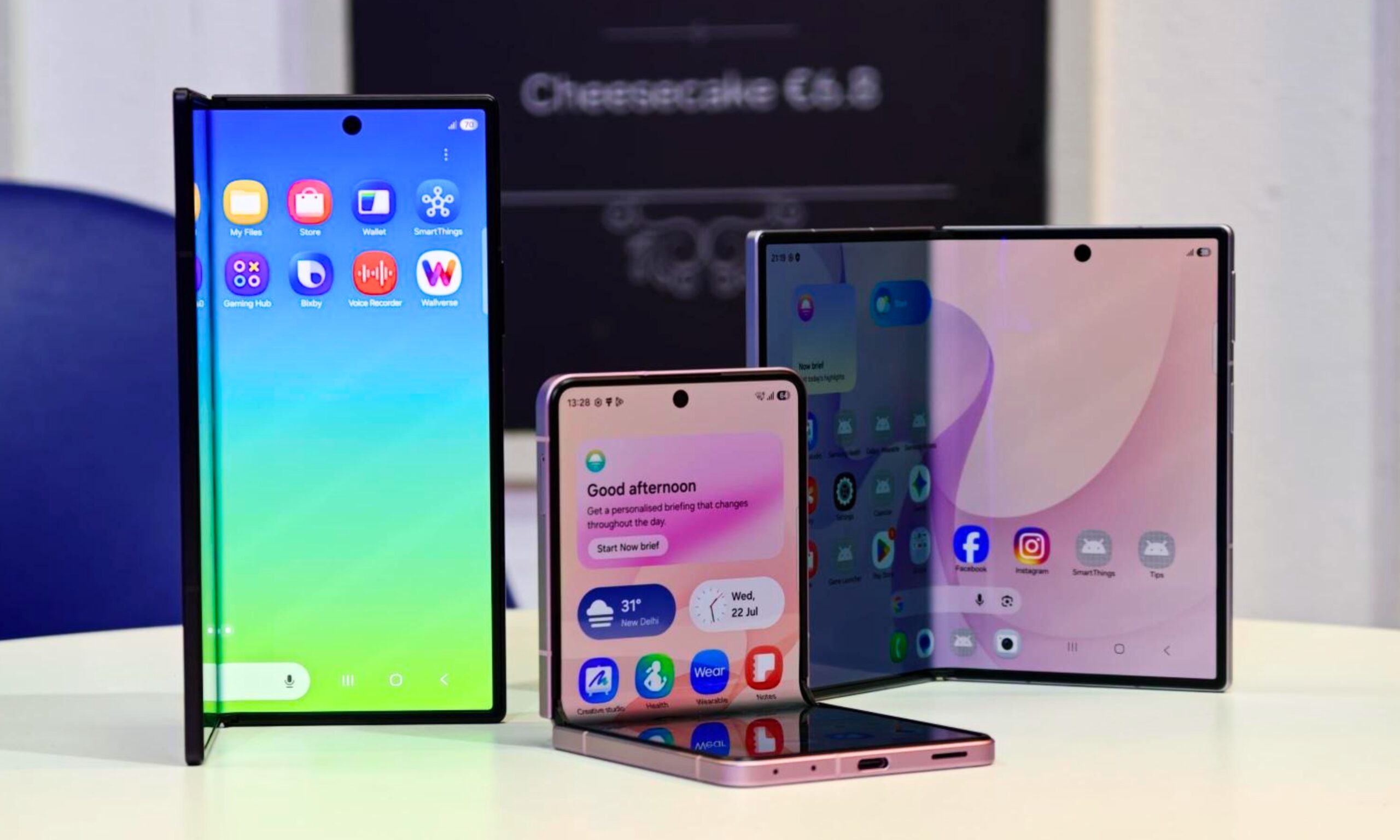
Samsung’s three new foldables solve very different problems
Galaxy foldables with its screen visible

After years of reviewing foldable smartphones, I have learned that choosing one involves much more than what looks pretty or how large you want. Book-style foldables are usually sold as productivity machines, while flip phones cater to people who value portability. Samsung’s latest lineup complicates that choice by introducing two very different book-style models alongside its familiar clamshell.

Most of their shared specifications fade into the background once you start using them. Their shapes and screens have a much greater impact on daily life. So here's how I'd make a decision when choosing between the new Galaxy Z Fold 8 Ultra, Galaxy Z Fold 8, and Galaxy Z Flip 8.

Read more