It looks like Essential, the company built by Android inventor Andy Rubin, isn’t dead after all. After Rubin tweeted confirming the new smartphone, along with images of a strange-looking device, the official Essential Twitter account followed suit with its own press imagery, and a hashtag — #ProjectGEM.


The images give context to the images posted by Rubin, showing more of the unique Android skin in use, as well as the odd, super-long shape. Also more obvious in these pictures is the odd, flowing design philosophy being used here. Rather than an abrupt camera bump, the new Essential Phone’s rear casing flows upwards towards the camera lens, and smoothly flows downwards to the fingerprint sensor’s bump.
Also of interest is the hashtag #ProjectGEM. This is presumably the working name for the new Essential device and not a final name. It certainly fits the smooth design and glossy color schemes, and we wonder whether the final name will reflect a precious stone of some sort. Essential Diamond, anyone?
These images match the earlier images posted by Andy Rubin, which show the device in use.


The body of the device in the images is shaped more like a remote control than a smartphone, and it does not appear as though the device can fold into a clamshell-style foldable device. Rubin seems to be running Uber, along with calendar, navigation, and weather apps on the device, which seems to have a totally new user interface based on Android, but unlike any Android phone we’ve seen in the past. Rubin also showed off the back of the phones, with four shiny new finishes. There seems to be room for a fingerprint sensor and a large bulge for a single camera lens. A front-facing camera can be found in a small hole-punch cutout, similar to that found in recent Samsung smartphones.
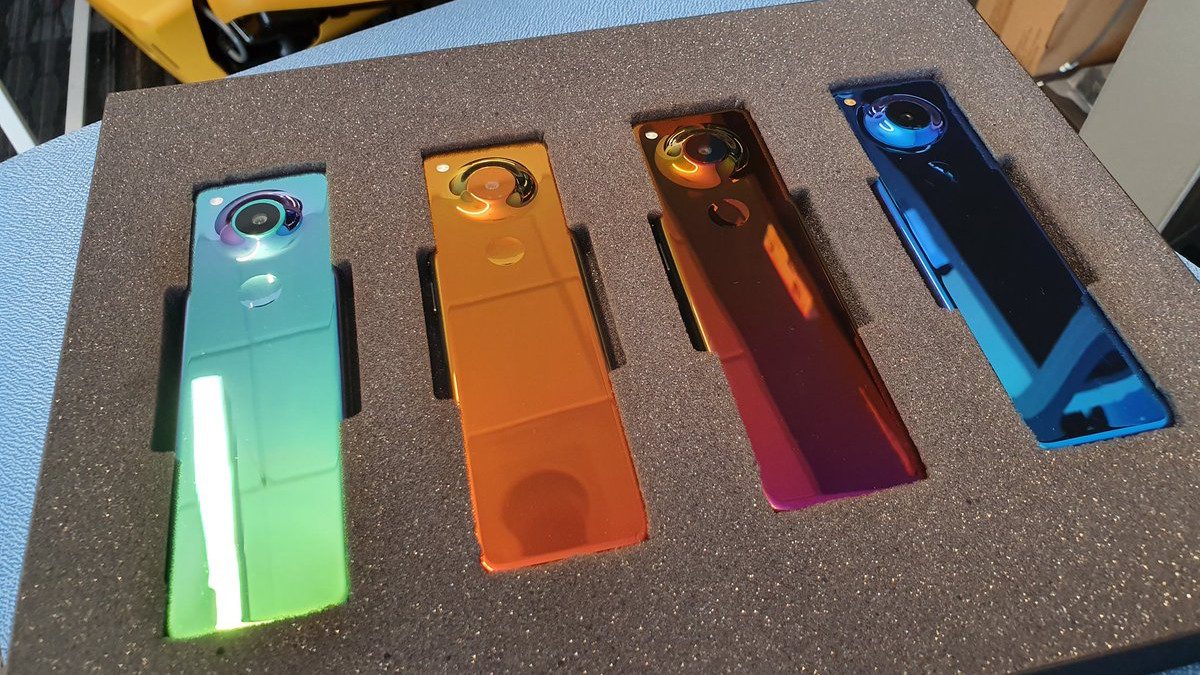
The phone doesn’t seem to be much longer than current Android handsets, instead offering a thinner design. Specs, of course, have yet to be revealed, as do specific dimensions of the phone.
While the new phone seems to feature a radically different design, it remains to be seen whether or not it will be popular. The original Essential Phone was a solid handset at a reasonable price, but it hardly launched the company into consumer consciousness the same way Android did way back in the mid-2000s.
Rubin has largely stayed out of the spotlight over the past few months, ever since The New York Times published a report detailing how Google protected Rubin from allegations of sexual assault. According to the report, Rubin coerced a woman into performing oral sex in a hotel room in 2013, had been found with bondage sex videos on his work computer, and had a relationship with another woman at Google that was left unreported to Google HR. After an internal investigation, Google asked for Rubin’s resignation, but not before giving him a $90 million exit package.
Updated on October 9, 2019: The official Essential account has posted more imagery of the new device.