What have I done? I’ve gone back on something I wrote with a fire in my belly and poison on my tongue about the new Pebble smartwatch, the Core Devices Core 2 Duo. I’ve not really reversed my position on it, but have been convinced enough to place a pre-order, which back in March seemed like a ridiculous thing to do. Here’s what changed my mind about the Core 2 Duo.
What changed?

My overall opinion of the basic new Pebble, the Core 2 Duo, hasn’t altered. Practically every other smartwatch you can buy today will be more technically impressive, more useful, more feature packed, better looking, and more durable. It’s why I don’t feel like a fraud saying all those awful things about it before, in light of what I’ve now gone and done, because I know I’m still right.
Yet, I’ve put down $150 (and whatever horrendous import charges I’ll face upon delivery) for a Core 2 Duo. I am too late to get a model in the first wave, and will have to wait until July for delivery. What has convinced me it’s worth all the money and wait? A big part of it was seeing the smartwatch in action for the first time.
Pebble and Core Devices founder Eric Migicovsky demonstrated an early prototype of the Core 2 Duo during the first edition of his Tick Talk podcast on YouTube recently, and although it was hardly an extensive, in-depth look, it was enough to see the smartwatch is not only real, but a true work in progress. Before this, all we had was a few rendered images, a spec sheet, and Migivosky’s word. It wasn’t enough to convince me to buy.
It’s now a real product
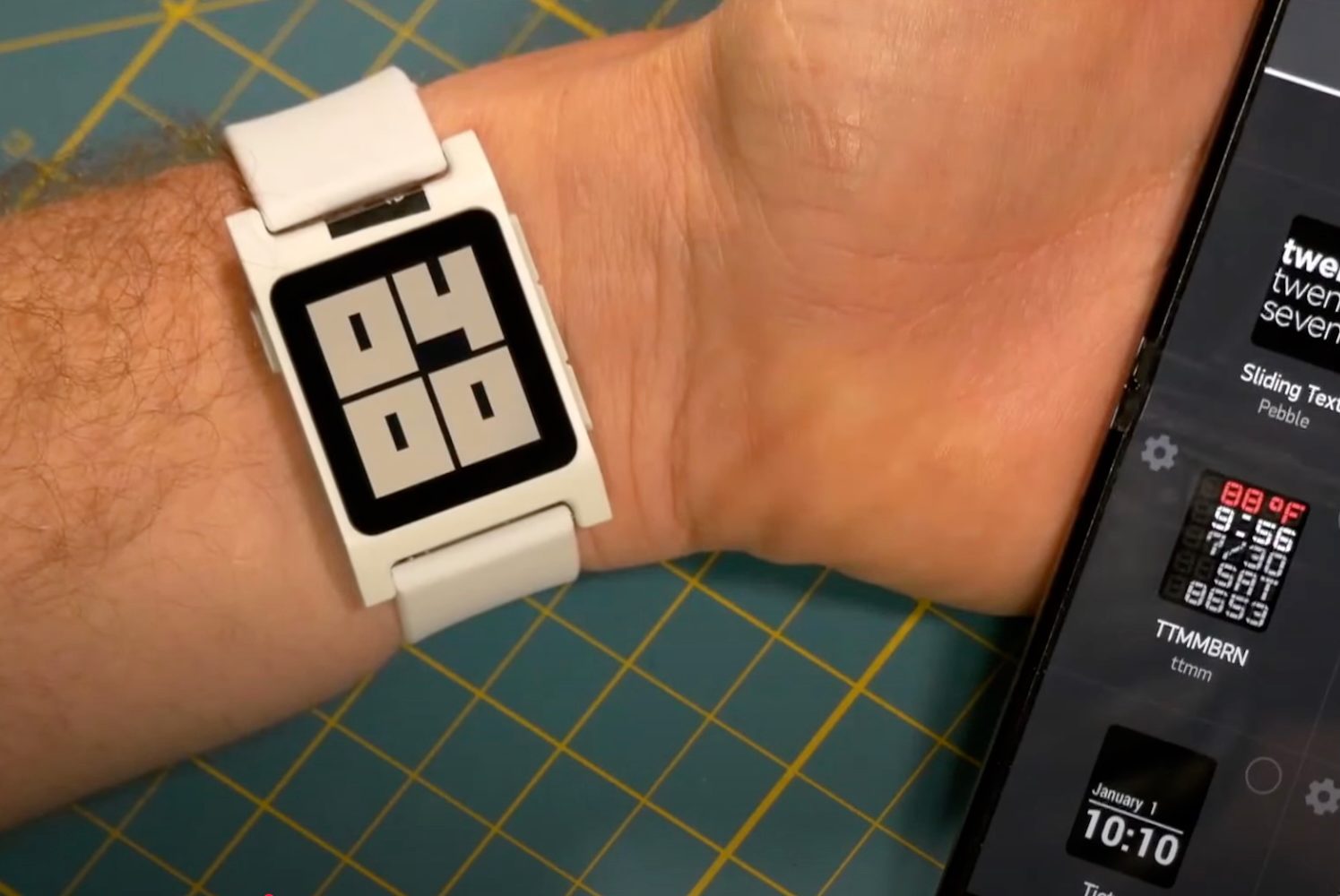
Seeing the Core 2 Duo (all taped up because it’s a development mule) on Migicovsky’s wrist made the project come alive. I didn’t doubt it was real before, but I’m not enough of a Pebble devotee to throw $150 in his direction because of a few rendered images and a promise to deliver.
I was also sold by the the way the Core 2 Duo was presented. Migicovsky chose to demo it despite the smartwatch still being a work in progress, which shows considerable confidence, but he was still honest and open about the limitations. He did so sat at a desk in a homemade studio, and I appreciated the friendly presentation a lot. No-one was screaming how it’s the best thing ever, and nobody was pompously “selling” its functionality (or general lack-of) like it would change the world either.
It’s a simple piece of tech presented simply, and I really liked the conversational, yet still passionate approach. Other companies would have made a lot more fuss about showing their product off, even in the same, far-from-sale-ready state as Migicovsky’s Core 2 Duo. Seeing it work, on a wrist, and spoken about honestly (and free from a marketing team’s influence) meant it took on its own life. It became a product I wanted to support.
We don’t need it, but we also do need it

Support is a key word in my personal decision to pre-order the Core 2 Duo. I absolutely stand by what I said about it dripping in mostly misplaced nostalgia, particularly in any appeal from the design. I owned an original Pebble so I know it’s not going to change my life. If I want to avoid notifications or not worry about battery life, I’ve got plenty of non-smart watches waiting to be worn.
We don’t need it at all, because far better examples of high quality wrist wear exist, connected or otherwise. Yet, what a shame it would be if small brands — even ones with valuable name recognition like Pebble and Migicovsky — couldn’t produce and sell passion projects like the Core 2 Duo. For every massive brand selling exciting new tech, there really should be smaller, less well-known ones doing the same. But without our support, they won’t get very far.
Not all of them deserve our attention, and flashy presentations don’t guarantee a good product (yes, Humane, I’m talking about you), but there does come a time when you feel confident enough to spend your hard-earned on something new. It does look like the Core 2 Duo is really real, on its way very soon, with the expected look and functionality. It’s not that I seriously doubted any of this before. I didn’t give it any consideration at all, because a few digital images and a promise or two about the future would never encourage me to do so. It all felt as empty as buying an NFT.
Will I actually wear it?
If I’ve pre-ordered the Core 2 Duo to support the project and what it means for wearable tech, does that mean I haven’t bought it to wear? It’s definitely not the driving force behind my purchase. The combination of my Apple Watch Series 10, Oura Ring 4, and Ray-Ban Meta smartglasses arguably do everything I want from wearable tech today.
I’ll definitely give it a try when it arrives, and who knows, perhaps I’ll love the retro software and surely-its-made-for-kids style? Either way, I’ve re-examined my position on the Core 2 Duo and I’m very pleased to have done so, even though it’s not for the reasons some others championed it.