  1. Home
  2. Photography
  3. Legacy Archives

Fujifilm puts stronger sensor and faster hybrid autofocusing into new X-E2

Add as a preferred source on Google

For more check out our full Fujifilm X-E2 review.

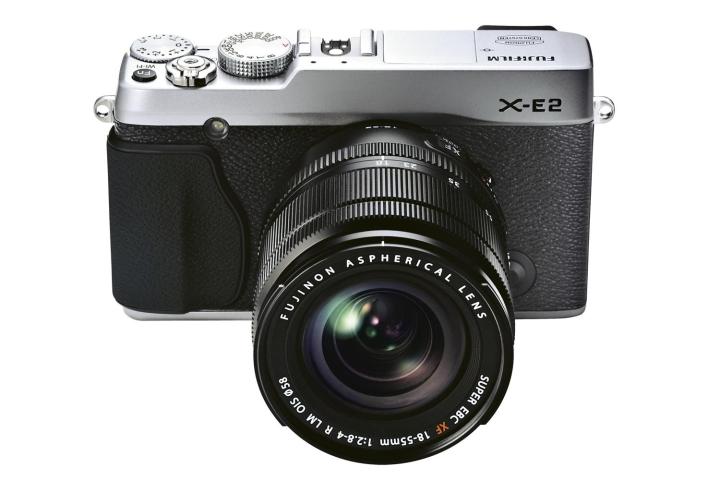
Fujifilm has updated it premium interchangeable lens camera lineup with the new X-E2, the successor to the X-E1. This upgraded camera retains a similar styling, but it now features Fujifilm’s X-Trans CMOS II APS-C sensor and a high-speed hybrid autofocus system with phase detection on the inside, as well as Wi-Fi. Fujifilm is so confident of this new camera that it says it delivers quality that rivals full-frame cameras and has the fastest autofocus speed in its category.

Recommended Videos

The 16.3-megapixel X-E2 is equipped with the X-Trans CMOS II sensor that Fujifilm unveiled earlier this year. Like the previous X-Trans CMOS, the new sensor doesn’t utilize an optical low pass (anti aliasing) filter (so that light can reach directly and effectively to the surface of sensor, which would maximize resolution and improve noise reduction) to enhance the picture quality. To compensate, a proprietary color filter array controls the moire and false color generation through highly randomized pixel arrangement. Together with the faster EXR Processor II and a lens modulation optimizer, the sensor produces strong image quality and faster performance. It has a burst mode of 7 frames per second, startup time of 0.5 seconds, and shutter lag of 0.05 seconds. To get a sense of how well these components work, check out our review of the X100S, a DT Editor’s Choice camera.

One of the issues with the X-E1, which uses a contrast detection autofocus system, was that it didn’t seem as fast as advertised. With the new hybrid autofocus system with phase detection, autofocus speed has been improved significantly – 0.08 seconds. As we mentioned in our review of the X100S, which uses the same components, the camera grabs focus very quickly and we never encountered focusing issues, regardless of the scene. Judging from our experience, we predict this will be the case with the X-E2. In manual mode, Fujifilm has included features to help with focusing, such as focus peaking.

While the X-E2 resembles its predecessor, Fujifilm did redesign the button layout and added more user programmable buttons to make the camera more usable, based on feedback from users. The 3-inch LCD is also bigger and made of tempered glass. The X-E2 retains the 2.36-million-dot OLED viewfinder.
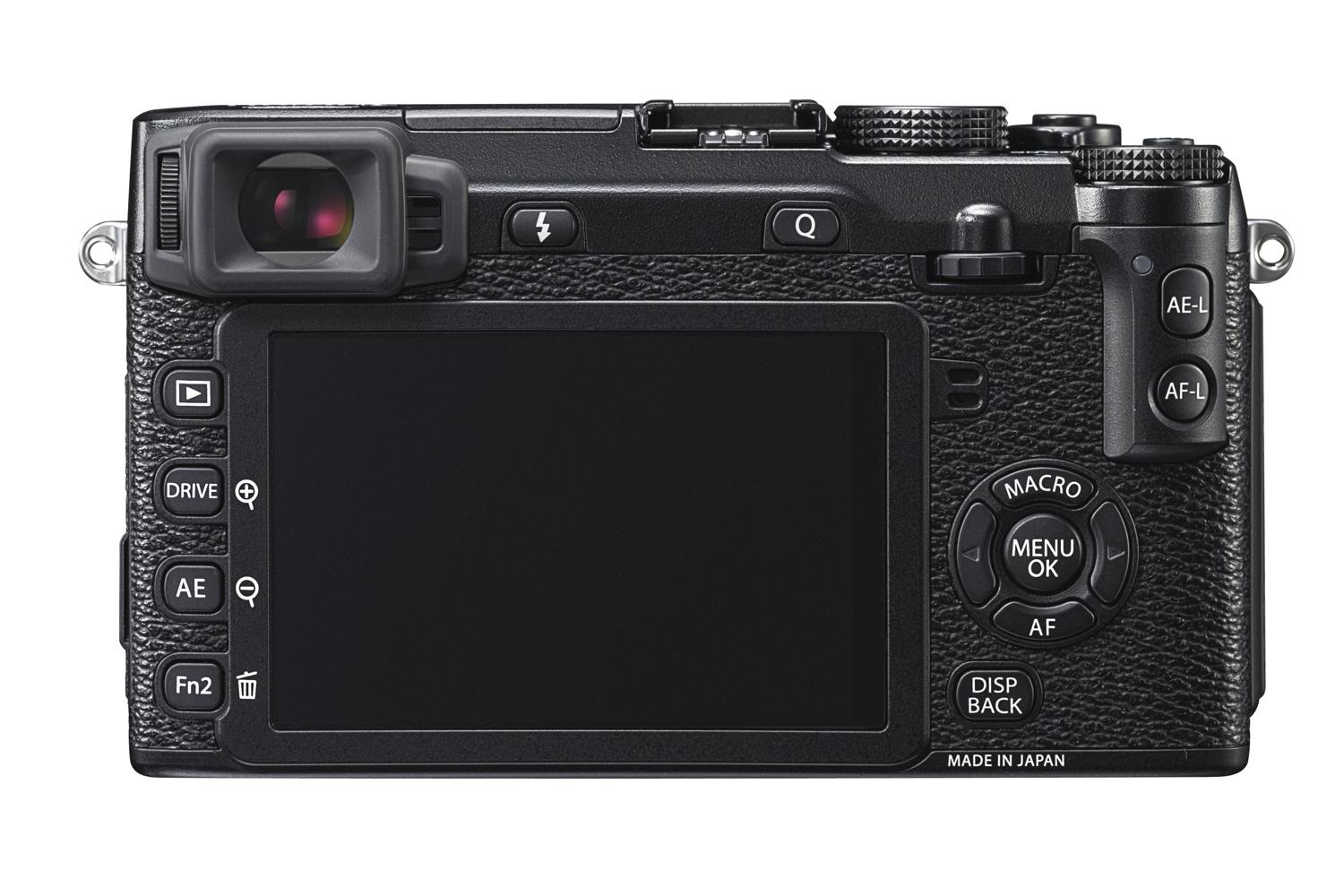
Now with Wi-Fi, the X-E2 has a dedicated button to access wireless sharing with smart devices and computers. When paired with a smartphone or tablet, you can use the Fujifilm Camera Application for iOS or Android to upload to the Web, but there’s no option for remote control of the camera. Movie capture isn’t a particular strong point for Fujifilm, but the X-E2 shoots Full HD 1080 video at up to 60 frames per second.

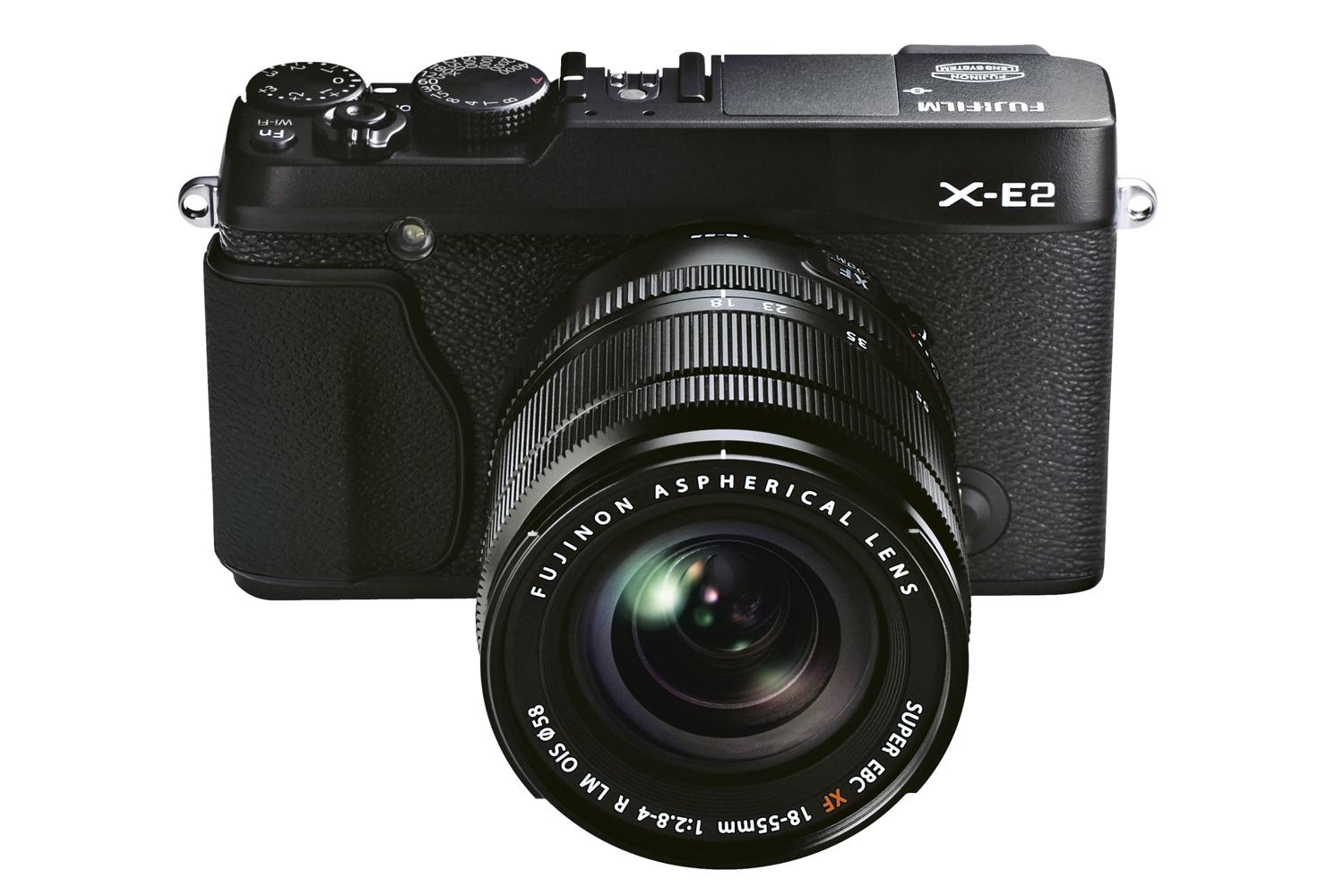
The X-E2 goes on sale in November for $1,000 (body only) in all-black or silver-and-black. It’s also available with an XF18mm-55mm (27-84mm) F2.8-4 kit lens for $1,400.

Les Shu
Former Senior Editor, Photography
I am formerly a senior editor at Digital Trends. I bring with me more than a decade of tech and lifestyle journalism…
I bought Kodak’s viral keychain camera, and the bad photos are part of its charm
The Kodak Charmera is barely a camera, and I still keep using it
Machine, Wheel, Camera

I bought the Kodak Charmera partly because I wanted a portable digital camera, and partly because I wanted a pretty little collectible. The Charmera is sold as a blind box, so you do not know which version you are getting until the box is opened. There are multiple retro Kodak-style designs, plus a transparent secret edition that looks like the one everyone would want.

I had the shopkeeper pick my box for better luck, and it worked out. I got the yellow variant, which is inspired by Kodak's original 80s disposable camera. The transparent one is definitely the fun collector’s piece, but the yellow model feels like the proper Kodak version. It looks like a tiny toy camera that escaped from a souvenir shop, found a keyring, and now hangs around wherever you go.

Read more
This new $30 keychain camera is coming for Kodak Charmera with a flip screen for selfies
Yashica's new camera makes toy photography more fun
YASHICA Funtastic Keychain Camera in multiple variants

Tiny digital cameras are all the rage, and Yashica is now offering a very cute toy photography experience of its own. The company’s new Funtastic Keychain Camera is exactly what the name suggests, a miniature digital camera small enough to clip onto your keys, bag, or lanyard. The popular Kodak Charmera is the obvious comparison, which brings a tiny blind-box keychain camera that became a viral collectible.

Now, Yashica's version lands in the same novelty-camera lane, but adds one very useful trick, which is a 180-degree flip screen.

Read more
Google releases big v4.0 update for its popular Snapseed editing app on Android
Electronics, Phone, Mobile Phone

After years of sitting on its hands, Google appears to have remembered it owns one of the best photo editing apps on mobile. Snapseed 4.0 is now rolling out to Android, bringing the platform up to speed after a stretch of iOS exclusivity that left Android users watching from the sidelines.

The story starts last June, when Google quietly broke Snapseed out of its long dormancy with a significant 3.0 update for iPhone. It was a surprise move that suggested the company was serious about the app again. Google then confirmed at the start of this year that Android wouldn't be left behind for long, and true to that word, the Play Store listing has now been updated to reflect version 4.0 — skipping straight past 3.0 for Android users and landing both platforms on the same version simultaneously.

Read more