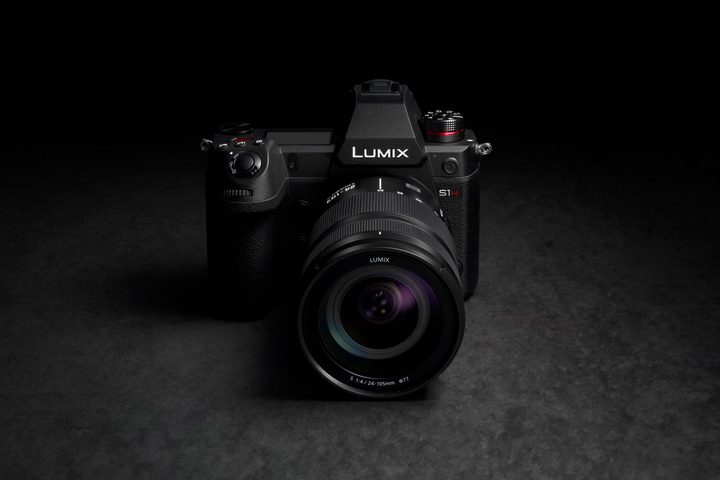
The Panasonic Lumix S1 is one of our favorite cameras — in fact, we named it the best full-frame camera of 2019. In late May, Panasonic revealed the S1H, which appeared to be a video-focused version of the S1, but the company kept the details of this new mirrorless camera secret until now. On August 27, Panasonic finally brought the S1H into the light, revealing features both predicted and surprising.
Most importantly, we now know the Lumix S1H will cost $4,000 and be available at the end of September. That’s more than both the S1 and the 47-megapixel S1R, but the still photo features appear to be identical to those of the S1. That includes a 24MP sensor, in-body stabilization system, 9-frames-per-second continuous shooting speed, and 4K and 6K photo modes. It also incorporates the same 96-megapixel high-resolution mode.
So what do you get for the extra $1,500? Limitless recording up to 6K resolution in a 3:2 aspect ratio, or a slightly lower-res 5.9K option in the standard 16:9 ratio. Anamorphic 4:3 is also available. 10-bit 4:2:2 video can be recorded internally or externally over HDMI, while the V-Log profile comes standard, rather than being a paid add-on as it is with the S1. The S1H can also record 10-bit 4K video at 60 frames per second — but only in Super 35 crop mode.
Interestingly, the S1H does away with the high-speed XQD memory card slot in favor of a second SD slot. The dual SD slots will still offer all of the same options from overflow to backup to splitting movie and still images, but that does mean the S1H will miss out on the potential for extremely fast CFExpress support in the future.
The S1H isn’t the only new 6K camera in town, however. Earlier this month, Blackmagic Design revealed the Pocket Cinema Camera 6K, which uses a smaller Super 35 sensor but costs just $2,500.
Alongside the S1H, Panasonic also announced a new lens for the L-mount system, the S Pro 24-70mm F2.8, as well as a second-generation 25mm F1.4 for its Micro Four Thirds cameras. Compatible with the Dual I.S. system of S-series cameras, the S Pro 24-70mm uses an optical stabilization system that combines with sensor-shift stabilization for 6.5 stops of shake reduction, allowing you to shoot much slower shutter speeds than normally available when handheld. It will be available in October for $2,200.
The Leica DG Summilux 25mm F1.4 II looks to be a ruggedized version of the original. It features a splash- and dust-proof design and will also be available in October, priced at $700.