1. Home
  2. Space
  3. Computing
  4. Legacy Archives

Oh! So that’s how NASA’s 3D printer will work on the International Space Station

Add as a preferred source on Google

When we first heard that NASA had plans to take a 3D printer into space in 2014, our first reaction was: Awesome! Our second reaction was: How the heck can you 3D print in space? Won’t the plastic material float up in the air in zero gravity? In a video published yesterday by NASA Marshall TV, our questions were mostly answered (although we’re a little confused by the disco tunes in the background, but that’s another story). 

NASA has designed and built its own additive manufacturing printer that has a footprint of about a square foot. You might be thinking that bringing a 3D printer on the International Space Station is a little frivolous, bit it’s actually very useful. In space, whatever the astronauts have available in orbit is what they have – there are no hardware stores in space. But parts get lost or break, and when they do, there’s a long wait for replacement parts if they don’t already have a backup on board. With a 3D printer, however, the astronauts can 3D-print some of the parts that they need, eliminating the wait time for the new item. The printer contains preloaded plans for common parts, and the astronauts can even receive new plans from Earth if they need something not already pre-made. 

Recommended Videos

“3D printing provides us with the ability to be able to do our own Star Trek replication right there on the spot to help us replace things we’ve lost, replace things we’ve broken, or maybe make  things we’ve thought  of that can be useful,” astronaut Timothy Creamer explains in the video. 

According to Jason Dunn, CTO of Made in Space (the company responsible for designing the hardware), the printer recently underwent a set of tests through the NASA Flight Opportunities program, where they flew the printer on zero gravity parabolic flights, verifying that the design of their printer works in microgravity. Looks like the printer is ready for takeoff.

We’re pretty sure only one of these 3D-printable household items would be useable in orbit, but NASA should consider the Finger Fork if their space forks go missing. Check out the video below to see the printer in action. 

Jennifer Bergen
Former Computing Editor
Jennifer Bergen is the Computing Section Editor at Digital Trends and is in charge of all things laptops, desktops, and their…
Space is becoming Bezos and Musk’s next data center site, and we have every reason to worry
The AI boom is coming for the night sky
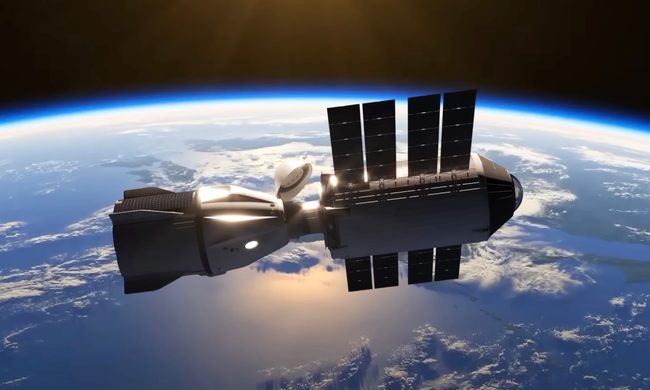
How Vast's space station will look in orbit.

AI data centers already consume vast amounts of electricity and water on Earth, so Silicon Valley has begun looking somewhere considerably more spacious... literally.

Elon Musk's SpaceX and Jeff Bezos' Blue Origin, along with several other companies, have proposed enormous constellations of satellites designed to operate as orbital data centers. However, environmental groups and former space officials are now warning that putting them into orbit at the proposed scale could have severe consequences for Earth's atmosphere and the night sky.

Read more
The first possible exomoon is here, and it makes our Moon look hilariously tiny
Scientists may have found the first exomoon, except this one is the size of Jupiter
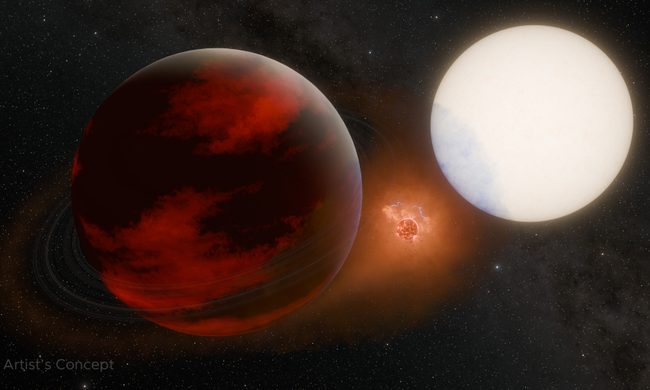
This artist’s concept depicts a potential volcanic moon between the exoplanet WASP-49 b, left, and its parent star. New evidence indicating that a massive sodium cloud observed near WASP-49 b is produced by neither the planet nor the star has prompted researchers to ask if its origin could be an exomoon.

We have already discovered more than 6,000 planets outside of our immediate neighborhood. Yet, finding a moon orbiting one of those distant worlds has proved considerably harder. Astronomers may finally have something close to the real deal, but this particular object stretches the word “moon” almost beyond recognition.

Using the European Southern Observatory’s Very Large Telescope in Chile, researchers detected strong evidence for a moon-like object in the CD-35 2722 system. Further observations are still necessary to confirm the discovery, but it could become the first confidently detected natural satellite outside our solar system. There is still one tiny complication though. This moon is apparently massive.

Read more
China’s answer to SpaceX’s reusable rockets literally catches boosters in a net
SpaceX catches boosters on legs. China just used a net.
Ammunition, Missile, Weapon

SpaceX's playbook for recovering a rocket booster generally involves legs, a precisely controlled vertical landing, and either a concrete pad or a drone ship. 

China just managed to pull off something similar, but in a slightly different way, and on July 10, it tested the method as well.

Read more