Updated 4/30/2017 9:35PM: Asus has informed us the Flip C302CA does have a gyroscope.
The first line of Chromebooks launched in 2011, aiming to provide full PC functionality at a fraction of the price. Chromebooks — so named because they run on Google’s Linux-based Chrome OS — are svelter than traditional laptops, trading size for value and connectivity for convenience. As technology progresses and we’re able to pack more power into smaller spaces, though, the best Chromebooks are capable of doing everything that most laptops can do.
Asus and Samsung are two of the biggest names when it comes to personal computing, pumping out several laptop and Chromebook models each year. The most recent additions to each collection — the Chromebook Flip C302CA and the Chromebook Pro, respectively — are some of the finest Chromebooks that we’ve ever gotten our hands on. Which one is superior?
|
Samsung Chromebook Pro  |
Asus Chromebook Flip C302CA 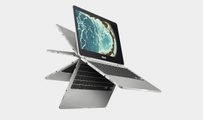 |
|
| Dimensions | 11.04 x 8.72 x 0.55 (in) | 11.97 x 8.3 x 0.54 (in) |
| Weight | 2.38 pounds | 2.65 pounds with battery |
| Keyboard | Full size keyboard | Full size, illuminated chiclet keyboard |
| Processor | Intel Core m3 (4M Cache, up to 2.2 GHz) | Intel Core m3 (4M Cache, up to 2.2 GHz) |
| RAM | 4GB LPDDR3 | 4GB DDR3 |
| Graphics | Intel HD Graphics 515 | Intel HD Graphics 515 |
| Display | 12.3-inch LED-backlit display with IPS technology | 12.5-inch LED-backlit Full HD display |
| Resolution | 2,400 x 1,600 (235 ppi) | 1,920 x 1,080 (176 ppi) |
| Storage | 32GB eMMC | 64GB eMMC |
| Networking | 802.11ac, Bluetooth 4.0 | 802.11ac, Bluetooth 4.0 |
| Ports | USB Type-C/Thunderbolt (2), microSD, headphone jack | USB Type C 3.1 (2), microSD, headphone jack |
| Webcam | 720p web cam | HD web camera |
| Operating System | Chrome OS | Chrome OS |
| Battery | 39-watt-hour | 39-watt-hour |
| Price | $550 | $500 |
| Availability | Coming soon | Now – Buy Now |
| Review | 4 out of 5 stars | 4 out of 5 stars |
Performance and hardware

While Asus’ website displays specifications for three different models of the Flip, the only version currently available for purchase features a second-generation Intel Core m3-6Y30 processor, which is the exact same microchip that powers the Samsung Chromebook Pro. As Chromebooks, both the Flip and the Pro eschew dedicated graphics cards in favor of Intel HD Graphics 515, offloaded from the processing chip. Additionally, both laptops are outfitted with 4GB of RAM, though the LPDDR3 memory in the Pro is a bit more efficient (and therefore expensive) than the regular DDR3 memory in the Flip.
Both computers utilize eMMC flash storage, though the Flip offers 64GB, while the Pro only includes 32GB. Compared to the SDD drives we’re used to seeing in laptops, these guys aren’t going to be setting speed records, but they perform well given context. Both can be expanded via microSD card. Each computer is equipped with an HD webcam and a 39-watt-hour battery as well. Altogether, there’s very little separating these two ‘books in terms of performance. Don’t expect either one to outstrip the other in terms of speed or energy usage, though the Pro’s LPDDR3 RAM does offer a slight advantage in terms of efficiency, while the Flip offers a bit more onboard storage.
The speakers on both computers are fairly basic, and you’ll want headphones or an external speaker for anything more demanding than simple Youtube videos. Both computers are outfitted with 39-watt-hour batteries, but the Asus’ lasted about an hour longer in the Peacekeeper browser benchmark loop. Confusingly, the Pro actually lasted an hour longer than the Flip in the video loop test, so there aren’t many conclusions to be drawn in terms of battery superiority. Despite the Asus’ lack of an onboard fan, it never came close to overheating during our time with it.
Winner: Tie
Design and connectivity

If you’re going to buy a 2-in-1 laptop, design is one of the most important aspects; a loose hinge or a misplaced power port can make all the difference between a best-in-class computer and a $500 paperweight. The Samsung Chromebook Pro is a great example of the former, with a magnesium alloy chassis that looks great and feels strong. Our review model was silver, but at release it’ll just be available in black. The 360-degree hinge is sturdy, and sticks satisfyingly at any angle. As with any 2-in-1, some of the functions are awkward in tablet mode; here, the power and volume buttons end up on the bottom. Not a huge deal, but kind of annoying if you plan to use the Pro in tablet mode often.
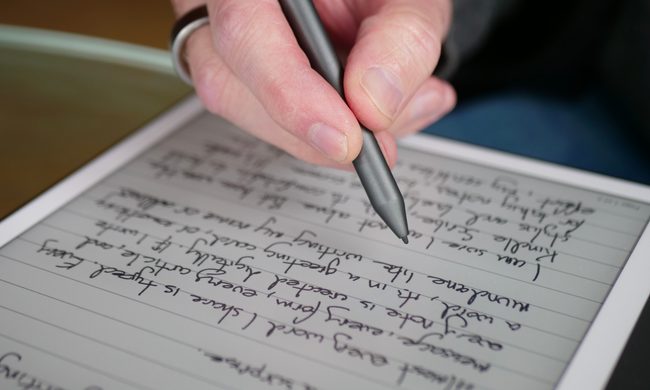
With Chromebooks, the keyboard often can be a sticking point, as there’s minimal surface area available. The Pro suffers a bit here, as there’s simply not enough key travel distance to feel natural; also, the keyboard isn’t backlit, which is very surprising and somewhat disappointing. Plus, the touchpad is small, which feels limiting when you try to use Chrome OS gestures. Luckily, the keys themselves are firm and responsive, pressing deep into the board. The Pro also comes with a digitizer stylus, which works extremely well with Android apps (more on that later), and with Google Keep handwriting recognition.
The Flip features a similarly clean design, crafted from aluminum and featuring an equally effective 360-degree hinge. The full-size, backlit keyboard is superior to the Chromebook Pro’s, though the keys don’t feel quite as responsive. The touchpad here is small, too, but what more can you expect from a Chromebook? The Flip is about a third of a pound heavier than the Pro, but at more than 2 pounds each, neither is ideal for extended use in tablet mode.
In terms of connectivity, you won’t find any meaningful difference between the two; each computer’s got a headphone jack and a microSD card slot, and both utilize Bluetooth 4.0 and standard 802.1.1 Wi-Fi. The Flip includes two USB Type-C ports, while the Pro’s got two Thunderbolt 3 ports.
Winner: Tie
Display, software, pricing, and availability
Display

The Chromebook Flip C302CA features a handsome 12.5-inch display running Full HD (1,920 x 1,080) resolution at 176 pixels per inch. The computer is actually pre-set to 1,536 x 864 (to increase text readability, we think), but this can easily be switched to maximum resolution. We found that colors looked sharp on the Flip, with appropriate sharpness, contrast, and white tint, but the glossy screen reflects too much light, and the default brightness is a bit low for our tastes. For a touchscreen — built to support up to 10 multi-touch inputs — it’s a quality offering.
Unfortunately, “quality” isn’t enough to compete with the gorgeous display on the Samsung Chromebook Pro. The 12.3-inch screen runs 2,400 x 1,600 resolution at 235 pixels per inch, which is noticeably sharper than the Asus’ screen. The Pro’s display boasts bright, vivid colors and deep blacks, creating an excellent contrast to go with the high resolution, and the 3:2 aspect ratio, while unusual for a laptop, actually works well here, making the computer feel more natural while in tablet mode. In particular, Android apps can run comfortably in both portrait and landscape orientations, which is a rarity — even for dedicated tablets.
Winner: Samsung Chromebook Pro
Software

The Chromebook Pro — along with the accompanying Chromebook Plus, released last month — was billed as the first Chromebook designed with Android apps in mind. The computer has accelerometers and gyroscopic sensors built-in for tilting and steering in games, and the included digitizer pen can be extremely useful for taking notes and performing other tasks.
The Intel Core m3 chip is easily powerful enough to breeze through most (if not all) apps available via the Google Play Store, even at maximum settings. There are a few minor issues — the computer sometimes lags while switching between Android apps and Chrome OS activities, and the “back” button is inconveniently located for use in tablet mode — but it’s hard to complain about a feature that no other Chromebook has.
However, the Asus Chromebook Flip isn’t far behind. It also has an accelerometer and a gyroscope, and it has beta support for Android apps. It does not have a stylus — though that’s not a required feature for full support. Samsung’s model has only the slightest edge here.
Winner: Samsung Chromebook Pro (by a hair)
Pricing and availability

As we mentioned before, Asus lists three versions of the Flip on its website, but only one is currently available (unless you’re buying secondhand). For $500, you’re getting extremely good value in a 2-in-1, with a processor powerful enough to speed through nearly any activity. Compared to machines like the Lenovo ThinkPad 13 and HP Chromebook 13, you’re getting similar specs and more flash storage for about the same price — plus, it has a tablet mode. You can get the Flip on Amazon, though the Asus web store appears to be out of stock at the moment. The Chromebook Pro isn’t out yet, so if you need a laptop this very second, you’ll have to go with the Asus.
Winner: Asus Chromebook Flip C302CA
Overall winner: Samsung Chromebook Pro
Ultimately, there’s not much difference between these two computers. Both are solid 2-in-1 options that function well in both laptop and tablet mode, with identical processors and generally similar specifications across the board. If you can’t wait any longer, go ahead and buy the Asus Chromebook Flip C302CA. It’s better than most comparable options, at an extremely reasonable price point.
If you can afford to be patient, though, give it a pass until the Samsung Chromebook Pro releases in the next few weeks. For just $50 more, you’ll get a superior display and a stylus. Sure, it’s rough around the edges in a few places, but the advantages outweigh the drawbacks here.
If you don’t think you’ll need the processing power of the Pro’s Core m3 chip, you can get the Chromebook Plus — which is otherwise identical to the Pro, right down to the great display — for less than Buy Now