CES is over. We’ve spent plenty of time over the last few days enumerating all the winners of this tech spectacle, but what comes next? Are the brightest stars of CES destined for retail greatness as consumers snap up the most eagerly anticipated gadgets when they hit stores?
Well, if history is any guide, no. Making a splash at CES doesn’t guarantee success – or even mean products hit the market. With this year’s show behind us, let’s look back at some major products from past CES show that aimed to change the world … and failed.
Windows slates

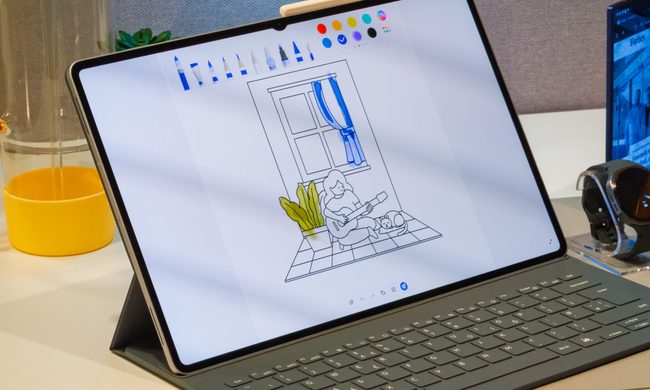
In a keynote at the 2010 CES, Microsoft CEO Steve Ballmer once again tried to usher in the era of tablet computing, touting “slate”-style tablets running Windows 7 during his highly visible keynote address. Ballmer demonstrated three touch-oriented slate products during the keynote, including a famously fumbling effort to touch and tap his way through Windows 7 on an HP Slate.
Where are they now?
Windows slates were quickly eclipsed by the Apple iPad (announced a few weeks later). HP did eventually release its Windows 7 slate in late 2010 – with an $800 price tag and an enterprise-only focus. Microsoft is making another go at Windows tablets with Windows 8, but despite repeated chest-thumping from Microsoft, as a rule Windows 7 tablets went nowhere with consumers.
Palm Pre and webOS

Skip back to CES 2009, and a darling of the show was a resurgent Palm and its new Palm Pre running a brand-new mobile operating system: webOS. The mobile industry was still looking for it’s “iPhone killer,” and at CES 2009 all eyes were on Palm. After the misstep of the Palm Foleo, the company seemed to have everything going for it: a Web-savvy mobile operating system in webOS, a slick touch-oriented smartphone (with a business-friendly QWERTY keypad to boot) in the Palm Pre, oh-so-cool wireless charging, and (by the time the Palm Pre launched) a CEO who had helped engineer the iPod revolution.
Where are they now?
Palm tried to make a legitimate run at the smartphone market, but the Palm Pre simply didn’t sell. By mid-2010, the company had been acquired by HP. HP had grand plans for Palm, its intellectual property, and particularly webOS, which it planned to put into everything from smartphones to printers and even a touch-oriented tablet (which the company killed after only a few weeks on the market). HP did release webOS to the open-source community, and it’s showing a bit of momentum, but Palm (and HP) smartphones are now historical footnotes.
3D TV
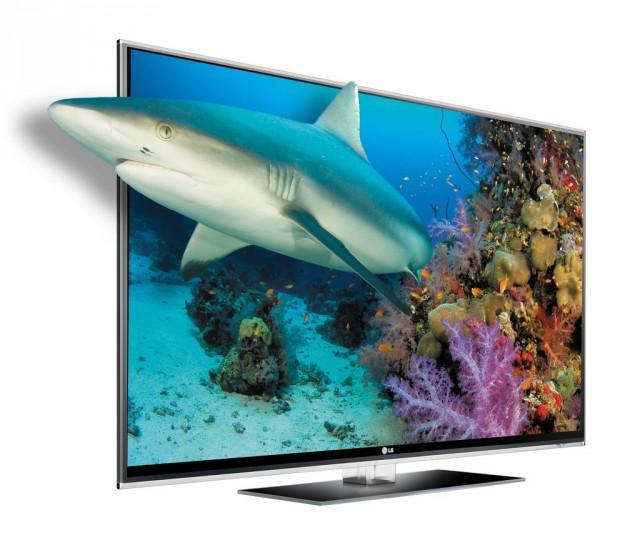
Remember Avatar? How it was supposed to herald a revolution in 3D filmmaking and create mammoth demand from consumers wanting bring 3D HDTVs into their living rooms? Manufacturers beat this drum hard at CES 2010, flogged the dead horse at CES 2011, and drove it into the ground at CES 2012. Movie studios and consumers electronics manufacturers desperately wanted consumers to embrace 3D, particularly as the price (and profit margins) on plain-old HDTV systems dropped through the floor.
Where are they now?
While sales of 3D-capable televisions have gradually picked up worldwide, the NPD Group found they declined in North America during 2011. Furthermore, content providers have scaled back 3D offerings, and while Hollywood still seems to think 3D is the next big thing, some major filmmakers simply disagree. The bottom line for consumers is that they consider 3D to be a gimmick: Some are happy to try, or buy it if it doesn’t cost much extra, but it’s not a must-have feature and most won’t embrace 3D full-time. After all, 3D glasses make it hard to tweet on your phone, or cruise Facebook with your iPad. Plus, if you’re among the as many people (anywhere from 5 to 30 percent of the population, depending who you ask) for whom 3D technology simply doesn’t work or induces headaches or nausea … it’s just a non-starter.
E-readers
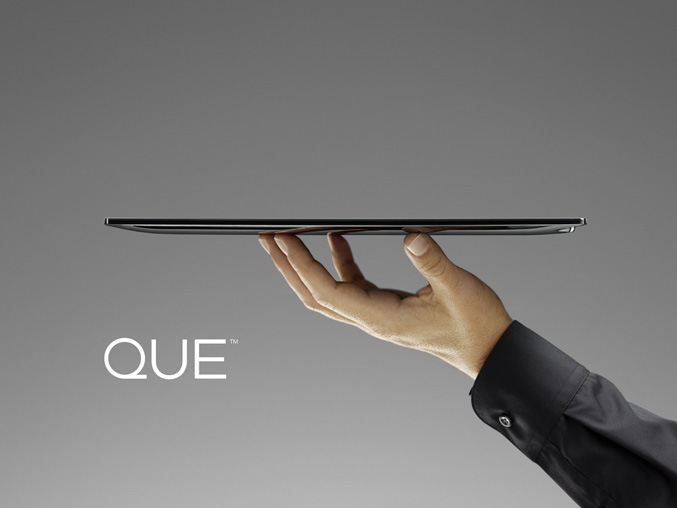
Amazon wasn’t the first to the market (that would have been, uh, Sony back in 2006), but the Kindle ignited a flurry of would-be competitors, starting as soon as 2008 but blossoming in 2009 and 2010. Remember the eSlick? Maybe the Skiff? The enTourage eDGe? Plastic Logic’s Que proReader? The Copia Ocean and Tidal? No? Surely you recall the iRiver story, Bookeen Cybook, and e-readers from Samsung and even RCA? How about the dual-screen Spring Design Alex and the folio-like Kno aimed at students?
Where are they now?
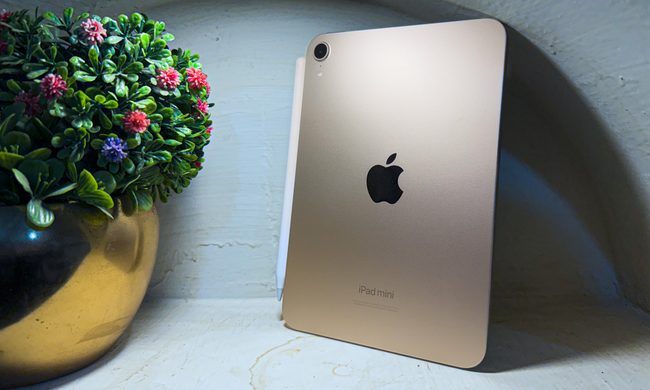
The e-reader market isn’t dead. Amazon says Kindle e-readers are still two of its the top four best-selling charts this year, and Barnes & Noble is still making a run with its Nook line (although it just revealed Nook sales dropped 3.1 percent in 2012 compared to 2011). However, most e-reader products that tried to capitalize on the Kindle boom have fallen by the wayside, and the entire category is being increasingly capitalized by media tablets (like the Kindle Fire and Nook Tablets) along with full-featured tablets like the iPad and iPad mini. In a few years, E-Ink readers may be little more than a niche product.
Netbooks

Another favorite of CES 2009? Netbooks. The basic idea was to pack a low-powered Windows XP PC into a package as small and cheap as possible and call it a revolution in mobile computing. Microsoft helped spur the category on with Windows 7 (which could run more acceptably than Vista on under-powered machines), and for a while it looked like the category might reverse the fortunes of the PC market: Asus and (particularly) Acer bet heavily on mass-producing inexpensive netbooks and saw direct benefits to their bottom lines.
Where are they now?
Netbooks are no more. They’ve been usurped by tablets (or, more properly, the iPad) and higher-priced ultraportable PCs like Apple’s MacBook Air and its competitors. It turns out that most cost-sensitive consumers who were willing to put up with tiny screens and cramped keyboards on netbooks were quite eager to jump ship to tablets like the iPad, which were more capable and in the same price range. Folks who couldn’t put up with tiny screen and cramped keyboards but who wanted a proper computing experience gravitated toward ultraportables. As of 2012, the netbook market was dead: Dell, Lenovo, and Toshiba bowed out a long time ago, and stalwarts Asus and Acer pulled the plug on their netbooks a few months ago. Almost nobody misses them.
HD Radio

Another CES darling over the last few years has been HD Radio. Developed by iBiquity, HD Radio is a digital radio technology that’s designed to offer better audio quality than traditional analog AM/FM, enable stations to broadcast digital data along with audio, and offer multiple digital programming choices alongside a standard analog broadcast signal. Would-be listeners have to buy new receivers to tune into HD Radio, and some HD Radio broadcasts are now available to the majority of the U.S. population.
Where are they now?
HD Radio is still around: Consumers can buy receivers and plenty of new automobiles offer HD Radio as optional or standard equipment, usually incorporated into onboard electronics systems. However, the technology has not seen widespread adoption for two reasons. First, unlike analog television, the FCC does not plan to shut down traditional AM and FM spectrum and require consumer switch to digital radio receivers. The result is that most radio stations continue to broadcast on AM and FM, same as they’ve always done. Second, consumers are more keen to hook up smartphones (or tablets) into their home or car-audio systems than they are to embrace a new radio technology: HD Radio can’t bring in their customized streams from services like Pandora, play audiobooks or podcasts, or tap into their media libraries. For better or for worse, consumers who are even aware of HD Radio treat it much like they treat AM and FM radio: a non-interactive, non-customizable, chunk of dashboard real estate they mostly ignore.
Beware the hype
CES is always a good source of entertainment and high-profile launches – along with some genuinely useful and even goofy products. And the technology and consumer electronics industries love to go to Vegas for a wing-ding. But it’s important to take any purportedly earth-shattering announcements from CES with a grain of salt. After all, companies have been shattering the world at CES for years … and the world is still here.