1. Home
  2. Wearables
  3. Emerging Tech
  4. Health & Fitness
  5. Legacy Archives

Garmin’s upcoming fitness tracker lasts for a year on replaceable batteries

Add as a preferred source on Google

Check out our review of the Garmin Vivofit fitness band.

Garmin may have jumped into the wearable fitness tracker market a little late, but it’s trying to make up for that shortcoming with Vivofit – a new tracker that, among other notable features, boasts a battery life of one entire year on replaceable batteries.

Recommended Videos

Unlike other fitness-tracking wristbands that need to be recharged every 7 to 10 hours, Vivofit uses a low-power e-ink display and two small coin batteries to power itself and track your activity for a full 365 days. As an added bonus, it’s also waterproof, and comes equipped with a heart rate monitor for more accurate activity tracking.
Screen shot 2014-01-06 at 12.44.17 PMIt also works in a slightly different manner than most other fitness bands currently on the market. Rather than simply tracking your progress or translating your general activity into points, Vivofit focuses on goals. It starts by  learning your current fitness and activity level, setting that as your baseline, and then gradually setting goals for you that get increasingly difficult as you attain milestones.

Obviously, we haven’t had enough time to test out Vivofit’s battery longevity just yet, but if it lives up to claims, Garmin may very well be able stand out in a market already crowded by big players like Nike, Fitbit, and Jawbone.

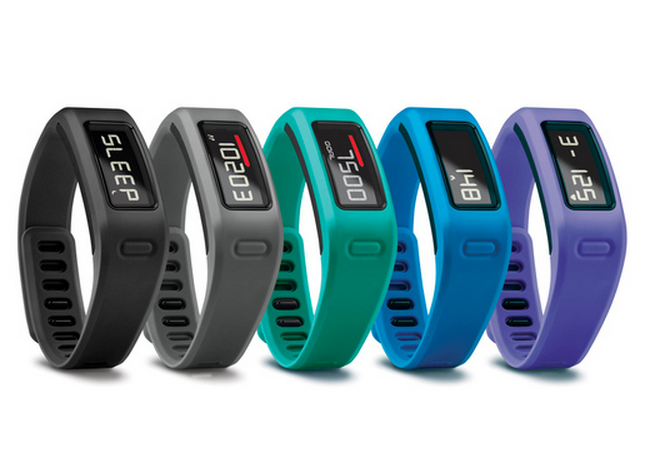
The band will come in five different colors – black, purple, teal, blue, and grey – and in two sizes: small or large. According to Garmin, Vivofit will ship in the first quarter of 2014, and will sell for $130. A bundle that includes a heart-rate monitor will be available for $170. 

Drew Prindle
Former Senior Editor, Features
Drew Prindle is an award-winning writer, editor, and storyteller who currently serves as Senior Features Editor for Digital…
Qualcomm is set to ratchet up chip prices in September, and your next gadget upgrade could bear the brunt
The price hike could touch every Snapdragon-powered device category.
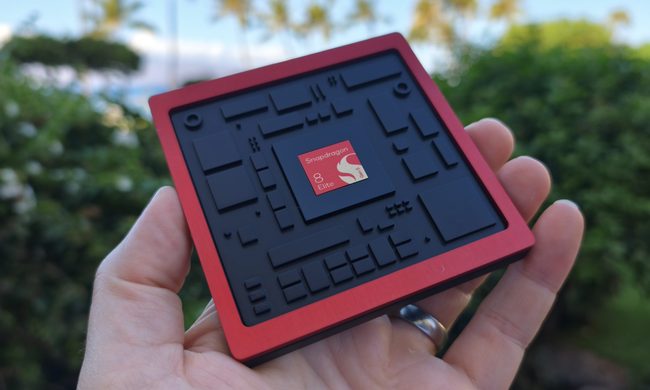
The new Qualcomm Snadragon 8 Elite Gen 5

I want you to sit with this for a second. Qualcomm, the company whose Snapdragon chips sit inside your Android phone and tablet, your Windows laptop, your Meta smart glasses, your Galaxy Watch, and your wireless earbuds, reportedly sent a letter to every major customer telling them prices are going up by double digits. 

The price hike will be in effect from September 1, 2026, a recent Bloomberg report claims. Essentially, all the companies placing their chip orders after that will pay a higher price. 

Read more
Slacked off all summer? Here are 3 fitness trackers that’ll help you stay accountable as you head back to school
Three trackers, three price points, three totally different approaches to keeping you honest about your own goals.
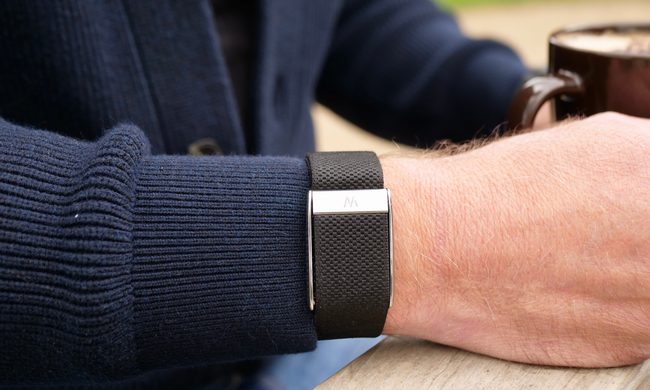
A person wearing the Whoop 5.0.

Summer break did what it usually does. Your sleep schedule drifted, workouts happened less often than you'd hoped, and by the time August rolled around, you were feeling it. You've got a plan to get back on track once the school year starts and your days have more structure, but you know how that usually goes. The first two weeks are solid, then the routine quietly slips.

A fitness tracker won't get you off your couch. What it will do is put a number in front of you every day, one that makes it obvious whether you stuck to your goal or slacked off. That small bit of visibility is often the difference between meaning to work out and actually doing it. Back-to-school season is a good time to buy in, since you're already resetting more than one part of your routine, and the overlap makes the habit more likely to stick. To keep the odds in your favor, here are three fitness trackers that can help you stay accountable and actually hit your goals.

Read more
Galaxy Watch 9 vs. Watch Series 11: Has Apple finally met its smartwatch match?
From AI-powered health coaching to outdoor fitness tracking, here's how Samsung's Galaxy Watch 9 stacks up against Apple's Watch Series 11.
Wristwatch, Arm, Body Part

These days, the real battleground between smartwatches is who can turn a wrist-worn, sensor-loaded device into something that resembles a personal fitness trainer, and this year's crop of flagship wearables takes that fight more seriously than ever. 

Samsung just refreshed its mainstream Galaxy Watch line with a new silicon and a batch of clinically-backed health tools, landing squarely on Apple's home turf of preventive wellness tracking. Apple, for its part, has spent the better part of a year letting its Series 11 sit as the reigning pick for anyone inside its ecosystem, propped up by a software catalog few rivals match feature-for-feature. 

Read more