
Can the Internet do to mass surveillance what it did to the Stop Online Piracy Act?
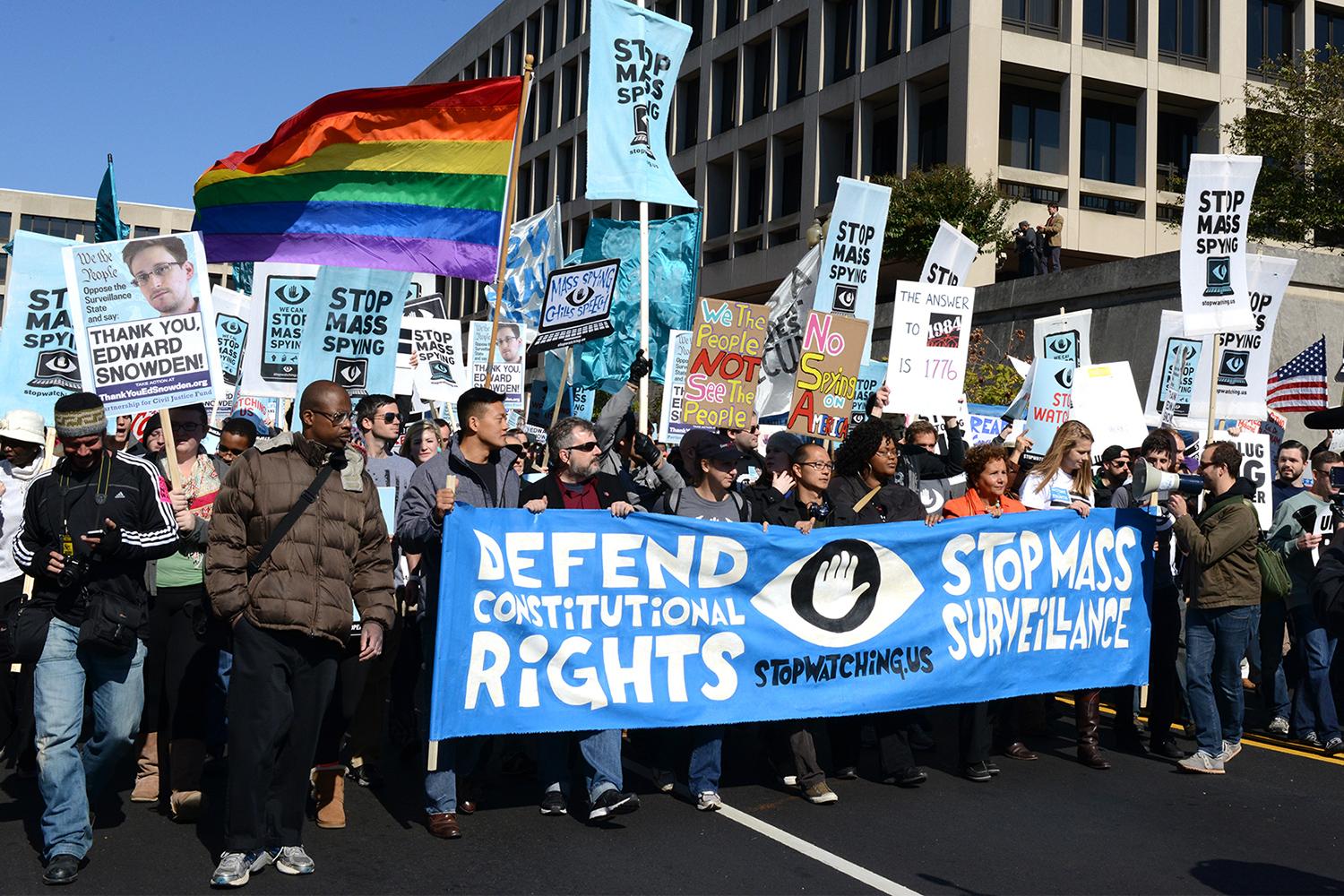
That is the question a coalition of companies, non-profit groups, activists, and Web users are attempting to answer with a roaring “Yes!” today, the launch of the ‘Day We Fight Back’ campaign.
Whereas the anti-SOPA movement sought one, simple goal – kill the bill – the Day We Fight Back campaign, launched in honor of late anti-SOPA activist Aaron Swartz, has three.
Nearly 6,000 websites, including Reddit, Tumblr, UpWorthy, and many more, are taking part in the online protest against the NSA.
Nearly 6,000 websites, including Reddit, Tumblr, UpWorthy, and many more, are taking part in the online protest against the NSA and other surveillance organizations. Citizens rights groups like the Electronic Frontier Foundation (EFF), the ACLU, Demand Progress, and others are also throwing in their support. Those organizations we should now expect to back these kinds of campaigns. Importantly, however, they aren’t the only ones.
Adding further muscle to the fight is the Reform Government Surveillance coalition, which counts Google, Facebook, Yahoo, AOL, LinkedIn, Twitter, and Microsoft as its members. These companies recently negotiated the ability to tell their users more about what information the government requests. This includes the aggregate number of Foreign Intelligence Surveillance (FISA) Court orders and National Security Letters these companies receive, as well as an approximate number (think “0 to 1,000”) of accounts affected – a move some believe to be nothing more than a PR stunt, a sentiment with which I happen to agree.
Still, the support of major tech companies is important for the Day We Fight Back campaign. Just as sites including Google and Wikipedia “blacked out” their homepages to help beat SOPA and PIPA, so too will many of these companies spread the message of the Day We Fight Back.
Yet the day before the campaign, it still wasn’t entirely clear how these companies planned to promote the Day We Fight Back message. And that isn’t a good sign. April Glaser, an activist with the EFF, tells me “some will be promoting the action on their sites, others will blog about it.” It doesn’t sound like any major tech brands will black out anything – but hey, it’s still something, right?
I guess. As a wholehearted supporter of the Day We Fight Back and its message, I certainly hope this campaign can make a difference. But opposing an anti-piracy bill is not the same as fighting against an entrenched, secretive surveillance apparatus – one that may or may not stop terrorists from blowing people up.
Is it enough to make average Americans continue to care about the NSA and Edward Snowden (or to make them care in the first place)?
At the very least, the fight against SOPA was a genuine grassroots campaign, which managed to generate an unprecedented level of political action from Web users who I can only assume would usually spend their day playing Flappy Bird. Approximately 75,000 websites went “black” to oppose SOPA, and upset citizens sent some 35,000 letters and more than 2 million emails to Members of Congress. Nearly 1.5 million people signed anti-SOPA petitions. And all of that really did make a difference – SOPA and PIPA died before ever coming up for a vote.
The Day We Fight Back, on the other hand, is comparatively miniscule. Yes, the support of thousands of websites, organizations, and major technology companies is notable and worth of praise. But is it enough to beat back the NSA – especially when President Obama has already announced the reforms he plans to make? Is it enough to make average Americans continue to care about the NSA and Edward Snowden (or to make them care in the first place)? It kills me to be defeatist, especially on an issue that I believe in the depths of my heart should be important. Alas, I fear the answer is no.


