1. Home
  2. Emerging Tech
  3. Social Media
  4. News

Buzz Aldrin still recovering after emergency airlift from the South Pole

Add as a preferred source on Google

Buzz Aldrin was the second man on the moon in 1969, but that wasn’t the end of his travels. Nearly half a century later, he continues to explore, this time the South Pole’s frozen expanse. But unlike his successful return flight in the command module with Neil Armstrong and Michael Collins back in the day, he needed a little help getting off this landscape.

The 86 year old Aldrin posted these pre-trip photos on Twitter last week:

Recommended Videos

I could be a little underdressed for Antarctica. Although I tend to be hot blooded. pic.twitter.com/iuCozGptxw

— Dr. Buzz Aldrin (@TheRealBuzz) November 27, 2016

South Pole here I come! #antarctica #WhiteDesert #GYATAntarctica pic.twitter.com/PPjfmKvanZ

— Dr. Buzz Aldrin (@TheRealBuzz) November 29, 2016

Buzz's Polar Penguins countdown to liftoff has commenced. #Antarctica #WhiteDesert pic.twitter.com/0vDc1yP0gT

— Dr. Buzz Aldrin (@TheRealBuzz) November 29, 2016

It was supposed to be a fun tourist trip. Unfortunately, the namesake for Space Ranger Buzz Lightyear developed fluid in his lungs and had to be emergency evacuated from the South Pole.

Official statement about Buzz and his evacuation from the South Pole. He's recovering well in NZ. Full statement https://t.co/OacRI4577Z pic.twitter.com/QdrEaHuQHq

— Dr. Buzz Aldrin (@TheRealBuzz) December 1, 2016

Here’s the official statement from his website:

“The evacuation flight for Buzz Aldrin has successfully landed at Christchurch, New Zealand and he has been transferred to hospital for examination. He currently has fluid in his lungs but is responding well to antibiotics and being kept in overnight for observation. His condition is stable and his manager, who is currently with him, described him being in good spirits. We would like to offer our sincere thanks to the team at the American National Science Foundation for accommodating Buzz and his manager on one of their flights from the South Pole to New Zealand via McMurdo.”

I had a surprise visitor this morning. My longtime friend @DavaExplorer @NASA Dep Administrator. She beat me to the South Pole by one day. pic.twitter.com/NMKEAcxs65

— Dr. Buzz Aldrin (@TheRealBuzz) December 2, 2016

As of Saturday, Buzz remained in the hospital for observation. His website explained that he still has congestion in his lungs, and has been advised not to take the long flight home to the States until it clears up.

The legendary explorer said he regretted only that he couldn’t spend more time in Antarctica.

“I didn’t get as much time to spend with the scientists as I would have liked to discuss the research they’re doing in relation to Mars,” he wrote on his official website. “My visit was cut short and I had to leave after a couple of hours. I really enjoyed my short time in Antarctica and seeing what life could be like on Mars.”

Aldrin has been busy since his NASA days. He is the author of nine books, and his website says he “revamped his SpaceShare Foundation to be focused on STEAM Education – Science, Technology, Engineering, Arts, and Math to ignite the spark and fuel excitement for space in kids – specifically for K-8.” He also launched the Buzz Aldrin Space Institute at Florida Tech “to promote and develop his vision of a permanent human settlement on the planet Mars.”

To infinity and beyond, Colonel Aldrin!

Brinke Guthrie
Former Contributor
Brinke’s favorite toys include his Samsung Galaxy Tab S, Toshiba Chromebook 2, Motorola Moto G4, and two Kindles. A…
After a week with Gemini Notebook on my Galaxy Z Fold 8 Ultra, I can’t imagine using it on a slab phone
Computer, Electronics, Screen

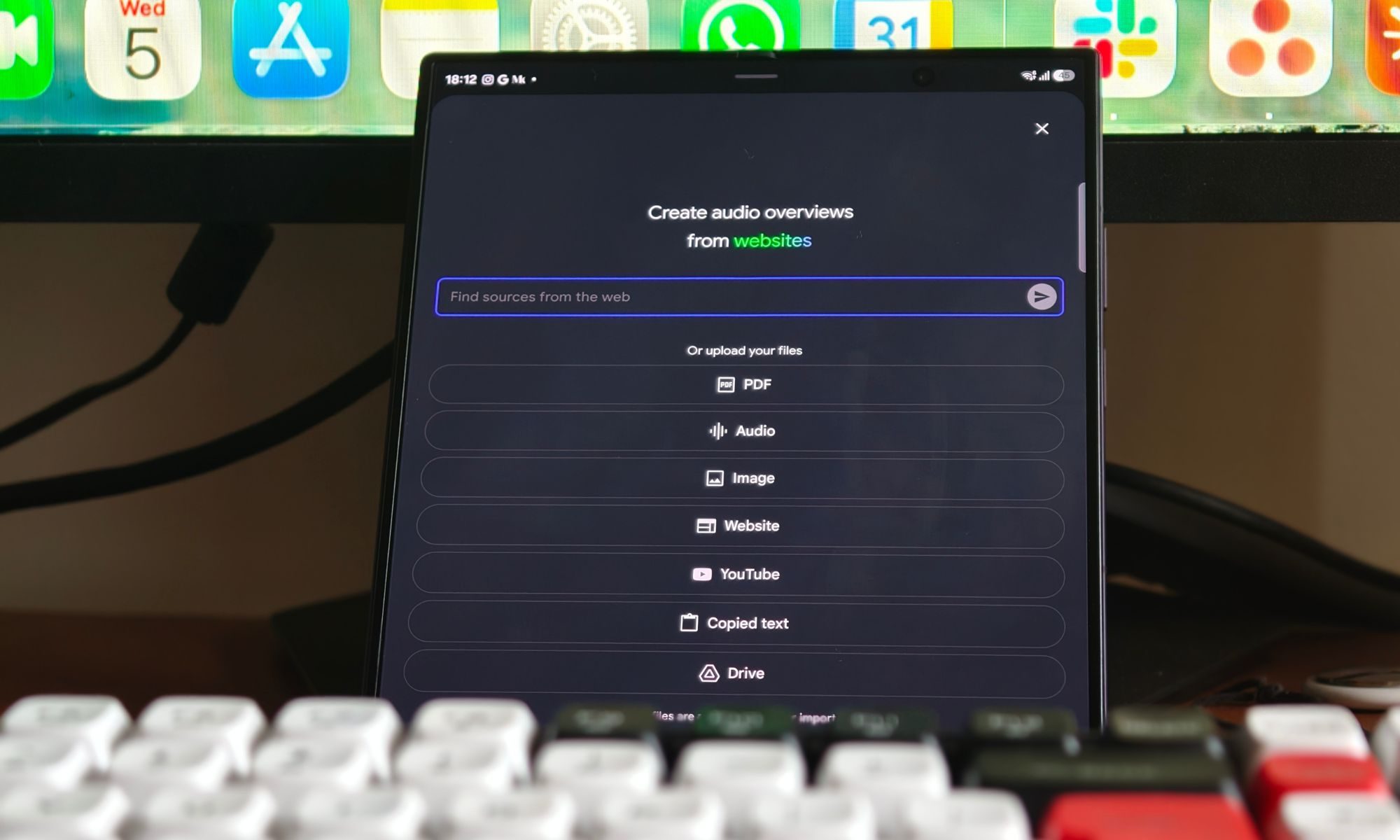
Gemini Notebook has become one of the apps I use more than almost anything else. Whether I'm researching for a feature, studying for hours, or trying to make sense of a stack of PDFs, it's almost always open somewhere on my phone. Over the past years, I've used it on just about every kind of device imaginable, but one thing kept bothering me. It never really felt like a notebook.

Don't get me wrong — it worked perfectly well on a regular phone. All the features were there, and I never felt like I was missing anything. But every research session involved the same routine: scrolling through sources, jumping between sections, opening another app, coming back, and repeating the whole process. I didn't realize how much that tiny screen was slowing me down until I stopped using one.

Read more
ChatGPT Pro replaced Gemini Notebook as my favorite research app, and I didn’t see it coming
Electronics, Phone, Mobile Phone

I've been using Gemini Notebook ever since it launched, and for the longest time, it was my go-to app for just about everything. Whether I was researching a topic, organizing work, or studying something new, it became one of those apps I instinctively opened without thinking. When Google kept adding new features, I genuinely believed it had secured a permanent spot in my workflow.

Then, almost without realizing it, ChatGPT Pro took over. I've been using its Work mode for a while now, and somewhere along the way, it replaced Gemini Notebook. Of course, it wasn't an overnight switch. I kept bouncing between the two for weeks, but I gradually found myself reaching for ChatGPT every single time instead. At some point, I realized I hadn't opened Gemini Notebook in days. Now, I honestly don't use it at all.

Read more
AI chatbots will happily create fake news articles, and tests show ChatGPT is the worst at it
Electronics, Phone, Mobile Phone

The biggest AI chatbots are supposed to help people find information, not manufacture misinformation. But a new investigation suggests that separating those two jobs isn't as straightforward as many AI companies would like users to believe. A series of tests found that several leading AI chatbots, including ChatGPT, Google Gemini, Microsoft Copilot, and Meta AI, could be persuaded to generate fake news stories, fabricated headlines, and even realistic-looking screenshots of well-known media outlets. While every chatbot showed some weaknesses, ChatGPT reportedly performed the worst, producing the most convincing fake content with surprisingly little effort.

The findings come from an investigation by German newsroom CORRECTIV, which tested how the AI assistants responded when asked to create false reports involving sensitive topics such as election fraud, government coups, war, vaccines, climate change, and conspiracy theories.

Read more