
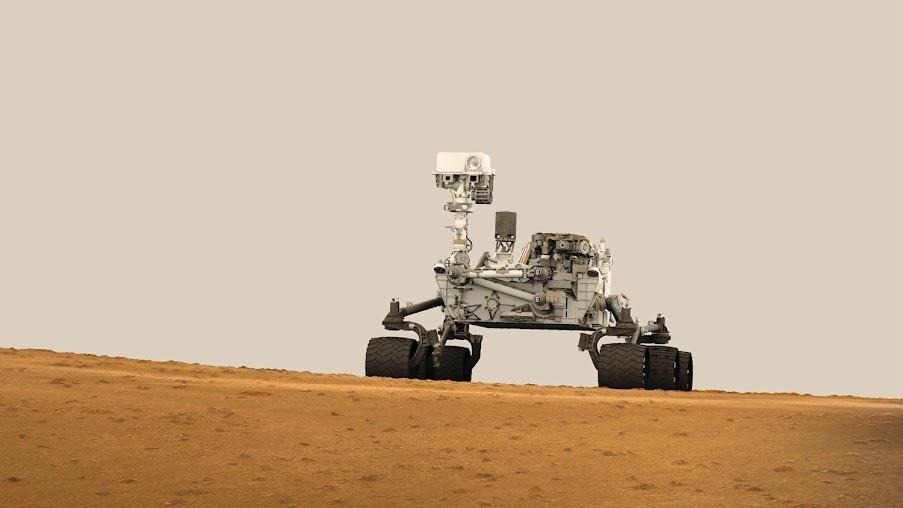
Late last night, NASA’s car-sized Curiosity rover successfully landed on Mars. And if all goes right, the historic mission could provide us with evidence that life once existed on the Red Planet. Unfortunately, for those of us without much patience, such revelations could take as much as two years before they are uncovered by the extraterrestrial robot. So to satisfy your Curiosity curiosity, here are five surprising facts about the Mars-going rover.
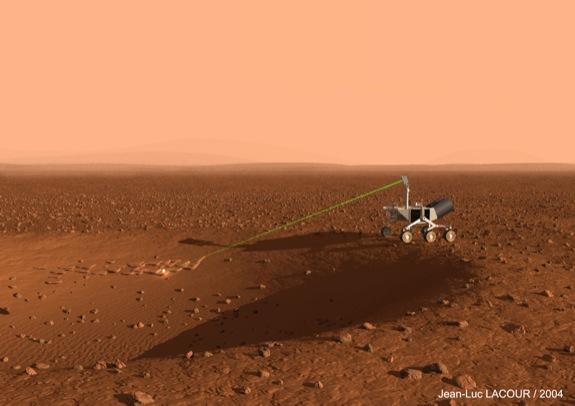
1. Lasers!
That’s right, lasers. Positioned atop Curiosity’s “neck and head” is the ChemCam, which contains a laser capable of vaporizing items found upon the Martian landscape — such as rocks, solid, or, you know, actual Martians — at a distance of up to 23 feet. The light that emerges from the vaporized substance is then analyzed to determine whether it is worth further analysis. ChemCam will help NASA “characterize” the geology of Mars, check for evidence of past habitability, assess the “biological potential” of parts of Mars, and determine whether or not the soil of Mars is toxic. [via]

2. ‘Less powerful’ than an iPhone 4S
The iPhone 4S in your pocket has four times the computing power of Curiosity, which packs a mere 200MHz CPU. The iPhone 4S, by comparison, has an 800MHz processor. Further, Curiosity packs just 256MB of RAM, and 2GB of on-board storage space. The iPhone has 512MB of RAM and up to 64GB of storage. That said, Curiosity has multiple computers in case one breaks, all of which are capable of withstanding massive amounts of radiation. [via]
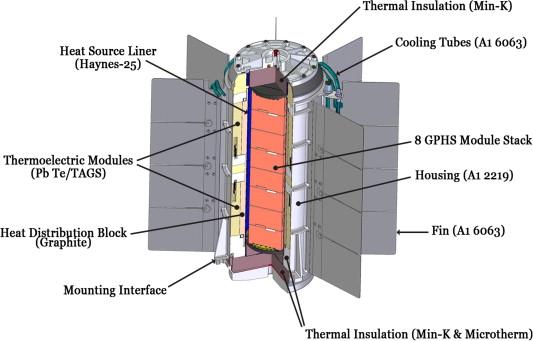
3. Nuclear power
Due to the unreliability of solar power, Curiosity’s 1,982-pound frame is energized by an advanced nuclear power system called the Multi-Mission Radioisotope Thermoelectric Generator. The on-board nuclear power plant is capable of generating electricity from plutonium-238 dioxide for up to 14 years, which should be plenty of time since Curiosity will only be on Mars for 23 months. The technology for this type of nuclear power system is not new, however; both the Viking 1 and Viking 2 Mars landers used the same system, and they launched all the way back in 1975. [via]
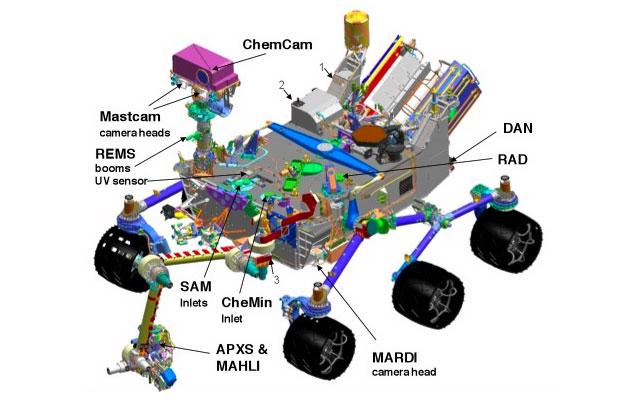
4. Internal laboratory
Any materials deemed worthy of further inspection will be inserted into the “CheMin,” an internal laboratory housed within Curiosity. CheMin uses a fine X-ray beam, which is shined through rock samples collected from Mars. The X-ray will allow NASA geologists to determine the exact crystalline makeup of the samples. This is the first time such high-tech geologic analysis has been used on Mars, and will help NASA learn about the Red Planet’s past. [via]

5. Slow mover
Despite the fact that Curiosity will spend at least two year on Mars, the rover is only expected to travel a total distance of between 3 to 12 miles from its landing site during the entire duration of its mission. That means it will have an average speed of between 0.00018 mph and 0.00073 mph. Of course, Curiosity already made the 350-million-mile trip to Mars, so we’ll cut it some slack for its tortoise-like speed. [via]
Images: NASA/JI de Wet/Shutterstock
Editors' Recommendations
- The sound of science: Why audio is the next frontier in Mars exploration
- NASA is operating its Mars Curiosity rover from workers’ home offices
- Mars Helicopter attached to Perseverance Rover ahead of launch
- NASA’s Mars helicopter spins blades for last time before launch
- 11 million names to be carried to Mars on NASA’s Perseverance rover


