Good, rational decisions are rarely born out of fear. Yesterday, the National Transportation Safety Board (NTSB) met to discuss a massive collision involving “two school buses, a bobtail, and a passenger vehicle” back on Aug. 5, 2010 in Missouri. This collision was caused by a truck driver who was texting while driving. While there is no doubt that texting or reading anything on your phone is a bad idea and a ban on it is probably a good thing, the NTSB is taking it too far. In an fearful overreaction that might as well be straight out of Footloose, the agency has issued a call for a nationwide ban on all personal electronic devices in the car.
“According to NHTSA, more than 3,000 people lost their lives last year in distraction-related accidents”, said Chairman Deborah A.P. Hersman in the NTSB press release. “It is time for all of us to stand up for safety by turning off electronic devices when driving. No call, no text, no update, is worth a human life…The data is clear; the time to act is now. How many more lives will be lost before we, as a society, change our attitudes about the deadliness of distractions?”
The agency also Tweeted plenty of impactful one-liners like “Life is far more precious than a phone call or a playlist” and “Distraction kills. More than a minivan load of people. Every day.”
The massive and invasive proposal
While I wholeheartedly agree that texting, emailing, or browsing the internet while driving is a terrible idea and might need banning, the scope of the NTSB’s recommendation to states is dangerously broad and vague.
Banning all portable electronics: The agency is calling for all 50 states (and DC) to “ban the nonemergency use of portable electronic devices (other than those designed to support the driving task) for all drivers.” Supposedly, this means that, under this rule, you would not be allowed to operate any electronic device, including an MP3 player or phone, while in the driver’s seat of a vehicle.
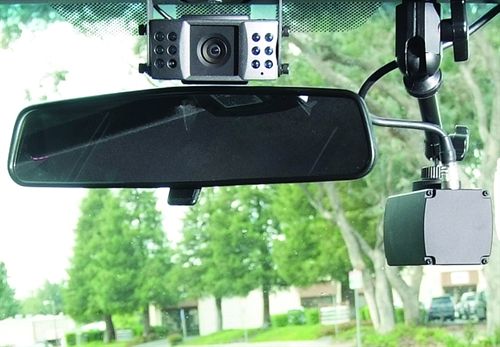 Video recording in commercial vehicles: The NTSB wants the Federal Motor Carrier Safety Administration to “require all heavy commercial vehicles to be equipped with video event recorders that capture data in connection with the driver and the outside environment and roadway in the event of a crash or sudden deceleration event.” These recordings would supposedly be triggered only in the event of an accident, but it means that active video monitoring equipment would become standard on all commercial vehicles. This may sound fine if you don’t drive a commercial vehicle, but what is standard in commercial vehicles one day may become standard in all vehicles the next.
Video recording would, no doubt, make it easier to see who is at fault in an accident, or help prevent them (should they choose to monitor videos), but at the complete cost of personal privacy. Using this logic, a gov’t agency could begin requiring cameras to be installed in every home because it could help solve burglaries or domestic disputes. The tradeoff is, of course, that you’d be constantly watched.
Auto-shutoff for devices that come within driver reach: The proposal goes further though, asking the CTIA and CEA (Consumer Electronics Association) to: “Encourage the development of technology features that disable the functions of portable electronic devices within reach of the driver when a vehicle is in motion; these technology features should include the ability to permit emergency use of the device while the vehicle is in motion and have the capability of identifying occupant seating position so as not to interfere with use of the device by passengers.”
Yes, the NTSB wants there to be GPS-like technology in cars that somehow disables any electronic device if it comes within reach of the driver when a vehicle is in motion, but somehow will allow emergency use as well. For this to happen, we’d need far more precise GPS technology and a transmitter located somewhere around the steering wheel of a car. It seems unlikely that even GPS III (coming May 2014) will be able to provide accurate enough data to prevent a driver from accessing an electronic device but enable it for use by passengers. And as PC Mag points out, what if you place your devices on the dashboard or in the space between the front seats, as most of us do? That’s essentially centered between a driver and passenger.
Some good stuff too: Many of the suggestions sound reasonable and good, like improving vehicle collision warning systems and ensuring that those checking up on drivers are qualified to do so. (Read the full list of recommendations.)
What would be banned
Since the full report is still weeks away and the NTSB’s bombshell is vague, at best, here’s my best guess as to what you would and would not be able to do should any state take this full proposal seriously.
No MP3 players: With CDs on the decline, the only way many people listen to music in the car is through their smartphone or MP3 player, which are often the same thing.
No phone use: You cannot operate a cell phone while driving a vehicle. This means no phone calls, texts, emails, apps, nothing.
No hands-free phone use: While this isn’t expressly stated in the NTSB’s ban it isn’t omitted and would be covered using the proposal’s broad language. A 2004 case involving a hands-free cell phone call causing an accident is also cited by the agency. CNN‘s report seems to confirm that no hands-free devices will be allowed. This means no Bluetooth headsets either.
No

What would be allowed
While we know what’s not allowed (pretty much everything), figuring out what is allowed is remarkably difficult. Here’s what I’ve pieced together.
Manufacturer installed electronics: CNN reports that “devices installed in the vehicle by the manufacturer” would be allowed, but this is not stated in the NTSB’s release. We suppose this means that you could still use your car’s radio, CD player, or, if you have a newer car with something like MyFord Touch, you can browse through a colorful 6-inch display of apps and do just about anything.
GPS devices: The report gives an exception to electronics “designed to support the driving task.” We assume that GPS devices would be a part of this. Other services, like OnStar, could be covered under this or the “manufacturer installed electronics” section.
Where it gets confusing
The NTSB’s full report isn’t out yet and we have a lot of big questions.
Smartphones and tablets: The problem with the NTSB’s proposal is that it’s clearly targeting smartphones as a whole, when it should really only be targeting specific actions on a phone, like texting, emailing, or browsing. Banning the devices entirely is harmful to many drivers as a
Tablets and computers: While I don’t condone using a tablet or computer in the car all the time, if you have one that can connect up to a cell signal and you need to use it for GPS or another useful function, then it should be allowed.
Taxi Cabs: Taxis almost always have something resembling a little laptop and a big screen showing how much money you owe. This is not installed by the manufacturer of the vehicle, to my knowledge, and is often used by drivers as they’re on the move. There are plenty of other examples of strange, but needed electronics in vehicles. These are all just as distracting.
If we’re going to be silly, then let’s just ban everything
The NTSB has our best interests in mind, but I’d imagine that many people who write bad proposals have good intentions. This proposal is intended to protect people from themselves and reduce distracted driving, but it’s far too broad and could very well harm the driving experience, and our freedom, more than it will help.
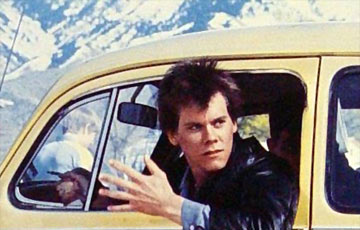 The film Footloose–which I do not endorse as a particularly great movie–is about a small town whose City Council bans dancing and rock music because a group of teenagers got in a car accident after attending a dance until Kevin Bacon moves to down and sets things straight. It’s a silly plot, but seems oddly relevant to this discussion. The problem wasn’t the dancing and the rock music, it was that the kids were acting irresponsibly while driving. Smartphones and electronics aren’t to blame and shouldn’t be banned from vehicles. But we do need to punish those who abuse them and cause problems for others on the road. It’s a difficult problem that we, as a society, need to deal with, but eliminating technology entirely isn’t a good solution: It’s a drastic overreaction and it won’t solve these problems.
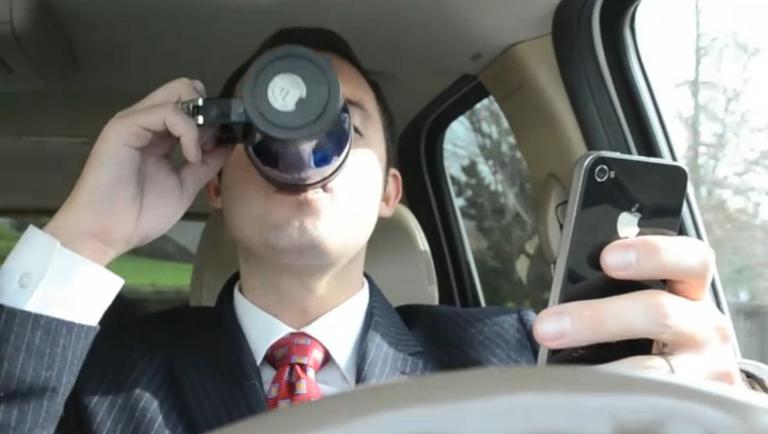
If the NTSB really wants to eliminate distracted driving, it shouldn’t merely single out electronics. There are a ton of activities that are distractions while driving. Maybe the government should ban us from eating, drinking water or pop, smoking, talking to passengers, having kids, listening to music, fiddling with the air conditioner, rolling windows up and down, looking down to check your speed, being a teenager, and, worst of all, thinking while driving. A teenage driver listening to Justin Bieber is always dangerous. Whether it’s coming from the radio or a
The problem isn’t smartphones or gadgets: it’s us. We don’t take driving seriously enough and even those who do can’t avoid all distractions. Perhaps we do need our roadways full of self-driving Google cars after all. At least then we could drink a coffee without fear of causing an accident.