1. Home
  2. Emerging Tech
  3. Health & Fitness
  4. News

Genetically modified mice could help us sniff out explosives and diagnose diseases

Add as a preferred source on Google

Could genetically-modified mice be used to sniff out everything from land mines and other explosives to diseases like Alzheimer’s and Parkinson’s?

That’s the dream of a new project unfolding at Hunter College in New York City, created by neurobiologist Paul Feinstein. Professor Feinstein has spent much of his career exploring the way in which odorant receptors form on the surface of neurons within the olfactory system. Each olfactory neuron has a singular receptor that specializes in a particular smell. Feinstein’s idea is that mice could be made to develop one especially powerful odor receptor: making that particular rodent up to 100x better at detecting specific odors.

Recommended Videos

“A lot of diseases probably elicit new odors in your body, some of which you might detect and others which you might not,” Professor Feinstein tells Digital Trends. “For example, one odor we know exists is the odor for tuberculosis in sputum samples. APOPO, which is a non-profit organization working in Africa, uses rats to seek out tuberculosis, as well as to search for land mines. What we want to do is to take these rodents and make them pay attention, or be more inclined to recognize, one particular odor.”

To make his mice better at “sniffing out” certain scents, Feinstein and his colleagues developed a DNA string that can can injected into a fertilized mouse egg — thereby making it more likely that the mouse will develop large quantities of specific olfactory neurons.

Right now, Feinstein’s work is still in the research stages. However, in the medium-term he thinks it could be used to create a sort-of “nose on chip” archive. “[We want] to create a library of mouse sensors that each express one human odour receptor, and then to extract the cells from the mice and put them onto a chip so the chip can read out odor signals that will activate those receptors expressed from the cells,” he says.

This work could have a broad range of applications. “If we can make an array of receptors from our mouse sensors on a platform technology like a chip we think we could use that as an odor detection grid — meaning that when a patient starts getting sick we think there’s a code in terms of specific odors which are released by the body,” Feinstein continues. “We think we could diagnose this through non-invasive measures like blood, saliva, urine or sweat. It could be a very powerful diagnostic tool for disease onset or progression.”


Luke Dormehl
I'm a UK-based tech writer covering Cool Tech at Digital Trends. I've also written for Fast Company, Wired, the Guardian…
Google just canceled its AI Studio mobile app, and it’s not all bad news
Logo, Symbol, Disk

Google AI Studio was on track to make its way to Android and iPhone, giving developers and AI enthusiasts a dedicated place to build prompts and experiment with Google's latest models from their phones.

That's no longer happening. In a post shared by the official Google AI Studio account on X, Google confirmed that it's canceling the standalone AI Studio mobile app before launch. The announcement comes despite the company saying nearly 800,000 people had already pre-ordered the app across iOS and Android.

Read more
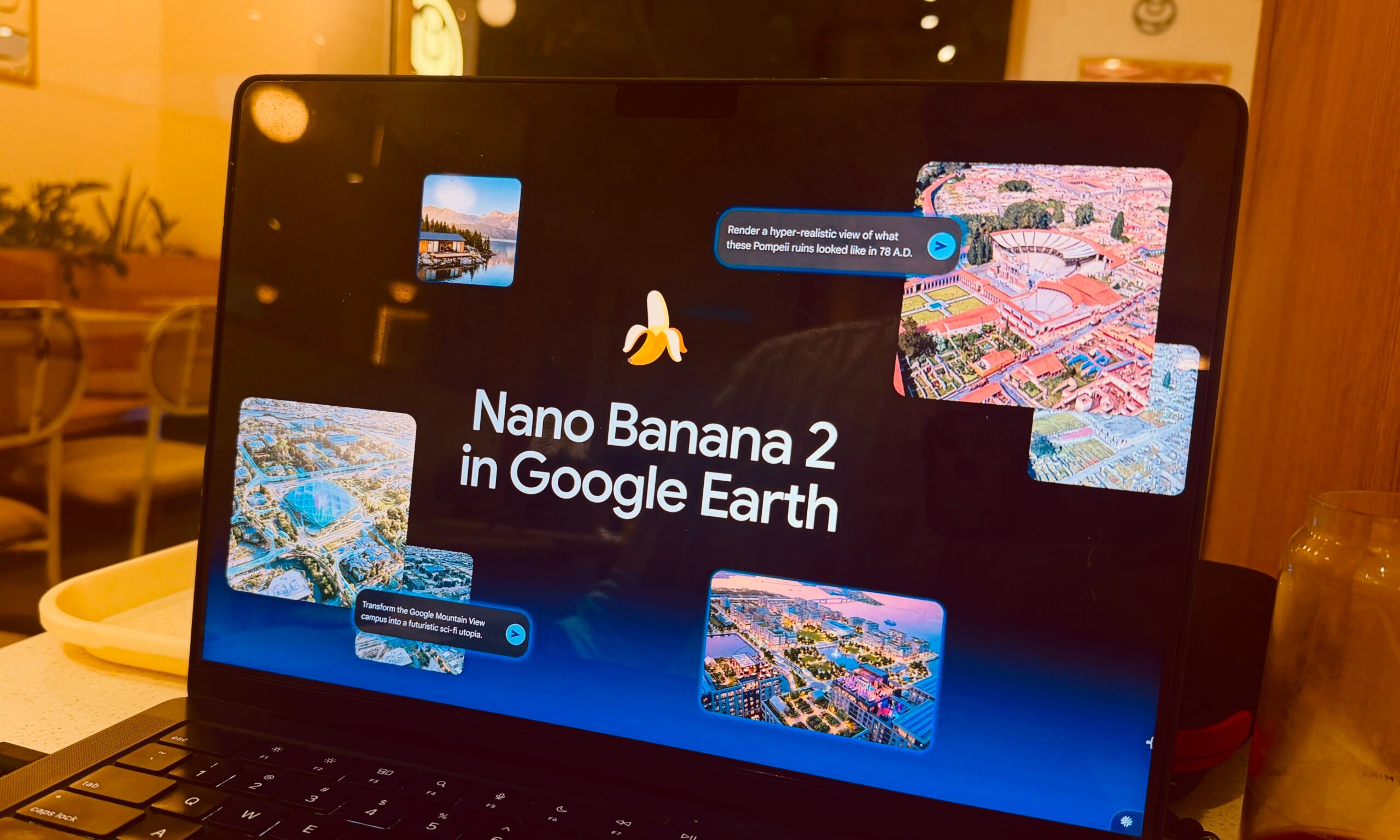
Google Earth’s AI misadventure lasted only a day. It was a tale of dangerous ignorance.
Nuclear reactors, tanks, and historical destruction on a life-like satellite map? Yeah, that's bad.
Nano Banana AI image generator representation.

Technology behemoths are clearly not reading the room, or they are just moving faster than they should when it comes to AI deployment. Google has already stuffed its Gemini AI in every corner of its software stack, from Android to daily productivity tools like Gmail that are used by hundreds of millions of users every day. AI is everywhere. Not all of it is bad, mind you. But in a few places, it just feels forced.

In its latest AI-fication experiment, the company targeted Google Earth. The idea was to let the audience use its Nano Banana 2 AI image generator and make images that can be placed on the map view. On paper, it's a cool idea. What would the Colosseum of Rome look like in your urban neighborhood? Yeah, fun stuff like that.

Read more
Google’s new AI gives robots better balance, smarter hands, and teamwork capabilities
Google just made robots a lot less clumsy and a lot more helpful.
Gemini robotics 2.0

Google DeepMind just brought sci-fi robots closer to reality, and it is very exciting. Building on its original Gemini Robotics model, the company has introduced Gemini Robotics 2, an AI system designed to help robots think, move, and even work together. Unlike most robots today, which rely on pre-programmed routines or someone controlling them remotely, this new system lets robots figure things out on their own when situations get unpredictable.

Can robots finally handle whole-body tasks?

Read more