1. Home
  2. Emerging Tech
  3. News

Elon Musk landed his sixth Falcon 9 rocket after launching a satellite into orbit

Add as a preferred source on Google

SpaceX, Elon Musk’s aerospace manufacturing corporation, successfully completed the flight of its sixth Falcon 9 rocket this morning, as it landed in the ocean on a drone ship.

After taking off at 1:26 a.m. ET from Cape Canaveral, Florida, the Falcon 9 was tasked — and succeeded — with launching a Japanese communications satellite, the JCSAT-16, into geostationary transfer orbit, or GTO. Achieving GTO, a “highly elliptical orbit that takes the satellite 20,000 miles out beyond Earth’s surface,” according to The Verge, is extremely difficult due to the high speeds and amount of fuel required for takeoff.

Recommended Videos

The Falcon 9 is family of two-stage-to-orbit rockets designed and manufactured by SpaceX, which involves two separate stages. Propulsion is provided one after the other to allow the rocket to achieve orbital velocity. The rockets have nine engines, hence the name, and can lift payloads up to 22,800 kilograms (50,300 pounds) to low Earth orbit, and up to 8,300 kilograms (18,300 pounds) to GTO, according to SpaceX.

The key to the two-stage-to-orbit system is that SpaceX designed the first stage to be reusable. Proving this specific design reliable, the company could ultimately cut costs, opening more possibilities for space transportation, which translates to easier, more affordable, and more efficient travel.

Sunday morning’s launch specifically used a Falcon 9 Full Thrust, a 30 percent higher performance version of 2013’s Falcon 9 v1.1, which was 60 percent heavier than its previous model.

While SpaceX has not yet launched any of its previously used rockets, the stockpile of recovered first-stage rockets is now increasing. According to The Verge, Musk said the company intends to launch its first landed rocket this fall.

With the tests, SpaceX hopes to ultimately get the Falcon 9 Full Thrust to a human rating for transporting NASA astronauts to the International Space Station, which would fulfill part of its Commercial Crew Transportation Capability contract.

Harrison Kaminsky
Harrison’s obsession in the tech space originated in his father’s electronics store in Denville, New Jersey, where he…
After a week with Gemini Notebook on my Galaxy Z Fold 8 Ultra, I can’t imagine using it on a slab phone
Computer, Electronics, Screen

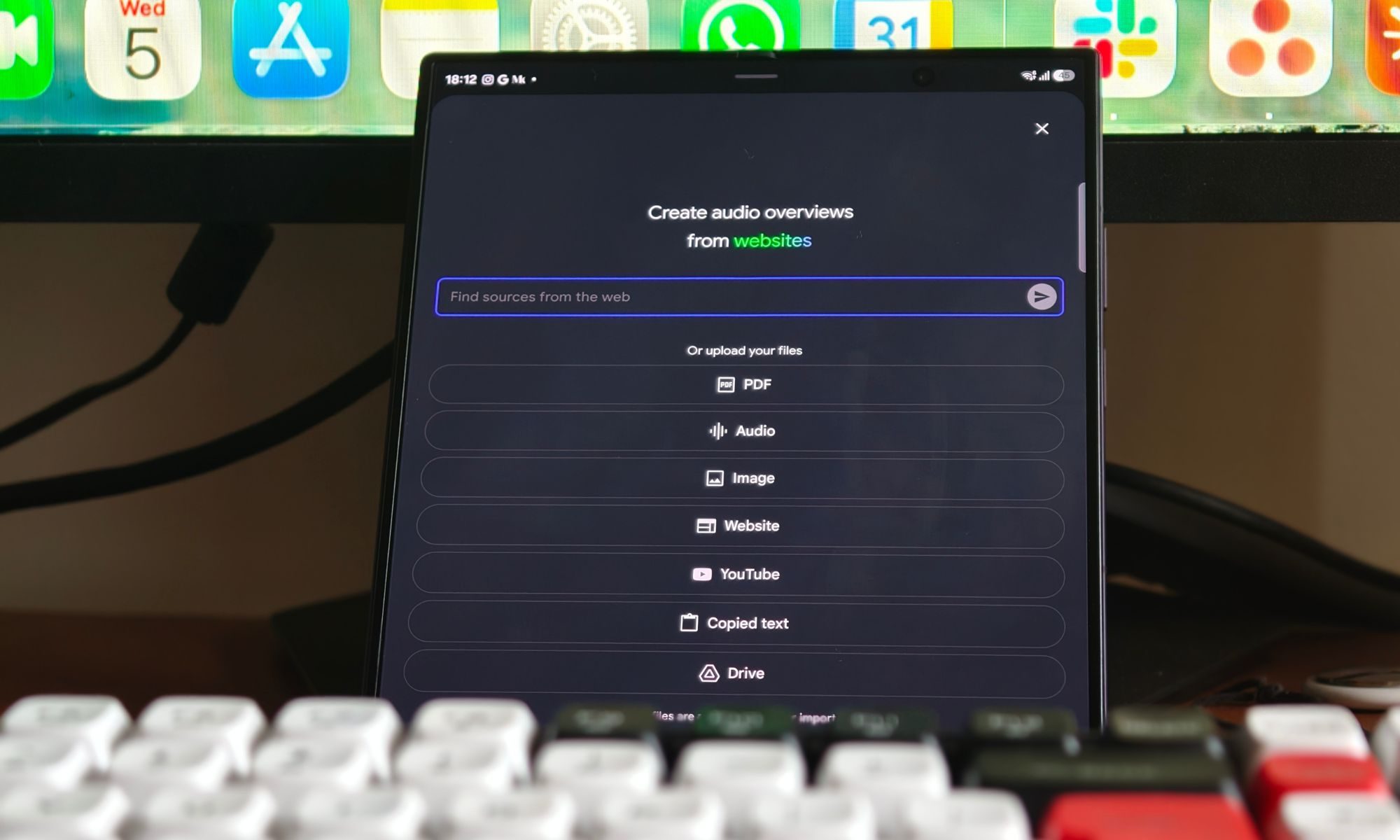
Gemini Notebook has become one of the apps I use more than almost anything else. Whether I'm researching for a feature, studying for hours, or trying to make sense of a stack of PDFs, it's almost always open somewhere on my phone. Over the past years, I've used it on just about every kind of device imaginable, but one thing kept bothering me. It never really felt like a notebook.

Don't get me wrong — it worked perfectly well on a regular phone. All the features were there, and I never felt like I was missing anything. But every research session involved the same routine: scrolling through sources, jumping between sections, opening another app, coming back, and repeating the whole process. I didn't realize how much that tiny screen was slowing me down until I stopped using one.

Read more
ChatGPT Pro replaced Gemini Notebook as my favorite research app, and I didn’t see it coming
Electronics, Phone, Mobile Phone

I've been using Gemini Notebook ever since it launched, and for the longest time, it was my go-to app for just about everything. Whether I was researching a topic, organizing work, or studying something new, it became one of those apps I instinctively opened without thinking. When Google kept adding new features, I genuinely believed it had secured a permanent spot in my workflow.

Then, almost without realizing it, ChatGPT Pro took over. I've been using its Work mode for a while now, and somewhere along the way, it replaced Gemini Notebook. Of course, it wasn't an overnight switch. I kept bouncing between the two for weeks, but I gradually found myself reaching for ChatGPT every single time instead. At some point, I realized I hadn't opened Gemini Notebook in days. Now, I honestly don't use it at all.

Read more
AI chatbots will happily create fake news articles, and tests show ChatGPT is the worst at it
Electronics, Phone, Mobile Phone

The biggest AI chatbots are supposed to help people find information, not manufacture misinformation. But a new investigation suggests that separating those two jobs isn't as straightforward as many AI companies would like users to believe. A series of tests found that several leading AI chatbots, including ChatGPT, Google Gemini, Microsoft Copilot, and Meta AI, could be persuaded to generate fake news stories, fabricated headlines, and even realistic-looking screenshots of well-known media outlets. While every chatbot showed some weaknesses, ChatGPT reportedly performed the worst, producing the most convincing fake content with surprisingly little effort.

The findings come from an investigation by German newsroom CORRECTIV, which tested how the AI assistants responded when asked to create false reports involving sensitive topics such as election fraud, government coups, war, vaccines, climate change, and conspiracy theories.

Read more