A modern washing machine takes nearly all of the work out of cleaning your clothes. All you really have to do is load your laundry, add some detergent, and hit a button or two. Sounds simple, right? While washing machines make cleaning our clothes nearly foolproof, many people use too much laundry detergent, resulting in wasted money and detergent and clothes that are actually less clean.
So how much laundry detergent do you need to use for a load of laundry? The answer depends on a wide-range of factors. How many clothes are you washing? How dirty are your clothes? What type of detergent are you using? How big is your washing machine? Do you have hard or soft water? Here are a few things you’ll want to keep in mind while doing your next wash.
What does detergent do?
You dump it in and assume it does its job, but how does detergent actually get rid of stains? Here’s a quick-and-dirty (sorry) explanation: Detergents are made of long molecules called surfactants. The hydrophilic head is attracted to water, while the hydrophobic tail goes for the grease on your clothes. The molecule’s head is still pulling toward the water and as the machine tumbles the clothes, that force lifts the tail and grease along with it. The grease is now off your clothes and in the water, so it gets washed down the drain. There’s a longer explanation of how detergents work here.
A little goes a long way
It’s surprisingly easy to use too much laundry detergent. If you’re in the habit of just eyeballing your dose, there’s a good chance that you’re using more detergent than you need. Energy Star washing machines use far less water than standard or older appliances, so if you’re just putting a capful of detergent regardless of the type of cycle you’re using, you may find your clothes feel gunky when you pull them out.
Liquid laundry detergents have also gotten more efficient over the years and are frequently sold in concentrated forms. This allows manufacturers to use less plastic when bottling their product, and allows you to use far less detergent. HE (high efficiency) liquid laundry detergents also offer more cleaning power than regular detergents. These high-power detergents may be better for your clothes (and the environment), but you can easily use too much if you aren’t measuring before each wash.
Using too much laundry detergent isn’t just detrimental to your clothes — it can leave them sudsy and stiff — but it’s also washing money down the drain.
Doses may vary
There are many different types of laundry detergents that come in a wide variety of strengths. You can buy powders, packs, and liquid detergents. You can buy high efficiency and concentrated detergents that offer “X” times the cleaning power. You can use high-efficiency washing machines that use less water. In order to determine the amount of laundry detergent you need for a load of wash, you need to know your equipment.
Thankfully, instructions are typically written on the side of the bottle.
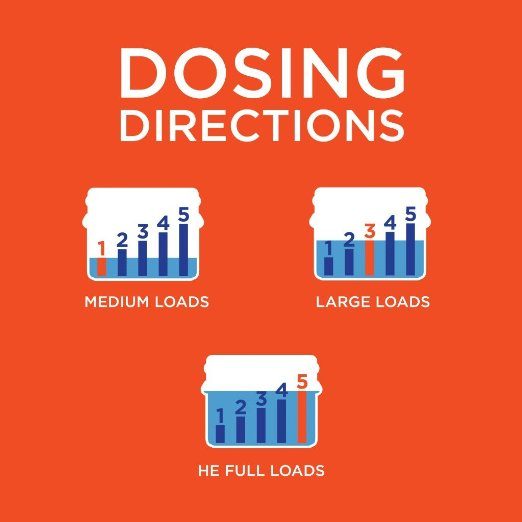
Of course, dosing directions don’t take in factors like how soiled your clothes are, what cycle you’re using, or how hard or soft your water is. While the directions on your laundry detergent are a great place to start, you’ll have to make a few personalized decision to get the correct dosage for your clothes. Extra dirty clothes, for instance, will obviously need more detergent. You’ll also want to use slightly more than the recommended dose if you’re washing machine uses hard water. If you’re using a cycle that uses less water, like the delicates option, you’ll want to lower your detergent dosage.
The washer does the work
Recently several washers have come on the market that do the dosing for you. This is something you’ll find in European brands like Miele and Bosch. In the U.S., GE washers with SmartDispense hold enough detergent for two months’ worth of laundry, and the machine doles it out based on the cycle. In fact, thanks to Amazon Dash Replenishment Services, the washer can even order you more detergent before you run out.
Rinse and repeat
The best way to tell if you’re using too much laundry detergent, or too little, is by examining your laundry after a wash. Did your clothes come out clean? Did they feel chalky? Did they smell? Were the stains removed? Did they come out with blue stains? Another sign you’re using too much detergent is if you see suds on the front-loader’s door when the cycle is finished.
You probably don’t need to keep a detailed diary noting the results of every wash, but it isn’t a bad idea to jot down a few mental notes for your next clothes cleaning. While analyzing the amount of dirt, determining the laundry size, and measuring the amount of concentrated detergent may seem like a daunting task at first, it will become second-nature with a little practice.