1. Home
  2. Computing
  3. News

SSD prices rise as NAND flash supply fails to keep pace with demand

Add as a preferred source on Google

The PC market has been in something of a funk for the last few years, with annual PC sales falling and only premium notebooks and 2-in-1 devices showing any signs of life. That’s starting to turn around, however, as analysts report that the PC market should stabilize over the next few years.

Other signs of general strength remain, such as recent component shortages that indicate there’s strong demand for PC components. Whether it’s batteries, displays, or solid-state drives (SSDs), notebook manufacturers have been struggling to get enough parts. Now, another component is showing some stress, as supply of the NAND flash memory used in SSDs is starting to come up short, Ctimes reports.

Recommended Videos

More: Laptop makers are hitting brick walls thanks to hesitant component suppliers

For quite some time now, SSD prices have continued to fall, making the much faster storage devices increasingly competitive with their slower spinning disk alternatives. However, with NAND flash demand beginning to outstrip supply, that value proposition is being challenged.

NAND flash is also used in smartphones, which helps explain the rise in demand and subsequent shortage in supply. In addition, the industry’s transition from 2D-NAND to 3D-NAND has contributed to reductions in manufacturing capacity, although that should have only a short term impact on prices.

According to market researcher DRAMeXchange, NAND flash revenue is up 19.6 percent in the third quarter of 2016. As Sean Yang, research director, puts it, “The NAND Flash market outlook for the fourth quarter of 2016 indicates that NAND Flash supply will be under greater strain with the advent of the peak shipment season for end devices. Therefore, contract prices for various NAND Flash products will see larger increases, which in turn will take suppliers’ revenues and operating margins to new highs for this year.”

What all this means is that if you want to buy an SSD to upgrade an existing system, then you might want to go ahead and pull the trigger today. Prices are likely to continue to go up in the near term, and at least until 3D-NAND manufacturing gets a chance to catch up. It also means that PC supply could remain constrained, just in time for the holiday season.

Mark Coppock
Former Computing Writer
Mark Coppock is a Freelance Writer at Digital Trends covering primarily laptop and other computing technologies. He has…
This experiment shows how easy it is to poison an open-weight AI model for under $100
This research raises new doubts about trusting open weight AI models.
Computer, Electronics, Laptop

Open-weight AI models have been having a moment lately. Just this month, Moonshot's massive Kimi K3 model landed close behind Claude Fable 5 and GPT 5.6 Sol in several benchmarks, all while remaining fully open-weight and downloadable by anyone.

However, Katie Paxton-Fear, a cybersecurity lecturer at Manchester Metropolitan University and staff security advocate at Semgrep, managed to poison an open-weight model and proved how easily that openness can be turned against you (via The Register).

Read more
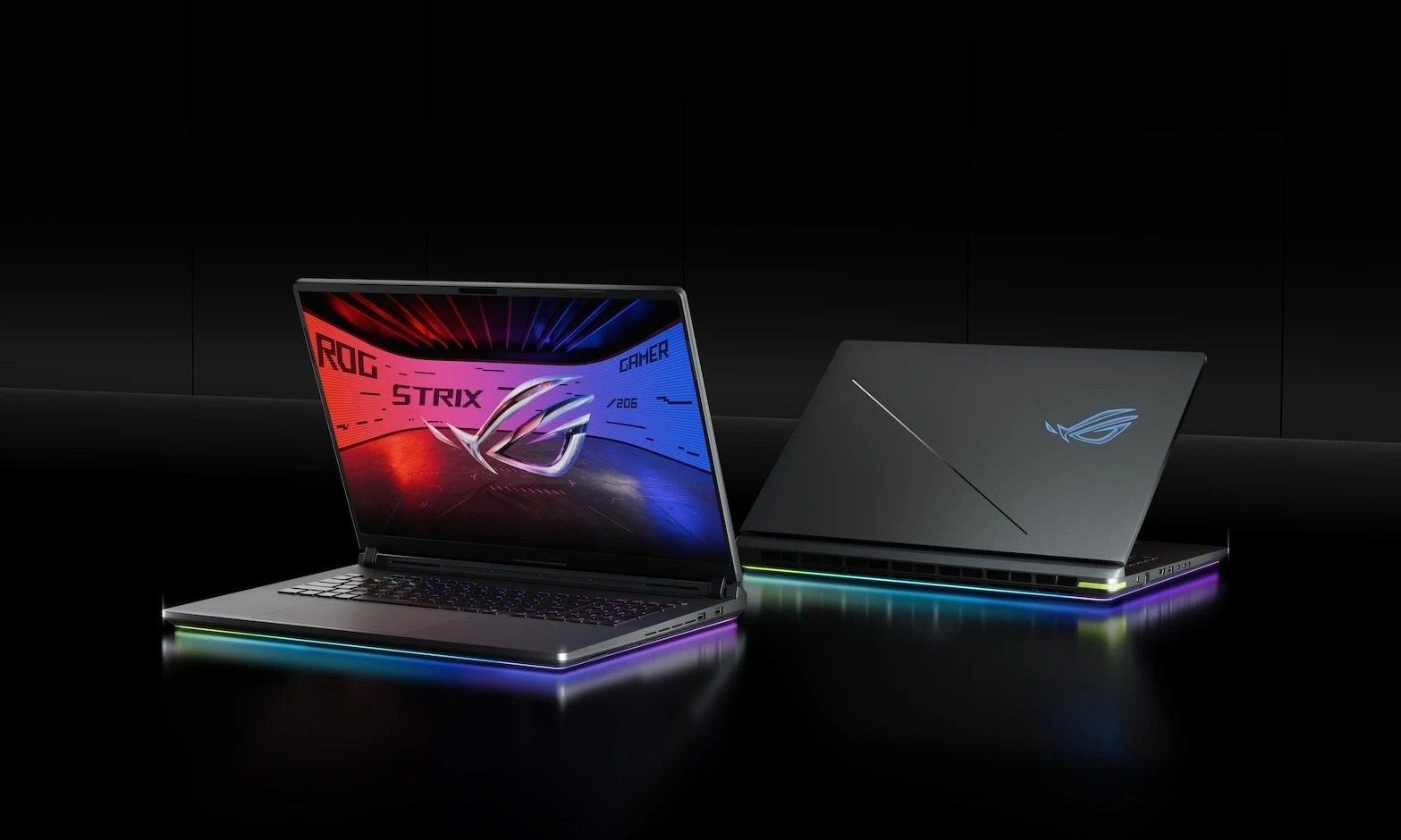
Asus’ powerful new gaming laptop with a 240Hz Mini LED display makes its global debut
The 2026 ROG Strix G18 pairs up to RTX 5080 graphics with an Intel Core Ultra 9 290HX Plus CPU
ROG Strix G18 (2026) laptop

Asus has started rolling out the 2026 ROG Strix G18 globally, and the easiest way to describe it is as a slightly toned-down version of the ridiculous ROG Strix Scar 18. It keeps the same 24-core Intel Core Ultra 9 290HX Plus processor but tops out at an Nvidia GeForce RTX 5080 Laptop GPU instead of the Scar’s RTX 5090. (via Notebookcheck)

The Mini LED model gets the best balance

Read more
Every app on my phone has decided I need AI, and none of them bothered to ask
AI assistants are invading everything from photo libraries to messaging apps, and dismissing them only seems to guarantee they’ll return later.
Electronics, Phone, Mobile Phone

My wife doesn’t use AI very much. She isn’t philosophically opposed to it, nor is she waiting for the machines to overthrow civilization. She simply opens Google Photos because she wants to look at her photos.

Lately, however, the app keeps greeting her with invitations to try its AI tools. Google would very much like her to search her library conversationally, generate something new, or ask Gemini to edit a photo. She dismisses the prompt, gets on with her life, and eventually meets it again.

Read more