1. Home
  2. Cars
  3. News

Update: Ludicrous+ sends Tesla Model S P100D to 60 mph in 2.41 seconds

Add as a preferred source on Google

Tesla Motors’ latest over-the-air software update includes an Easter egg that makes the P100D variants of the Model S and the Model X even faster.

Announced late last year by company boss Elon Musk, the update adds a new driving mode named Ludicrous+ that unlocks about 33 extra horsepower. As a result, the Model S hits 60 mph from a stop in as little as 2.4 seconds, faster than the 2.5-second time recorded in Ludicrous mode. To put that figure into perspective, the acceleration time on the S is in the same ballpark as that of high-end supercars like the McLaren P1, the Ferrari LaFerrari, and the Bugatti Chiron.

Recommended Videos

The Tesla Racing Channel‘s P100D hit 60 mph from a standstill in 2.41 seconds. Musk predicted on Twitter that a 2.34-second 0-to-60 time might be achievable using Motor Trend’s testing procedure, which subtracts a 1-foot rollout from every run. The magazine hasn’t tested the car yet, however.

To engage Ludicrous+ mode, owners need to go into the settings menu and hold down the blue Ludicrous button for at least five seconds, according to British magazine Auto Express. They’ll then see a message that warns the new high-performance mode can cause accelerated wear on the motor, the gearbox, and the battery pack. They accept the risk by pressing “yes, bring it on!”, or go back by hitting “no, I want my Mommy.”

With Ludicrous+ mode engaged, the Model S P100D is the quickest regular-production car on sale anywhere in the world. The Model X’s 0-to-60 time also improves, though Tesla hasn’t revealed how fast the crossover takes to reach freeway speeds. However, it’s expected to be a little bit slower than its sedan counterpart because it’s heavier.

Faraday Future’s recently unveiled FF91 concept out-sprints the Model S by just two tenths of a second if we take Tesla Racing Channel’s recorded time into account, but it’s still a prototype that’s not slated to enter production for at least another year. Time will tell whether Faraday can take the acceleration crown from its rival.

It’s unclear how much faster the Model S can get, but Tesla has previously hinted the next generation of the Roadster will get a new mode named Maximum Plaid that will be even faster than Ludicrous.

Updated on 01-13-2017 by Ronan Glon: Added 0-to-60 time recorded by Tesla Racing Channel, Tweet from Elon Musk about projected 2.34-second sprint. 

Ronan Glon
Ronan Glon is an American automotive and tech journalist based in southern France. As a long-time contributor to Digital…
Volvo is rolling out Apple Music to over 2 million cars with a simple OTA update
Your Volvo may soon get Apple Music without needing CarPlay
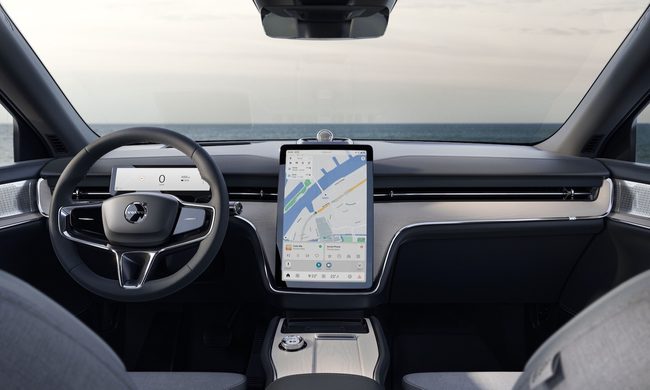
Interior view of the 2024 Volvo EX90.

The line between your smartphone and your car continues to blur. Volvo has announced that it is rolling out an over-the-air software update that brings Apple Music directly to the infotainment systems of more than 2 million vehicles worldwide. Instead of relying on Apple CarPlay or plugging in an iPhone, eligible drivers will be able to stream music natively from their car's built-in system, making Apple Music another integrated feature of Volvo's software experience.

The update is arriving for a wide range of Volvo models, including the EX90, ES90, XC90, S90, V90, XC60, S60, V60, XC40, EX40 and EC40, covering model year 2020 onwards. Availability, however, may vary depending on the vehicle.

Read more
Chery’s latest EV packs flagship tech for the price of a base Tesla, but you can’t buy it
Here's everything packed into Exeed's 2027 Exlantix ES, from its 27-sensor autonomous driving suite to its 860 km range, all starting under $31,000.
Car, Transportation, Vehicle

Chery's premium arm just dropped a sedan that makes you wonder why American EVs cost twice as much for half the tech.

Exeed's 2027 Exlantix ES ships with a driver-assist system called Falcon 700. It is built around an Nvidia Orin-Y chip and a genuinely stacked sensor suite.

Read more
A new AI model wants self-driving cars to think before they swerve
Forget guessing games, this self-driving AI actually shows its work.
Self driving car

Self-driving cars have gotten pretty good at driving. The harder problem is teaching them to drive safely in situations nobody planned for. We have heard horror stories of self-driving cars, behaving erratically in emergency situations, often times delaying first responders from reaching the scene.

A team at Seoul National University, led by professor Jun Won Choi from the Department of Electrical and Computer Engineering, thinks they have cracked part of that puzzle with a new AI model called SafeDrive. The research was recently selected as a highlight paper at CVPR 2026, a distinction that goes only to roughly 3% of all submissions.

Read more