1. Home
  2. Emerging Tech
  3. Photography
  4. News

Consumer drones could carry more with twice the rotors, NASA experiment suggests

Add as a preferred source on Google

Want to design a quadcopter that can lift heavier DSLR cameras or actually deliver packages? Just make it an octocopter, a new experiment from NASA suggests.

Earlier this month, NASA used its computer model stimulation software at the Ames Research Center in California to analyze the airflow for the popular DJI Phantom 3 quadcopter. The simulation shows how the air moves around the drone, with the color red indicating high pressure and blue illustrating low pressure.

Recommended Videos

While the footage may be mesmerizing to watch, it also led NASA to a few conclusions about the next generation of consumer aerial vehicles. The Phantom 3’s X-shaped body and four rotors allow the quadcopter to carry it’s own 1,280g weight with a built-in camera for up to 25 minutes. The drone’s four rotors create enough thrust to lift the unmanned aircraft off the ground.

NASA simulated how the drone’s capabilities would change if there were eight rotors instead of four. Doubling the rotors nearly doubled the level of thrust that the drone produced — suggesting drones with more rotors could carry heavier loads than the more common four-rotor aerial vehicles.

The compute- generated experiment suggests that drones could be used to transport cargo by increasing the amount of thrust with eight rotors. NASA isn’t alone in its thinking — DJI’s latest cinema-level drone, the Matrice 600 Pro, uses six rotors. And E-Volor recently proved that an 18-rotor drone could lift the weight of a human.

NASA presented the computer simulation at the 2017 American Institute of Aeronautics and Astronautics SciTech Forum earlier this month. Along with exploring options for creating more thrust, NASA has conducted several drone experiments recently. Using the same drone as in the computer generations, NASA tested out-of-sight flights in October to help develop safety standards.


Hillary K. Grigonis
Hillary never planned on becoming a photographer—and then she was handed a camera at her first writing job and she's been…
Yet another study says AI is bad for elections, and the rabbit hole gets worse
AI may be an election bomb waiting for someone to light the fuse
Voters cast their ballots on Election Day

Another election, another study has concluded that asking an AI chatbot for political guidance is a spectacularly bad idea. Research conducted during Hungary’s 2026 parliamentary election found that ChatGPT and Google Gemini offered not just inaccurate but also inconsistent and unreliable voting advice. The chatbots misclassified voter profiles, overlooked relevant parties, recommended parties absent from the ballot, and sometimes produced materially different answers when given the same information repeatedly.

AI keeps failing the voter test

Read more
Samsung’s humanoid robot ambitions are real, but factories come first
Samsung’s new robotics division has humanoids in its sights, although its immediate business is far more practical factory automation
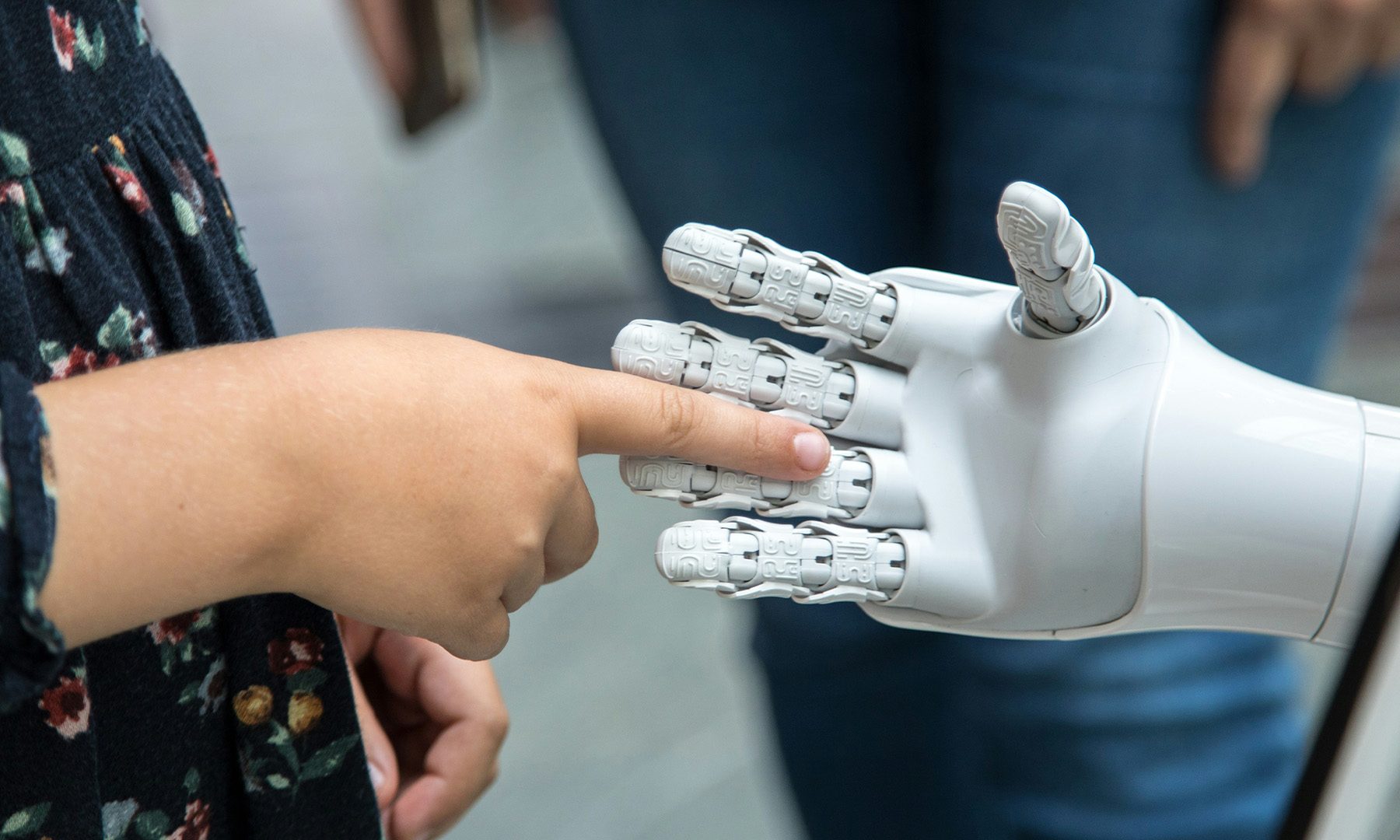
Robot Touch Human Finger

Samsung wants a place in the humanoid race, but its new robotics push begins with machines built for factories rather than homes.

The CEO-led RX robotics division will initially focus on manufacturing robots. Samsung has separately identified humanoids as a priority, although it hasn’t announced a commercial model or explained where one fits into the division’s immediate plans.

Read more
The future of AI may depend on this one behind-the-scenes change
Running Claude on Android.

Whenever a new AI model arrives, it's easy to get caught up in the bells and whistles. We talk about how much smarter it is, how quickly it answers questions, or how realistic its images have become. But here's the thing: none of that matters much if the AI can't reliably work with the apps and services people use every day.

That's why an upcoming update to the Model Context Protocol (MCP) caught my attention. It isn't a new chatbot or a fancy AI model. In fact, most people will never even know it's happening. But it could quietly make the AI ecosystem a lot healthier. If you've never heard of MCP before, don't worry. Think of it as a shared language that lets AI assistants safely talk to apps like Gmail, Slack, calendars, databases, and countless other services. Instead of every company inventing its own way to make those connections, MCP gives everyone a common rulebook.

Read more