Google launched its Daydream platform for Android in 2016, enabling specific Android phones to support virtual reality content. It followed that up with the Daydream View headset for those phones in October 2016. At Wednesday’s Google I/O keynote, it was revealed that Google is conjuring up a stand-alone mobile VR headset.
For starters, Daydream View requires a compatible smartphone to be physically inserted into the headset, which generates all the visual on-screen content. While the number of compatible phones is limited, Clay Bavor, vice president of Google’s Virtual Reality division, indicated that additional manufacturers such as LG have jumped on the Daydream bandwagon. LG will introduce a compatible phone later this year.
Samsung has its own Gear VR headset that works only with a handful of Galaxy smartphones, including the new S8 and S8 Plus, but come this summer, those two phones will also support Google thanks to a software update.
But the big surprise in Bavor’s announcement was that Google is working on a stand-alone mobile VR headset that doesn’t require a smartphone, a PC, or the associated cables. Google worked with Qualcomm to create a reference design that will be used by Lenovo and HTC. That’s right, the creator of the popular Vive headset for PC-based virtual reality is working on a mobile VR headset too.
“Vive will be making a stand-alone VR product for the Google Daydream Platform,” an HTC representative said after the reveal. “Vive represents the best VR experience in market, whether it is PC-powered or stand-alone devices. We’ve been working with developers and consumers for years to ensure Vive offers the best VR solution, no matter what form it takes.”
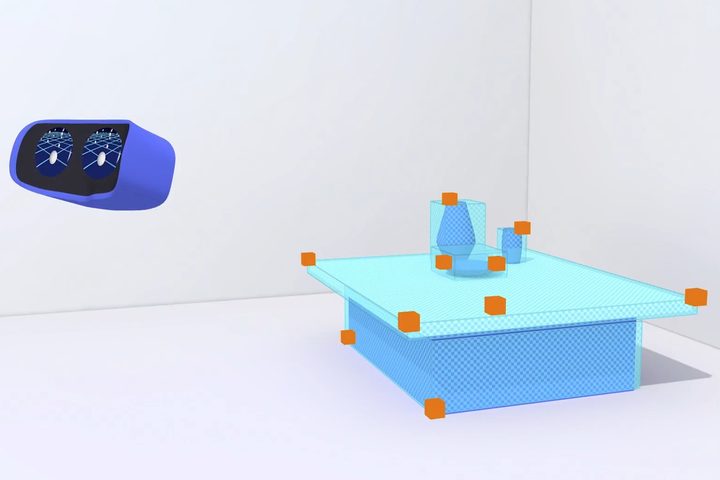
According to Bavor, getting into VR will be as simple as throwing the headset on. Since the hardware isn’t centered around a smartphone, the design is optimized for tether-free virtual reality. It uses what Google calls WorldSense, a precise positional tracking system that relies on a “handful” of sensors to keep track of the user’s surroundings. That eliminates the need for external sensors and a setup process to establish the playing area.
Of course, that also means users can move about and experience virtual worlds without having to worry about a tethered connection, or bumping into people and objects. Users will have the ability to jump, duck, weave, and do whatever they physically want without constraints. In turn, developers can create experiences that go beyond the traditional PC-based and phone-based limitations.
Lenovo and HTC aren’t coughing up the hardware specifics about their upcoming headsets, but they will share additional details soon. Both units will presumably rely on a Qualcomm Snapdragon processor based on the reference design mentioned by Bavor. HTC said that its model will provide “a deeper and more immersive portable VR experience than ever before.”
Headsets built by Lenovo and HTC will arrive in late 2017 to take on Microsoft’s Mixed Reality headsets for Windows 10. Lenovo said on Wednesday that it plans to offer an early preview of its upcoming Daydream-based headset, so stay tuned for that.