  1. Home
  2. Computing
  3. Emerging Tech
  4. News

Microsoft manages to cram artificial intelligence on the Raspberry Pi 3 PC board

Add as a preferred source on Google

The Raspberry Pi 3 is one of the most popular devices you can buy. For $35, this inexpensive all-in-one computer board can be used to power numerous projects ranging from miniature Linux-based PCs to gaming consoles and more. Now Microsoft reports that it built a device based on the Raspberry Pi 3 that uses artificial intelligence to hunt down pesky rodents.

The device was created by the head of Microsoft’s Machine Learning and Optimization group, Ofer Dekel. He discovered that squirrels were stealing flower bulbs along with seeds in the bird feeder in his backyard garden. Naturally, he couldn’t literally keep watch in the shadows and chase down the furry-tail rodents with his bare hands, so he came up with a plan.

Recommended Videos

Using his team located at the Redmond, Washington, research lab (he has one in India, too), they trained a computer-vision model to detect squirrels. The artificial intelligence was then deployed onto a Raspberry Pi 3 board inside a special device he mounted in his backyard. Thus, when a squirrel rears its head, the device will turn on the sprinkler system, thwarting the rodent’s thieving habits.

This backyard “project” is just part of Microsoft’s overall picture of an artificial intelligence-first world. “We’re moving from what is today’s mobile-first, cloud-first world to a new world that is going to be made up of an intelligent cloud and intelligent edge,” Microsoft CEO Satya Nadella said during the recent Build developer conference.

The big accomplishment in the squirrel-hunting project, according to Microsoft, was cramming a deep neural network onto an extremely small chip. Dekel and his team used “a variety of techniques” to compress the neural network, which is essentially “a class of predictors” inspired by our brains.

One technique is called weight quantization, capable of cramming more parameters into a smaller physical space. This compression enables the artificial intelligence to work faster, too. Additionally, Dekel’s group is examining a technique called pruning, which removes redundancies in neural networks. This has a double benefit: the ability to run a neural network on extremely small processors, and faster evaluation times.

However, the team wants to get artificial intelligence running on the smallest ARM-based processor to date: the Cortex M0. According to ARM, this processor has a “floorplan area” of 0.007mm squared. That’s very, very tiny, and will require the team to make its machine learning models up to 10,000 times smaller than what they’re compressing for the Raspberry Pi 3.

“There is just no way to take a deep neural network, have it stay as accurate as it is today, and consume 10,000 less resources. You can’t do it,” said Dekel. “So, for that, we have a longer-term approach, which is to start from scratch. To start from math on the white board and invent a new set of machine-learning technologies and tools that are tailored for these resource-constrained platforms.”

To see what the team is currently working on, early previews can be downloaded from Microsoft’s GitHub depot here. It also provides previews of the compression techniques and training algorithms.

Kevin Parrish
Kevin started taking PCs apart in the 90s when Quake was on the way and his PC lacked the required components. Since then…
Google Earth’s AI misadventure lasted only a day. It was a tale of dangerous ignorance.
Nuclear reactors, tanks, and historical destruction on a life-like satellite map? Yeah, that's bad.
Nano Banana AI image generator representation.

Technology behemoths are clearly not reading the room, or they are just moving faster than they should when it comes to AI deployment. Google has already stuffed its Gemini AI in every corner of its software stack, from Android to daily productivity tools like Gmail that are used by hundreds of millions of users every day. AI is everywhere. Not all of it is bad, mind you. But in a few places, it just feels forced.

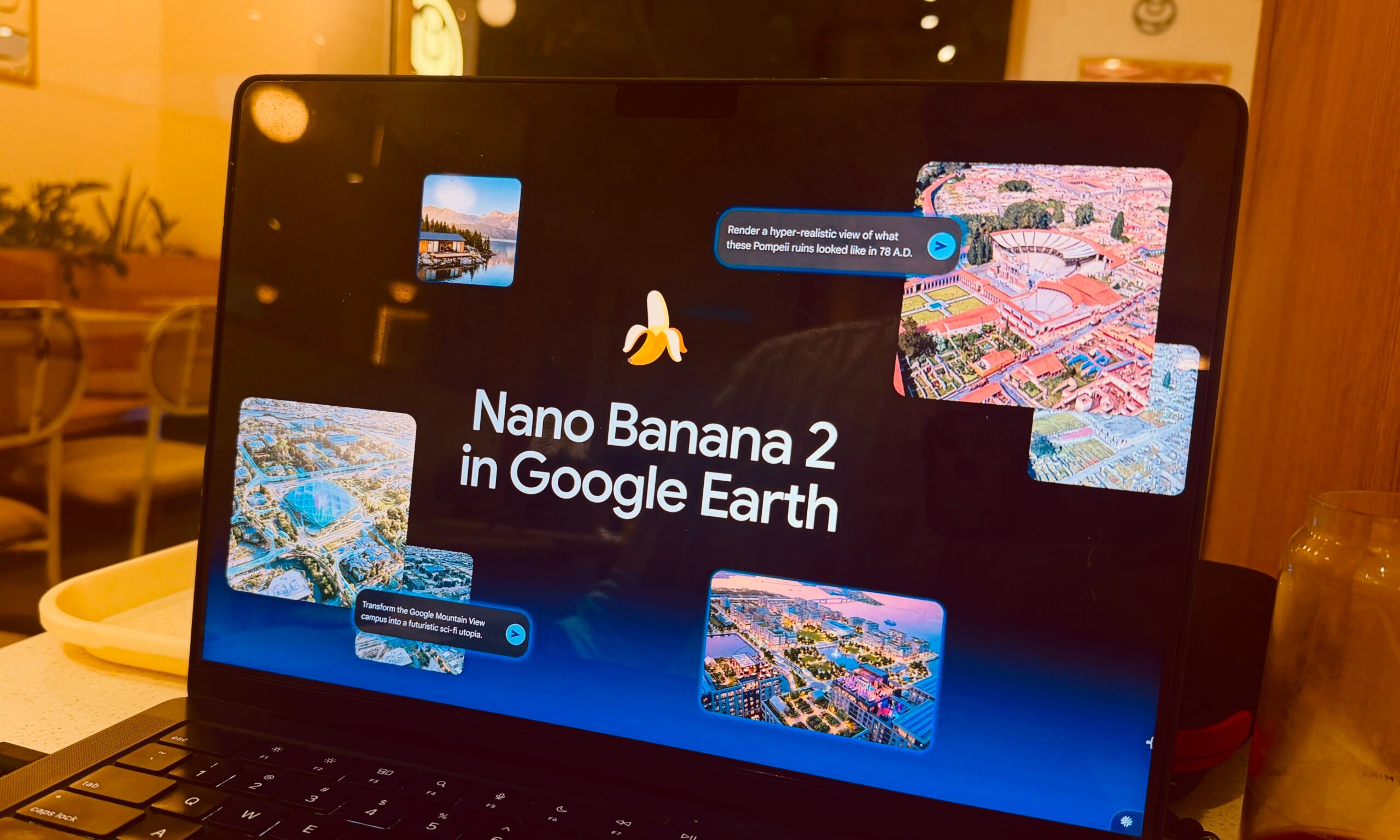
In its latest AI-fication experiment, the company targeted Google Earth. The idea was to let the audience use its Nano Banana 2 AI image generator and make images that can be placed on the map view. On paper, it's a cool idea. What would the Colosseum of Rome look like in your urban neighborhood? Yeah, fun stuff like that.

Read more
AMD is apparently gearing up to raise GPU prices right after Nvidia’s steep hike
AMD has reportedly told AIB partners about a price hike that goes into effect in. August.
AMD RX 7800

AMD is next in line to raise the asking price of its Radeon GPUs, merely days after the news of a similar hike coming for Nvidia graphics cards started making waves. As per ChannelGate on Weibo (h/t VideoCardz), AMD has informed its board partners that the price of GPU and memory bundles will go up by at least 10% in August.

Is a similar price hike coming for standalone graphics cards? I won't be surprised if that happens. The situation is so bad that AMD is planning to bring back graphics cards with 4GB of onboard memory. AMD just introduced the RX 9050 GPU, which costs $279. Notably, it's just $20 less than the RX 9060 XT that offers double the graphics memory.

Read more
Microsoft will make Windows work well with just 8GB RAM. We desperately need it
The dream of a reliable and affordable Windows laptop hinges on the next milestone at Microsoft.
Surface laptop on wooden table

The year 2026 has marked a huge course correction for Microsoft after years of frustrating users with plenty of confusing processes, unoptimized UI elements, and just the generous bloatware that can bring any Windows system to a crawl. Microsoft has finally shifted into a new phase. From fixing the right-click behavior to speeding up the Search system, the company has fixed plenty of papercuts.

The next major milestone is making Windows 11 run smoothly on Windows PCs with just 8GB of RAM. That directly means entry-level and budget laptops will at least get the basics right, even if that means sacrificing the on-device AI bells and whistles. Let's face it. The increasingly AI-first approach to computing on a Windows 11 machine is a little too taxing on the hardware at hand.

Read more