1. Home
  2. Audio / Video
  3. News

Audio-Technica ditches the headphone jack altogether with the ATH-DSR9BT wireless headphones

Add as a preferred source on Google

Remember when Apple’s announcement about dropping 3.5mm headphone jacks from its phones was a big deal? Well, headphone manufacturers are responding in force, and now Audio-Technica getting further involved with the launch of the ATH-DSR9BT, a pair of fully wireless over-hear headphones. By fully wireless, we mean it — there is no 3.5mm AUX jack on the DSR9BT. While that’s certainly a surprising choice, even more surprising is Audio-Technica’s reported frequency response range for these headphones: 4Hz to 45,000kHz, with an up to 24-bit/48kHz resolution .

The question is, if high-fidelity audio is the goal, why would a headphone manufacturer opt to limit users to only wireless connectivity? After all, a wired connection is more reliable than a Bluetooth connection, nor is it dependent on battery charge. While that may be true, Audio-Technica is hoping to solve this issue with the ATH-DSR9BT’s unique design.

Recommended Videos

A common detractor to using Bluetooth headphones is the possibility for distortion inherent in wireless audio transfer. However, the DSR9BT are designed around Audio-Technica’s Pure Digital Drive system. According to Audio Technica, this technology prevents the distortion because it removes the processing steps that transform a digital wireless signal into analog signals that can then be amplified to produce sound. This conversion is normally handled by a digital-to-analog converter, otherwise known as a DAC. Instead of using a digital-to-analog converter chip, the DSR9BT uses a Tigence Semiconductor Dnote chipset, which can use the direct digital signal from the listening device to power the DSR9BT’s 45mm drivers, no conversion needed. The DSR9BT also uses Bluetooth 4.2 to ensure a strong and reliable wireless connection at up to 30 feet.

While the Pure Digital Drive technology sounds impressive, and the move to nix the AUX jack is bold, there still remains a way to listen to music through a wired connection. The DSR9BT can connect to PCs via a USB cable for playback, and support high fidelity audio formats like FLAC, ALAC, and WAV at an increased resolution — up to 24-bit/96kHz, to be exact.

With such a unique design that relies almost entirely on Bluetooth connectivity, the question of battery life becomes an important one. Audio Technica promises the DSR9BT’s rechargeable battery will provide up to 15 hours of continuous use, and with the use of stand-by mode, a single charge could last up to 1,000 hours. That’s a decent battery life, but it strikes us as unfortunate that there’s no way to listen on a non-PC device when the battery’s dried up.

If the DSR9BT’s Pure Digital Drive system or fully wireless nature appeals to you, head over to Audio-Technica’s page for the headphones to learn more. The DSR9BT are available now for $550, and includes a soft carrying case and USB cable for PC connections. The headphones can be purchased directly from Audio-Technica’s online store, or from Amazon.

Brendan Hesse
Former Staff Writer, Home Theater
Brendan has written about a wide swath of topics, including music, fitness and nutrition, and pop culture, but tech was…
Stop joining group projects with a blurry laptop webcam and buy one of these instead
Your laptop webcam is sabotaging your first impression. These five can fix it
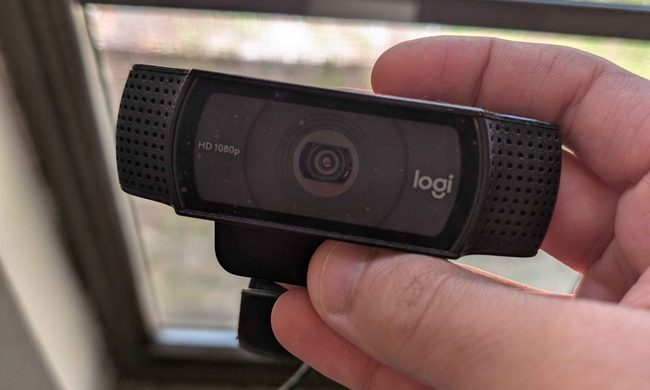
I'm holding my Logitech C920 1080p webcam in my hands.

The webcam built into your laptop might be good enough for a quick call with friends and family. But its shortcomings become much harder to ignore when you are presenting a semester project, interviewing for an internship, or maybe if you're planning to stream for fun.

Laptop cameras also tend to sit far too low, especially when the computer is placed directly on a desk. Meanwhile, a dedicated webcam lets you position the camera closer to eye level. This improves the framing and brings larger sensors, better microphones, and more effective low-light processing.

Read more
I desperately want a new classic Walkman, but Sony probably can’t give me one
Tech minimalism is begging for a new Walkman. Though rebuilding it may be close to impossible
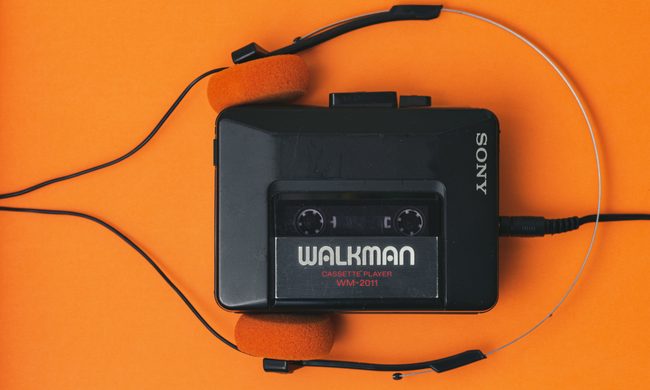
Sony Walkman WM2011

Every few months, another piece of tech that seems obsolete crawls out of a drawer and becomes cool again. The age of minimalism has revived the popularity of iPods among younger buyers. Dumbphones have become an escape hatch from endless notifications. Similarly, digital cameras are dangling from bags again. Physical media keeps attracting people who want something they can actually hold instead of another frustrating subscription.

All of this makes it the perfect time for Sony to bring back the classic Walkman, which was a phenomenon during the 80s and 90s. I would love one. Give me a compact cassette player, physical buttons, and wired headphones. Keep the apps, notifications, and algorithms that shape your taste of music. No more AI assistants or personalzied feeds, just you and your Walkman. There is only one problem though. Recreating the Walkman that people love and remember, would be far harder than putting an old design back into production.

Read more
Proton reveals how smart TVs track you and the escape situation is pretty grim 
Modern smart TVs fingerprint your screen content at the chipset level.
Google TV applications on the Sony A95K TV.

Your smart TV may know far more about your viewing habits than you realize, even if you rarely use its smart features. In a new privacy explainer, Proton warns that many modern TVs quietly collect data about everything displayed on the screen and share it with manufacturers, advertisers, and analytics companies.

The worrying part is that escaping this tracking is becoming increasingly difficult because many privacy controls are buried deep in settings or enabled by default. Proton argues that buying a smart TV today often means accepting a level of surveillance that most people never knowingly signed up for.

Read more