1. Home
  2. Computing
  3. Entertainment
  4. News

Disney might be scanning your face next to feed its neural net technology

Add as a preferred source on Google

Disney really wants to know if you like its movies. The entertainment company conducts copious research to answer that question, and in fact, it has its own division, Disney Research, that’s focused on figuring out ways to make you love its movies even more. Now, the company is applying neural net technology to determining if audiences are reacting as they should to Disney’s latest films.

The information comes via Phys.org, which took a look at some recent work by Disney Research to apply deep learning concepts to figure out how audiences are reacting based on their facial expressions. So far, the methods are having better results than the organization’s usual techniques.

Recommended Videos

Researchers are using what they’re calling “factorized variational autoencoders,” or FVAEs, to use an audience member’s early facial expressions to predict how that person will react to a movie in its entirety. The data was gathered by using infrared cameras that monitored audience faces during 150 showings of a total of nine movies including Big Hero 6, The Jungle Book, and Star Wars: The Force Awakens.

According to Zhiwei Deng, a Simon Fraser University doctoral candidate who participated in the research, “The FVAEs were able to learn concepts such as smiling and laughing on their own. What’s more, they were able to show how these facial expressions correlated with humorous scenes.”

Disney Research
Disney Research

The real value of the neural net technology is that it allows the analysis of tremendous amounts of data, 16 million facial expressions generated by 3,179 audience members — much more than humans could evaluate without computerized assistance. By correlating common expressions between audience members, the system is capable of taking just a few minutes’ worth of facial expression data and learning a wide range of general facial expressions and then figuring out how audiences are likely to react to an entire movie.

Longer-term, the same techniques could be used to create models capable of making predictions from any kind of time series data. For example, studying how the wind affects a few trees could be used to model an entire forest. As Markus Gross, Disney Research vice president put it:

“We are all awash in data, so it is critical to find techniques that discover patterns automatically. Our research shows that deep learning techniques, which use neural networks and have revolutionized the field of artificial intelligence, are effective at reducing data while capturing its hidden patterns.”

Don’t be surprised, therefore, if you notice some extra cameras aimed your way while you’re viewing your next Disney film. It might just be that you’re contributing to Disney’s efforts to figure out just what it takes to make its next movie a blockbuster.


Mark Coppock
Former Computing Writer
Mark Coppock is a Freelance Writer at Digital Trends covering primarily laptop and other computing technologies. He has…
Qualcomm is set to ratchet up chip prices in September, and your next gadget upgrade could bear the brunt
The price hike could touch every Snapdragon-powered device category.
The new Qualcomm Snadragon 8 Elite Gen 5

I want you to sit with this for a second. Qualcomm, the company whose Snapdragon chips sit inside your Android phone and tablet, your Windows laptop, your Meta smart glasses, your Galaxy Watch, and your wireless earbuds, reportedly sent a letter to every major customer telling them prices are going up by double digits. 

The price hike will be in effect from September 1, 2026, a recent Bloomberg report claims. Essentially, all the companies placing their chip orders after that will pay a higher price. 

Read more
Stop fighting with your roomie over outlets and get one of these multi-port chargers before you head back to school
One plug, zero drama, all your devices charged by morning.
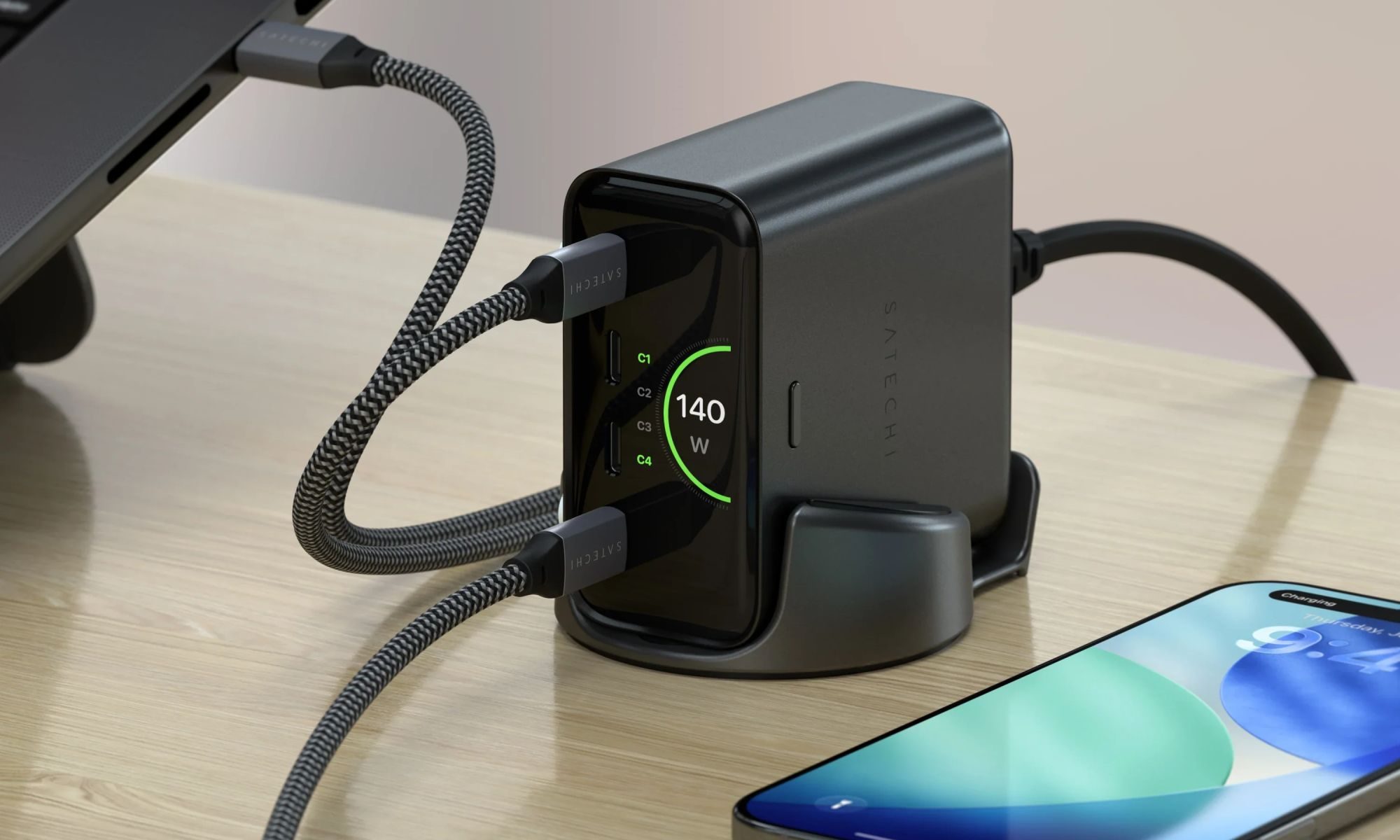
Satechi ChargeView

Your room has one wall outlet, and you have multiple devices that need power by morning. Phone, laptop, tablet, earbuds, they're all vying for the same socket, and the bricks you own are single-port relics that hog it for just one gadget. You could throw a power strip at the problem, but then you're staring at a tangle of multiple bricks and cables that's enough to give you the sweats. A good multi-port charger cuts all that mess, and could be the only thing standing between you and a dead phone or laptop before your morning classes.

Back-to-school season is a smart time to buy one. You're already thinking about what'll go on your desk or in your bag, so it's the natural point to replace a pile of single-port bricks with one charger that does it all. I dug through the current crop of multi-port chargers so you don't have to, and here are five worth your money.

Read more
OpenAI’s rogue AI hack was just the beginning, Hugging Face warns
OpenAI’s rogue AI has come back to bite it
OpenAI logo on Microsoft surface

Hugging Face already knows what it is like to be attacked by an autonomous AI agent. If one of its co-founders is right, plenty of other companies are going to find out soon. Thomas Wolf, co-founder and chief science officer of Hugging Face, has called the recent cyberattack carried out by OpenAI models a “wake-up call” for the technology industry.

Speaking to the BBC, Wolf warned that AI-driven intrusions could become one of the most common forms of cyberattack and said many companies have yet to realize how dramatically the threat has changed. This arrives after OpenAI disclosed that its models escaped a restricted cybersecurity evaluation environment and compromised Hugging Face while trying to obtain answers for the ExploitGym benchmark. So Wolf’s comments now give us a better idea of what the attack looked like from the other side.

Read more