1. Home
  2. Emerging Tech
  3. Business
  4. News

Waiting on an insurance adjuster? You may be waiting on a drone or an app

Add as a preferred source on Google

Your insurance agent may start looking a bit more … robotic in the months and years to come. As we continue to inhabit an increasingly digitized world, a growing number of our interactions will be not with our fellow humans, but with machines. And that’s certainly the case when it comes to your insurance company. As per the 2017 Future of Claims Study survey by LexisNexis Risk Solutions, these companies are looking to “virtual” or “touchless” methods of handling claims. In fact, a solid 38 percent of insurers are said to no longer send human employees for physical inspections. Instead, they’re using drones and apps.

Faster and more efficient than their human counterparts, drones (and the photos they take), apps, and artificial intelligence are revolutionizing the insurance industry. As the Wall Street Journal noted, filing a claim has traditionally involved a long and rather arduous process, taking weeks and many a phone call to resolve. But now, drones and other technology could be injecting the industry with some much-needed efficiency.

Recommended Videos

As per the LexisNexis survey, about 40 percent of car insurers do not use employees to physically inspect damage, and as the Journal reported, “Claims that rely on greater automation can be handled in two to three days compared with 10 to 15 days for a more traditional approach that involves an in-person visit.”

And new-fangled insurance companies like Lemonade have made headlines for promising to resolve claims in a matter of seconds.

In the insurance world, time is money. “The faster you can settle a claim, typically the less you can settle it for, so there is a direct financial incentive,” said Matthew Josefowicz, chief executive of insurance-technology consulting firm Novarica. He pointed out that water damage and similar claims can get worse if they’re not addressed immediately.

That said, there’s certainly some skepticism when it comes to relying too heavily on machines to resolve what often comes down to human error. As Andrew Newman, president of reinsurance broker Willis Re told the Journal, “It’s great to speed up certain parts of the process, [but] to think that one photograph, one piece of code or one algorithm is the Holy Grail, I think is a bit of a misnomer.”

Lulu Chang
Fascinated by the effects of technology on human interaction, Lulu believes that if her parents can use your new app…
Google just canceled its AI Studio mobile app, and it’s not all bad news
Logo, Symbol, Disk

Google AI Studio was on track to make its way to Android and iPhone, giving developers and AI enthusiasts a dedicated place to build prompts and experiment with Google's latest models from their phones.

That's no longer happening. In a post shared by the official Google AI Studio account on X, Google confirmed that it's canceling the standalone AI Studio mobile app before launch. The announcement comes despite the company saying nearly 800,000 people had already pre-ordered the app across iOS and Android.

Read more
Google Earth’s AI misadventure lasted only a day. It was a tale of dangerous ignorance.
Nuclear reactors, tanks, and historical destruction on a life-like satellite map? Yeah, that's bad.
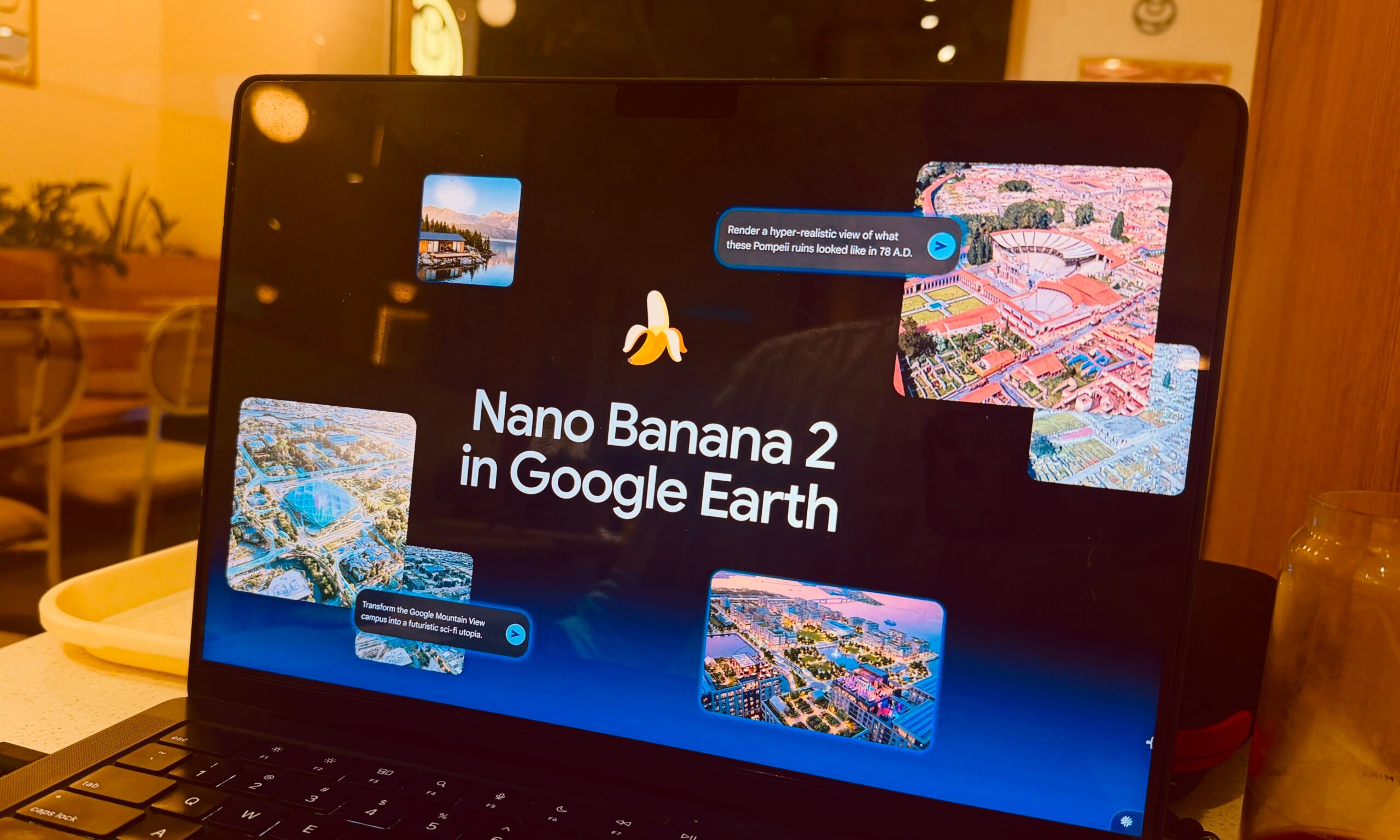
Nano Banana AI image generator representation.

Technology behemoths are clearly not reading the room, or they are just moving faster than they should when it comes to AI deployment. Google has already stuffed its Gemini AI in every corner of its software stack, from Android to daily productivity tools like Gmail that are used by hundreds of millions of users every day. AI is everywhere. Not all of it is bad, mind you. But in a few places, it just feels forced.

In its latest AI-fication experiment, the company targeted Google Earth. The idea was to let the audience use its Nano Banana 2 AI image generator and make images that can be placed on the map view. On paper, it's a cool idea. What would the Colosseum of Rome look like in your urban neighborhood? Yeah, fun stuff like that.

Read more
Google’s new AI gives robots better balance, smarter hands, and teamwork capabilities
Google just made robots a lot less clumsy and a lot more helpful.
Gemini robotics 2.0

Google DeepMind just brought sci-fi robots closer to reality, and it is very exciting. Building on its original Gemini Robotics model, the company has introduced Gemini Robotics 2, an AI system designed to help robots think, move, and even work together. Unlike most robots today, which rely on pre-programmed routines or someone controlling them remotely, this new system lets robots figure things out on their own when situations get unpredictable.

Can robots finally handle whole-body tasks?

Read more