1. Home
  2. Emerging Tech
  3. Outdoors
  4. News

Footage of a racing drone zipping over the Swiss Alps will give you vertigo

Add as a preferred source on Google

In 2017, footage shot by drone is nothing new. But a spectacular new first-person drone flyover of the Swiss Alps will drop your jaw — and quite possibly give you vertigo, too. Titled Elevations, the short film was shot by Gabriel Kocher, a Swiss physicist living in Montreal, who moonlights as a racing drone pilot. Having finished second in the Drone Racing League’s Allianz World Championship earlier this year, Elevations is part of Kocher’s Gab707 YouTube channel — designed to focus on more creative uses of drones as a way of exploring rugged landscapes.

“This shoot came about while I was hiking in the Swiss Alps in early September this year,” Kocher told Digital Trends. “The drone is a small 220mm diameter custom-built racing drone made for long range that I built myself. It gets strapped to my backpack, along with all the photographic gear that I carry wherever I go. What makes this unique is that the drone is flown FPV [first-person view], through video glasses that allow me to see through a small camera placed on the drone. In contrast to regular camera rigs, this kind of machine brings through all the control movements made by the pilot, capturing much more of the sensation of flight. Its very high power-to-weight ratio — around 8:1 — allows it to get very close to obstacles and acrobatic flights.”

Elevations, uncut DVR

The footage is accompanied by a second video offering an uncut, lower resolution look at the material shot by Kocher. The final edit includes an added sheen — although the only thing that’s tweaked is the addition of driving background music and some footage stabilization to iron out wind-related wobbles.

Recommended Videos

“The biggest challenge in capturing this kind of footage is that it is shot at the edge of what the technology can do,” Kocher continued. “Not outrunning the battery capacity is a key factor, but the hardest one is keeping the drone in view from the ground station. While I’m looking for a maximum of proximity to the terrain, dropping behind an obstacle will result in a control loss and likely a crash — so this is a constant memory and mental 3D-mapping game.”

On this occasion, we think Kocher won this particular game!

Luke Dormehl
I'm a UK-based tech writer covering Cool Tech at Digital Trends. I've also written for Fast Company, Wired, the Guardian…
Google Earth’s AI misadventure lasted only a day. It was a tale of dangerous ignorance.
Nuclear reactors, tanks, and historical destruction on a life-like satellite map? Yeah, that's bad.
Nano Banana AI image generator representation.

Technology behemoths are clearly not reading the room, or they are just moving faster than they should when it comes to AI deployment. Google has already stuffed its Gemini AI in every corner of its software stack, from Android to daily productivity tools like Gmail that are used by hundreds of millions of users every day. AI is everywhere. Not all of it is bad, mind you. But in a few places, it just feels forced.

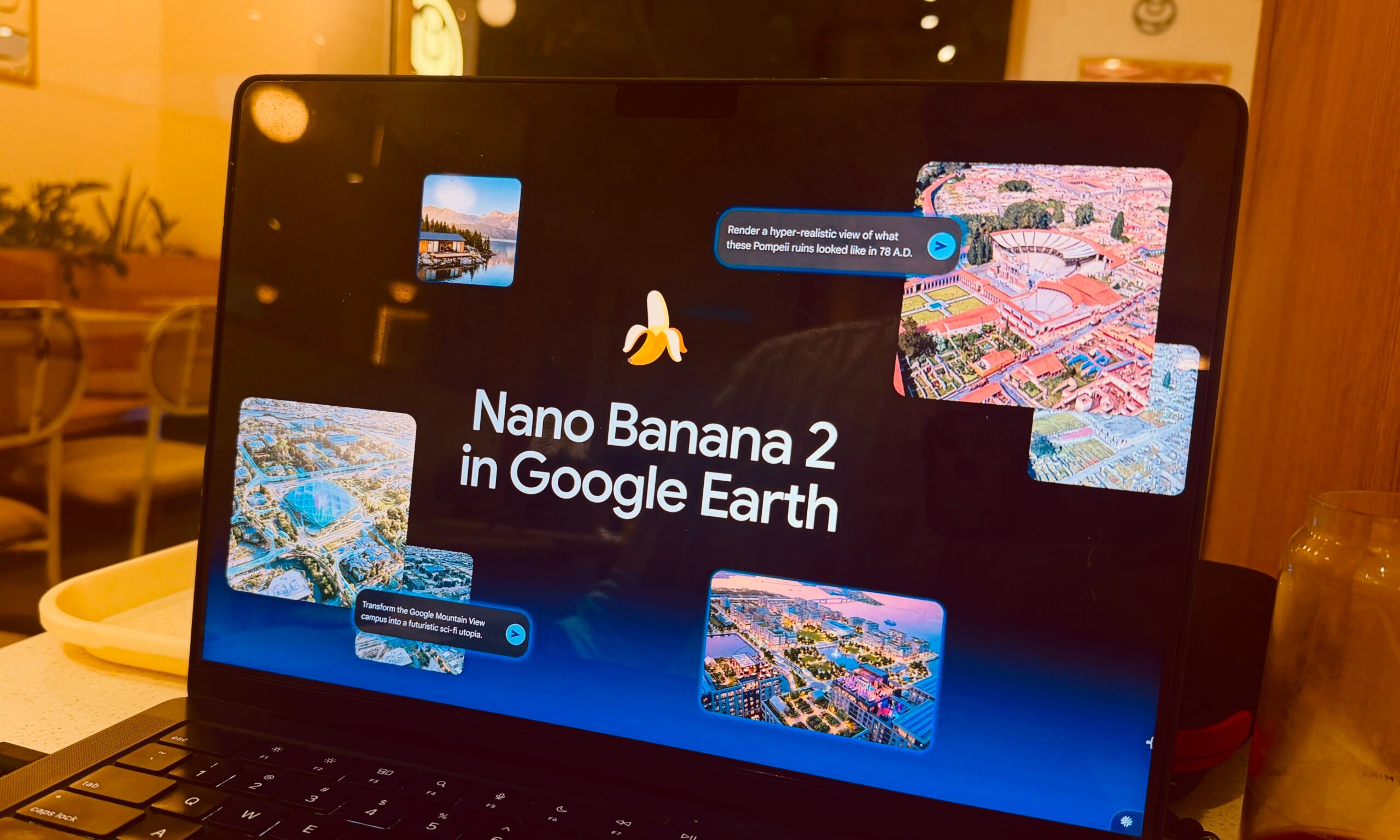
In its latest AI-fication experiment, the company targeted Google Earth. The idea was to let the audience use its Nano Banana 2 AI image generator and make images that can be placed on the map view. On paper, it's a cool idea. What would the Colosseum of Rome look like in your urban neighborhood? Yeah, fun stuff like that.

Read more
Google’s new AI gives robots better balance, smarter hands, and teamwork capabilities
Google just made robots a lot less clumsy and a lot more helpful.
Gemini robotics 2.0

Google DeepMind just brought sci-fi robots closer to reality, and it is very exciting. Building on its original Gemini Robotics model, the company has introduced Gemini Robotics 2, an AI system designed to help robots think, move, and even work together. Unlike most robots today, which rely on pre-programmed routines or someone controlling them remotely, this new system lets robots figure things out on their own when situations get unpredictable.

Can robots finally handle whole-body tasks?

Read more
Remember Samsung’s Ballie home robot? It may finally be inching closer to reality
Leaked app wireframes give the strongest hint yet that Samsung's Ballie home robot, first shown at CES 2020, might still be headed toward an actual release.
Samsung Ballie robot in a room next to a dog feeder.

Samsung's rolling home robot has been the industry's longest-running "will it ever actually ship" joke, and I'll admit I'd mostly given up on it. Now, there's finally a glimmer of hope.

Samsung first unveiled Ballie as a concept at CES 2020. Then, it showed it as a significantly upgraded version four years later. However, the company never confirmed a release date or committed to releasing it at all. 

Read more