France-based company Blade said that its new “Shadow” virtual PC cloud service is now making its North American debut in California. This platform essentially streams a virtual high-end Windows 10 desktop computer to any device so you’re not sinking $2,000 or more into upgrades or a new machine. Blade says this cloud-based PC will stay current with the latest technologies, such as the most-recent processor and graphics card.
That said, the current Shadow cloud-based PC relies on an Intel Xeon processor with eight dedicated threads, Nvidia’s GeForce GTX 1080 graphics chip, 12GB of server-grade DDR4 system memory (2,400MHz), and 256GB of storage. It also has a dedicated internet connection of up to one gigabit per second per customer. It’s fully compatible with fiber-based connections, DSL, 4G LTE, and so on.
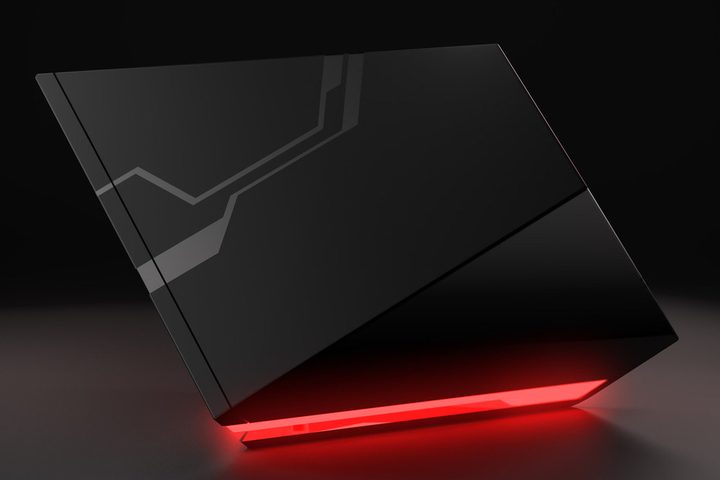
Of course, you will never see the physical version. The Shadow service is accessible through apps provided for Windows 10, MacOS, iOS, and Android. But the company knows how many customers desire a dedicated, physical device, so it’s offering a stylish “streamer” packing physical ports for peripherals and controllers, and one of AMD’s APUs for local, real-time decoding of 1080p content at 144Hz, or Ultra HD content at 60Hz.
“Shadow frees PC power users from bulky, loud and unwieldy hardware, and allows them to work and play, with no lag, delay, hardware issues or other major worries, whenever and wherever,” Asher Kagan, co-founder of Blade, said in a statement. “We’re thrilled to debut Shadow to Californians today and can’t wait for all of our American users to experience the freedom and convenience that Shadow provides.”
The company said that it also partnered with Razer to bring its Shadow streaming service to the Razer Phone. That simply means the Shadow service will stream high-end PC games running at a 2K resolution and a 120HZ refresh rate. According to Blade, the Shadow service will “deeply integrate with the Razer Phone in the coming months.”
Shadow made its stateside debut at CES 2018 in Las Vegas at the beginning of 2018. Customers are essentially subscribing to a virtual machine, which is a software-based environment running on servers located in Blade’s data centers. Shadow had an early run in July 2016 and soon became a full-fledged service in France. It’s had time to mature, thus Shadow is finally making an entry into the North American market.
Emmanuel Freund, co-founder of Blade, said the company initially targeted the most-demanding audience you can find: PC gamers. “[They] are able to see any quality loss on any image, any latency,” he told VentureBeat. “If we can show them that what we’re doing is exactly the same as on the computer, we can show that this is working.”
But Shadow isn’t just about gaming. Any software that can run on a Windows 10 machine will run on the Shadow service. But Shadow isn’t cheap, costing $35 per month for a 12-month commitment, $40 per month for a three-month commitment, or $50 per month with no commitment.
Shadow will be widely available across the U.S. this summer.