1. Home
  2. Emerging Tech
  3. Photography
  4. News

Lawmakers discussing proposal that would allow cops to take over drones

Add as a preferred source on Google

Should law enforcement have the authority to disable a drone that’s breaking the law or posing a security threat? That’s the question Washington is considering with potential legislation, Bloomberg reports.

The proposal is not yet complete, but Michael Kratsios, a U.S. technology officer inside the Trump administration, said that a proposal is currently in progress. The bill is focused on security as drone technology continues to progress. The proposal would address civilian drones. Another official, who chose to remain unnamed, says that several groups are working on the legislation, including the Department of Homeland Security and the Department of Justice.

Recommended Videos

While few details are available until the discussion creates an actual bill, the legislation would likely address laws already on the books. Laws that prohibit wiretapping, for example, prevent law enforcement from using existing technology such as signal jammers to take over a drone’s controls or land the UAV. Another possibility is allowing those same groups to use drone monitoring programs. The discussion is said to include both law enforcement agencies and security companies.

The discussion isn’t the first to look into safety and security as the drone market expands — Bloomberg says a similar proposal was suggested last year but nothing came of the plan. Since then, a helicopter reportedly had to make a crash landing after veering to avoid a drone and hitting a tree. The FAA confirmed the accident but did not confirm if a drone was involved in the incident earlier this year.

The FAA is also working on drone safety legislation, including a proposal that would require consumer drones to broadcast their positions, allowing law enforcement to track drones.

Currently, drone owners are required to register their UAV with the FAA, while stricter guidelines for commercial flights require testing and certification. Existing drone laws also create no-fly zones, including airports.

The bill is one of several suggestions presented as drone use continues to grow. Drone giant DJI itself has proposed an “invisible” license plate system that allows law enforcement to access the drone’s information. Because the program uses numbers rather than names, the idea would offer some privacy in keeping that data away from average citizens. The number would be transmitted using radio controls that are already built into most drones.

Hillary K. Grigonis
Hillary never planned on becoming a photographer—and then she was handed a camera at her first writing job and she's been…
Yet another study says AI is bad for elections, and the rabbit hole gets worse
AI may be an election bomb waiting for someone to light the fuse
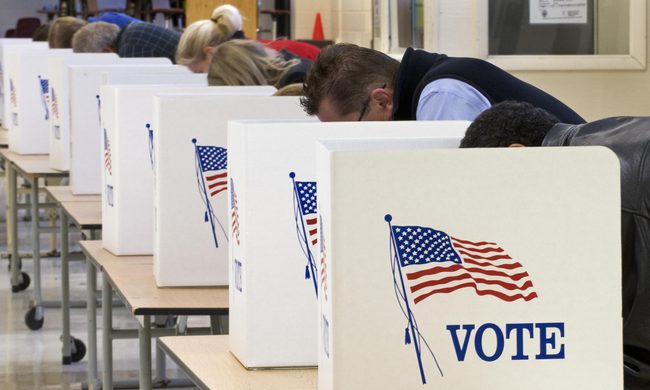
Voters cast their ballots on Election Day

Another election, another study has concluded that asking an AI chatbot for political guidance is a spectacularly bad idea. Research conducted during Hungary’s 2026 parliamentary election found that ChatGPT and Google Gemini offered not just inaccurate but also inconsistent and unreliable voting advice. The chatbots misclassified voter profiles, overlooked relevant parties, recommended parties absent from the ballot, and sometimes produced materially different answers when given the same information repeatedly.

AI keeps failing the voter test

Read more
Samsung’s humanoid robot ambitions are real, but factories come first
Samsung’s new robotics division has humanoids in its sights, although its immediate business is far more practical factory automation
Robot Touch Human Finger

Samsung wants a place in the humanoid race, but its new robotics push begins with machines built for factories rather than homes.

The CEO-led RX robotics division will initially focus on manufacturing robots. Samsung has separately identified humanoids as a priority, although it hasn’t announced a commercial model or explained where one fits into the division’s immediate plans.

Read more
The future of AI may depend on this one behind-the-scenes change
Running Claude on Android.

Whenever a new AI model arrives, it's easy to get caught up in the bells and whistles. We talk about how much smarter it is, how quickly it answers questions, or how realistic its images have become. But here's the thing: none of that matters much if the AI can't reliably work with the apps and services people use every day.

That's why an upcoming update to the Model Context Protocol (MCP) caught my attention. It isn't a new chatbot or a fancy AI model. In fact, most people will never even know it's happening. But it could quietly make the AI ecosystem a lot healthier. If you've never heard of MCP before, don't worry. Think of it as a shared language that lets AI assistants safely talk to apps like Gmail, Slack, calendars, databases, and countless other services. Instead of every company inventing its own way to make those connections, MCP gives everyone a common rulebook.

Read more