Representatives of 14 transportation agencies from across the country will soon convene in Tampa, Florida, for a first-hand look at how connected vehicle technologies work in real life. Futuristic yet realistic, these state-of-the-art smart city solutions promise to save lives, make the traffic flow smoother, help public transportation run on time and reduce pollution.
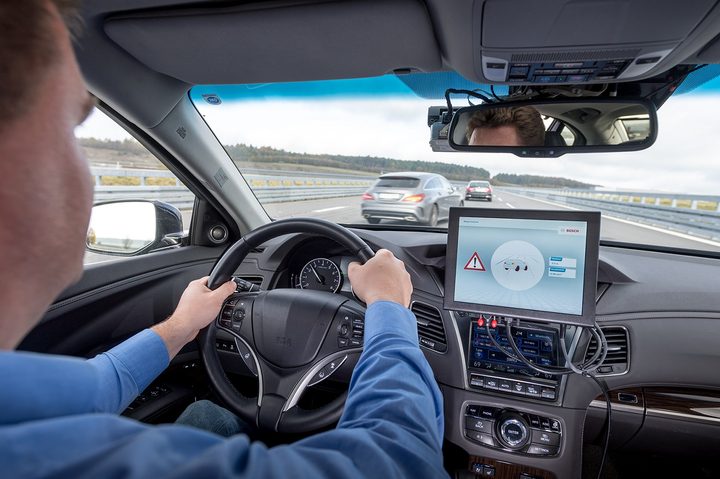
The demonstration will focus on vehicle-to-vehicle and vehicle-to-infrastructure communication systems. Already deployed in some cars, like the latest Mercedes-Benz E-Class, this technology lets internet-connected cars wirelessly “talk” to each other and to infrastructure. For example, a car can tell vehicles traveling around it that it has slowed down or stopped. In turn, drivers will receive a real-time message to tell them they’re approaching a collision or a traffic jam. The technology can also warn motorists when a car is traveling the wrong way, or when there’s a pedestrian crossing the street.
The demonstration will coincide with the launch of a large-scale pilot program. Tampa stands out as one of three sites across the nation selected by the United States Department of Transportation (USDOT) as a test venue, but it’s the only city whose pilot program will include local residents. The other sites are New York City and a stretch of I-80 in Wyoming. The USDOT is investing $42 million to make connected vehicle technologies a reality.
Tampa has started the process of recruiting the 1,600 volunteer drivers it needs to participate in the pilot program. Interested motorists can take a pre-screening questionnaire online to check whether they’re eligible. They notably need to be at least 18 years old, drive regularly in downtown Tampa, and have a 1996 or newer car. Sorry, sun lovers, but it can’t be a convertible because participants need to install a roof-mounted antenna. If selected, motorists will receive an internet-enabled rearview mirror to install in their car. It will emit visual and audible alerts while allowing the car to communicate with other vehicles on the road, including buses and street cars, and traffic signals.
As a trade-off, Tampa will give participants a 30-percent rebate on the Lee Roy Selmon Expressway’s reversible express lanes. Officials estimate the discount can save participants up to $550.
Pedestrians can get involved, too. Tampa officials will release a smartphone application that will activate crosswalk signals on Meridian Avenue. The app will also warn users of oncoming buses or streetcars in some areas. However, the project’s website notes the app only works on Android-powered devices. A spokesperson for the Tampa Expressway told Digital Trends the app won’t be compatible with Apple devices during the pilot project.
The demonstration will take place on April 12 on the downtown end of the Lee Roy Selmon Expressway, according to a statement published by Tampa officials. Part of the road will be closed to traffic during the event. Plan accordingly if you’re traveling in the area.
Update: added information from Tampa officials about Apple availability, car compatibility.