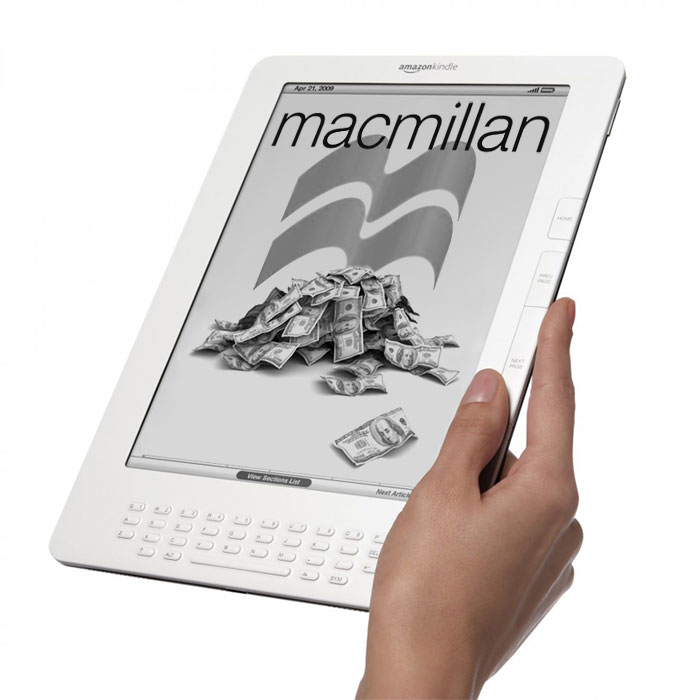
Ten dollars for a virtual copy of a book – one that you can’t handle, sell, lend, or even read without a $259 device – never seemed that reasonable to begin with. But with e-books gaining steam, most recently with a prominent inclusion on Apple’s new iPad, it looks like publishing house MacMillan will push that price even higher. After a round of back-and-forth face slapping, Amazon has been forced to abandon its $9.99 e-book price cap to accommodate Macmillan titles that will sell for $12.99 and $14.99.
Let’s recap: An old-school company that used to make a killing by controlling the dissemination of an artist’s work and keeping a fat share of profits is now bent out of shape that the same job can be done digitally for much cheaper. They still demand the product is wrapped in an unwieldy tangle of DRM, and sold for prices nearly on par with physical copies. But they own the rights to most of the work we want to enjoy, so companies that want to distribute it online have nothing to do but pay the piper.
This sounds familiar. Like, oh, the battle record companies have waged with digital distribution of music for over 10 years now.
As the $1.29 price tag on DRM-free iTunes tracks demonstrates, getting dragged into irrelevance kicking and screaming wasn’t totally fruitless for those goons. They’re still milking CD-like prices out of a distribution system that practically eliminates the need for them to exist at all. It’s like Aquafina ganged up with the public waterworks to charge you $2 for every cup out of the tap.
Of course, that’s overlooking one significant fact: A good portion of the civilized world gives this rigged system of overcharging the middle finger and downloads everything for free, illegally.
In the face of unjust pricing, piracy thrives. It did with music, and it will with e-books, too, if book publishers learn nothing from their musical counterparts and insist on pricing their virtual wares into the realm of absurdity.
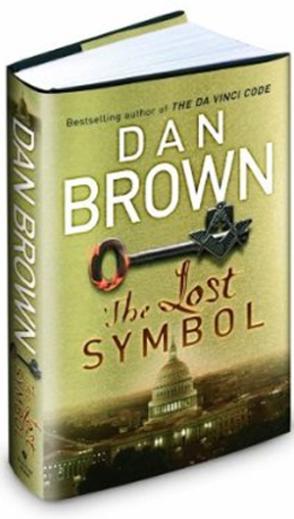 Pulp piracy is already taking root before our eyes. In 2009, Dan Brown’s The Lost Symbol became one of the first major novels to sell more digital copies than hardcovers, priced at $9.99 in Amazon’s Kindle store. Within days, it also became one of the most popular pirated books, with over 100,000 illegal copies getting passed around online. You can download the 2.86MB PDF file from any number of pirate sources in a matter of minutes.
Who can blame the pirates? I can buy a physical copy of Dan Brown’s book for $12, or a digital copy for $10. With the physical copy, I need no expensive e-reader to use it, I can lend it around to a dozen friends when I’m done with it, or I can turn around and sell it for about $7, in which case the privilege of reading it cost me about $5. Not bad, and it amounts to half the expense of the digital copy, which is impossible to lend or resell, and which I most likely will not read again.
As the pirate surge around The Lost Symbol proved, the reading public, much like the music-listening public, is not afraid to go underground to dodge the barbed wire and tollbooths publishers have strewn out above.
Macmillan reminds me a lot of street artists who charge money to take pictures of them. They’re really in no position to make outlandish demands of you as a pedestrian. You should really pay them something – because it’s fair. But if the amazing robotic moonwalker’s little cardboard sign demands $50 for a picture, you’re just going to take a picture, turn on heel, and walk away with it for free. Because you can, and because that price is outrageous.
Go back to your calculators and punch up some numbers that make sense, Macmillan. Before we snap our pictures and slink away from your clown act without dropping you a dime.