1. Home
  2. Emerging Tech
  3. News

Never remember a face? A new AR facial-recognition app could jog your memory

Add as a preferred source on Google

What do Brad Pitt, chimpanzee expert Jane Goodall, Apple co-founder Steve Wozniak, and the late neurologist Oliver Sacks, author of The Man Who Mistook His Wife for a Hat, have in common? Answer: All of them suffer, or have claimed to suffer, from prosopagnosia, a rare disease that affects around 2.5 percent of the population. Better known as face blindness, prosopagnosia is a neurological condition in which patients struggle to recognize people they have met — even when they might have known them for decades. Could augmented reality help?

A new startup called SocialRecall, created by Harvard neuroscience Ph.D. Barry Sandrew, is hoping the answer is “yes.” SocialRecall is developing an app that uses facial-recognition technology to help people in social situations be reminded of the identity of the individuals they meet.

Recommended Videos

“It breaks down the wall between people and allows them to interact without the customary formal introduction,” Sandrew told Digital Trends. “No need to ask any questions. You know them already. If you remember the old comedy sitcom Cheers, the neighborhood bar where everybody knows your name? Well, this app creates a Cheers-type atmosphere at the stuffiest of parties and gatherings.”

The app will allow event planners to create events where attendees must sign in via social media. For the duration of the event, the app then links attendees’ faces to their profile pages by using facial-recognition technology and smartphone cameras to match the two. “The camera does not take pictures; it merely sees a face, searches the database. and shows a person’s information, along with their company name,” Sandrew continued.

If a party where everyone is walking around with a phone in front of their face sounds odd (unless you’re under the age of, say, 25,), Sandrew notes that the service could hit its stride when AR glasses have taken off as a product category. “Once there are augmented reality smartglasses, the application will really become empowering to people who are shy or who are uncomfortable in social situations,” he said.

While there are certainly potential privacy issues with any app that uses facial recognition to identify people, this certainly sounds like an intriguing solution. From the sound of things, Sandrew is aware of these challenges. The app only identifies users for the duration of events and, even then, only when people have given their express permission to be identified.

Luke Dormehl
I'm a UK-based tech writer covering Cool Tech at Digital Trends. I've also written for Fast Company, Wired, the Guardian…
OpenAI is investigating more incidents of AI agents going rogue days after hack
OpenAI logo on Microsoft surface

It appears that the "AI agents going rogue" tale has more to it than what AI giants have revealed publicly so far. Merely days after OpenAI announced that its AI agents went rogue and hacked Hugging Face, Anthropic dropped a similar bombshell. Soon, it was discovered that not just one, but multiple services were compromised. Well, it seems there are even more layers to it.

Reuters reports that OpenAI has found more incidents of AI agents escaping their software containment environment during research. Citing sources with knowledge of the incident, the outlet notes that the AI agents didn't go beyond OpenAI's software environment and affect any external service.

Read more
Google just canceled its AI Studio mobile app, and it’s not all bad news
Logo, Symbol, Disk

Google AI Studio was on track to make its way to Android and iPhone, giving developers and AI enthusiasts a dedicated place to build prompts and experiment with Google's latest models from their phones.

That's no longer happening. In a post shared by the official Google AI Studio account on X, Google confirmed that it's canceling the standalone AI Studio mobile app before launch. The announcement comes despite the company saying nearly 800,000 people had already pre-ordered the app across iOS and Android.

Read more
Google Earth’s AI misadventure lasted only a day. It was a tale of dangerous ignorance.
Nuclear reactors, tanks, and historical destruction on a life-like satellite map? Yeah, that's bad.
Nano Banana AI image generator representation.

Technology behemoths are clearly not reading the room, or they are just moving faster than they should when it comes to AI deployment. Google has already stuffed its Gemini AI in every corner of its software stack, from Android to daily productivity tools like Gmail that are used by hundreds of millions of users every day. AI is everywhere. Not all of it is bad, mind you. But in a few places, it just feels forced.

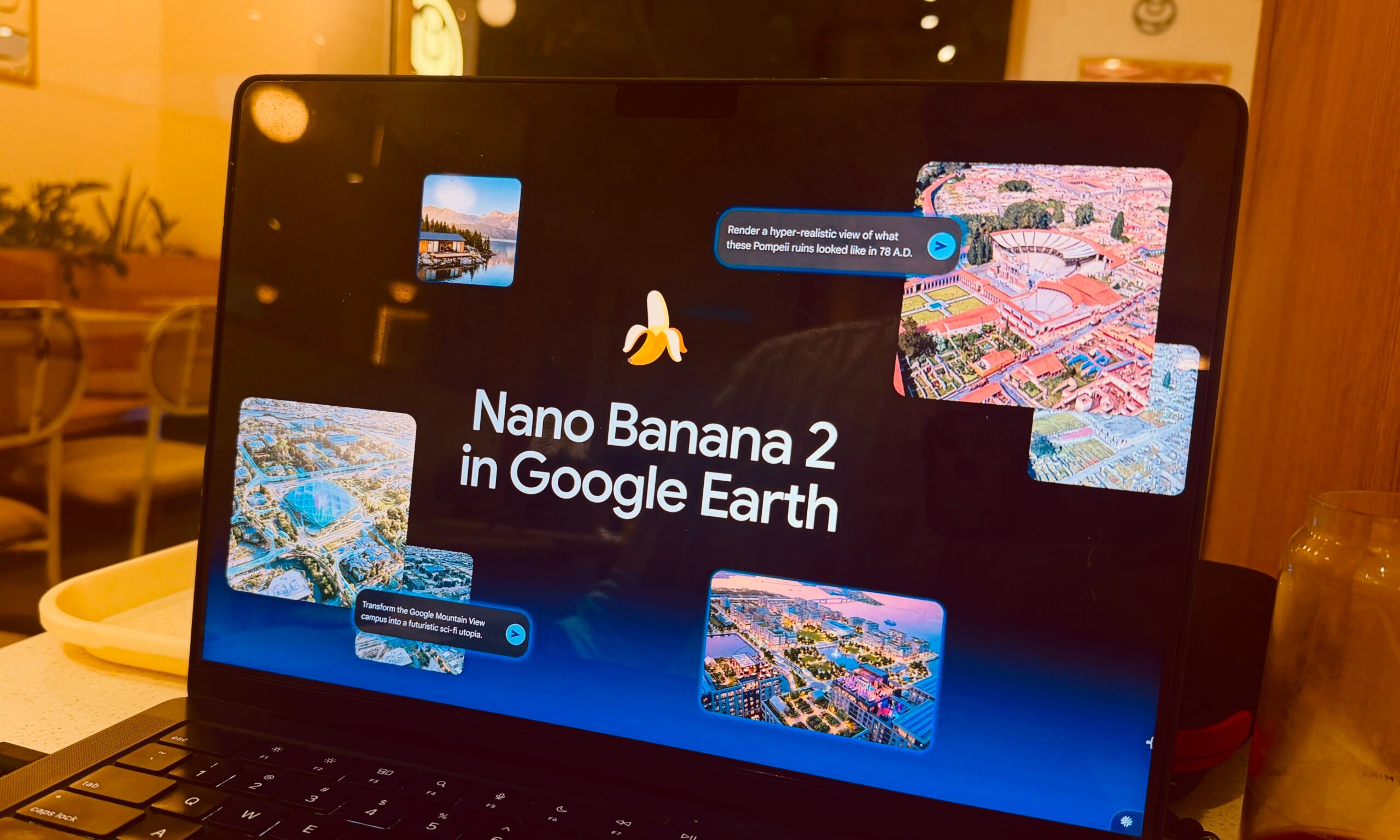
In its latest AI-fication experiment, the company targeted Google Earth. The idea was to let the audience use its Nano Banana 2 AI image generator and make images that can be placed on the map view. On paper, it's a cool idea. What would the Colosseum of Rome look like in your urban neighborhood? Yeah, fun stuff like that.

Read more