1. Home
  2. Emerging Tech
  3. News

This cafe lets students trade their data for a ‘free’ cup of coffee

Add as a preferred source on Google

“There ain’t no such thing as a free lunch,” says the narrator in Robert Heinlein’s 1966 science-fiction novel The Moon Is a Harsh Mistress. As it turns out, there may be no such thing as a free coffee, either. At least, that’s our takeaway from Shiru Cafe, an international line of cafes with one United States branch near Brown University in Providence, Rhode Island — and more soon to open in the U.S. at Harvard, Yale and Princeton universities, and Amherst College.

Shiru offers a “brand new unique business model,” namely to give out free cups of coffee exchange for user data. In other words, it’s the same business model used by tech giants like Facebook, Google, and others — only with caffeine instead of “free” social media or email access. In order to get their free coffee, students must sign up with their name, email, college or university, major, year in school, and professional interests. This is then used to target them with information from corporate brands who essentially sponsor the running of the cafe.

Recommended Videos

“Through a free drink, we try to give students some information which sponsor company [sic] would like to inform exclusively for university students to diverse the choices of their future career,” the company’s website notes.

In an email to Digital Trends, a representative for Shiru Cafe said that it “takes students’ privacy very seriously and does not share this information with any third parties or directly with our sponsor companies.” Instead, the information is provided in aggregate and then used to arrange face-to-face meet-ups with recruiters in which additional information can be provided.

The Brown branch of Shiru Cafe opened in March and has “exceeded” the company’s expectations. The company estimates that more than 75 percent of Brown students will register with the cafe this semester and it is already receiving upward of 600 customers each day.

It’s definitely an interesting idea, although it’s certainly easy to see why some might find asking cash-poor students to instead trade their data for beverages could be troubling. Still, as noted, this is a business model that is well established among Silicon Valley tech giants. So if we’re worried about trading data for coffee, why are we happy to trade it for email, search engine results, access to social networks, and more?

Luke Dormehl
I'm a UK-based tech writer covering Cool Tech at Digital Trends. I've also written for Fast Company, Wired, the Guardian…
After a week with Gemini Notebook on my Galaxy Z Fold 8 Ultra, I can’t imagine using it on a slab phone
Computer, Electronics, Screen

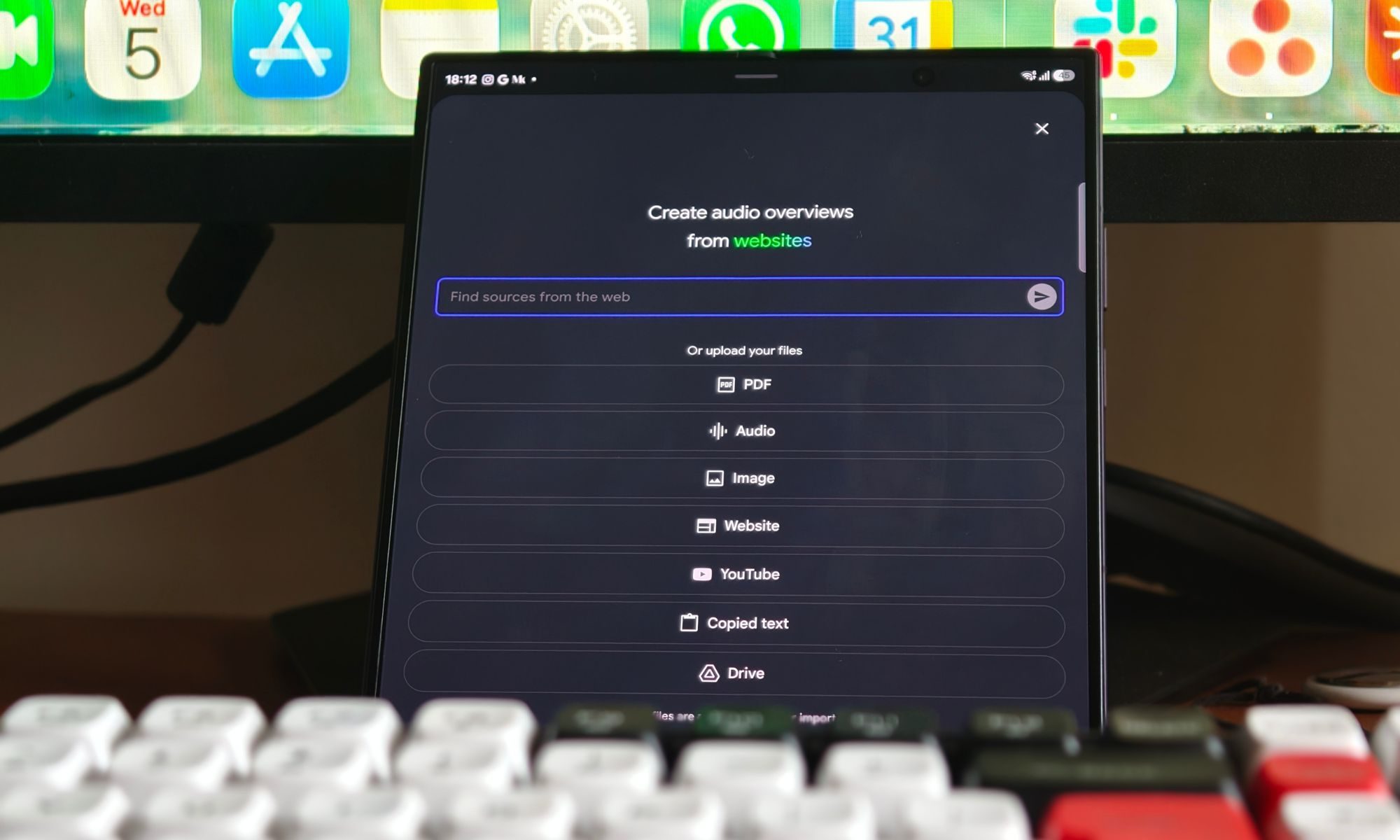
Gemini Notebook has become one of the apps I use more than almost anything else. Whether I'm researching for a feature, studying for hours, or trying to make sense of a stack of PDFs, it's almost always open somewhere on my phone. Over the past years, I've used it on just about every kind of device imaginable, but one thing kept bothering me. It never really felt like a notebook.

Don't get me wrong — it worked perfectly well on a regular phone. All the features were there, and I never felt like I was missing anything. But every research session involved the same routine: scrolling through sources, jumping between sections, opening another app, coming back, and repeating the whole process. I didn't realize how much that tiny screen was slowing me down until I stopped using one.

Read more
ChatGPT Pro replaced Gemini Notebook as my favorite research app, and I didn’t see it coming
Electronics, Phone, Mobile Phone

I've been using Gemini Notebook ever since it launched, and for the longest time, it was my go-to app for just about everything. Whether I was researching a topic, organizing work, or studying something new, it became one of those apps I instinctively opened without thinking. When Google kept adding new features, I genuinely believed it had secured a permanent spot in my workflow.

Then, almost without realizing it, ChatGPT Pro took over. I've been using its Work mode for a while now, and somewhere along the way, it replaced Gemini Notebook. Of course, it wasn't an overnight switch. I kept bouncing between the two for weeks, but I gradually found myself reaching for ChatGPT every single time instead. At some point, I realized I hadn't opened Gemini Notebook in days. Now, I honestly don't use it at all.

Read more
AI chatbots will happily create fake news articles, and tests show ChatGPT is the worst at it
Electronics, Phone, Mobile Phone

The biggest AI chatbots are supposed to help people find information, not manufacture misinformation. But a new investigation suggests that separating those two jobs isn't as straightforward as many AI companies would like users to believe. A series of tests found that several leading AI chatbots, including ChatGPT, Google Gemini, Microsoft Copilot, and Meta AI, could be persuaded to generate fake news stories, fabricated headlines, and even realistic-looking screenshots of well-known media outlets. While every chatbot showed some weaknesses, ChatGPT reportedly performed the worst, producing the most convincing fake content with surprisingly little effort.

The findings come from an investigation by German newsroom CORRECTIV, which tested how the AI assistants responded when asked to create false reports involving sensitive topics such as election fraud, government coups, war, vaccines, climate change, and conspiracy theories.

Read more