With Uber set to release its first earnings report as a publicly-traded company Thursday afternoon, expect to see some updates on the company’s troubled self-driving car program.
Uber suspended the program in March 2018 following a fatal accident involving one of its prototypes. In December, the company announced that it was ready to resume testing its autonomous technology on public roads, and it pledged to put a bigger focus on safety than ever before.
“Over the past nine months, we’ve made safety core to everything we do,” said Eric Meyhofer, the head of Uber’s Advanced Technologies Group, in a statement sent to Bloomberg.
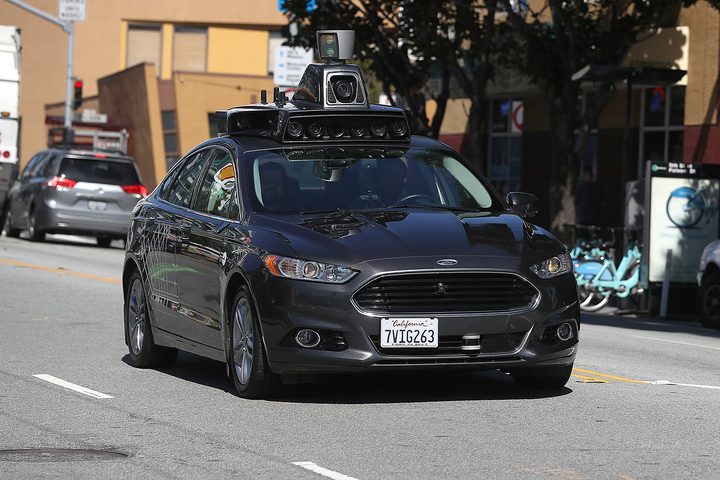
The ridesharing giant planned to resume testing by deploying one or two prototypes on the streets of Pittsburgh. It plans to operate its autonomous cars along a mile-long route between two of its offices in Pittsburgh, with the vehicles traveling no faster than the posted speed limit of 25 mph. The cars will also stay off the road in wet weather and at night. The company will also increase the number of safety personnel inside the vehicle from one to two.
The self-driving program is still a major focus for Uber. The company found three investors — Toyota, Softbank’s Vision Fund, and the Denso Corporation, a Japanese auto parts manufacturer — to provide the program with a big infusion of cash. The Japanese companies invested a combined $1 billion into the self-driving car project, Uber said in April.
The investment is a sign that Uber still sees self-driving cars as the future of the company, but a recent MIT study found that driverless ride-hailing could still be more expensive than car ownership.
Before the March accident in which an Uber test car struck and killed 49-year-old Elaine Herzberg as she crossed the street in Tempe, Arizona, Uber was operating its self-driving program in four cities — three in the U.S. and one in Canada. The autonomous cars drove at speeds of up to 55 mph, and also operated at night and in various weather conditions.
When Herzberg was struck, the Uber car was traveling at 39 mph at night and its technology failed to spot her in the road ahead. The safety driver is believed to have been streaming a TV show on her phone. Local police described the incident as “entirely avoidable.” It marked a significant setback for the firm, and for self-driving car technology in general.
To enable the restart of its trial program, the San Francisco-based company had to get permission from Pennsylvania state officials, as well as submit a voluntary report to the National Highway Traffic Safety Administration detailing all of the safety improvements that it has incorporated into its autonomous car technology. In July, Pennsylvania’s Department of Transportation (DOT) tightened up its guidelines for autonomous car testing, resulting in companies being told to submit more detailed information about their operations on the state’s roads.
Uber will need to play catch-up. As the company worked to get its autonomous car program back on track, competitor Waymo scored a big win in December when it became the first company in the U.S. to launch a full-fledged robot taxi service in and around Phoenix.
Updated December 20, 2018: Added information about Uber resuming testing.
Updated May 30, 2018: Added information about Uber’s earnings report and investment into the self-driving car program.