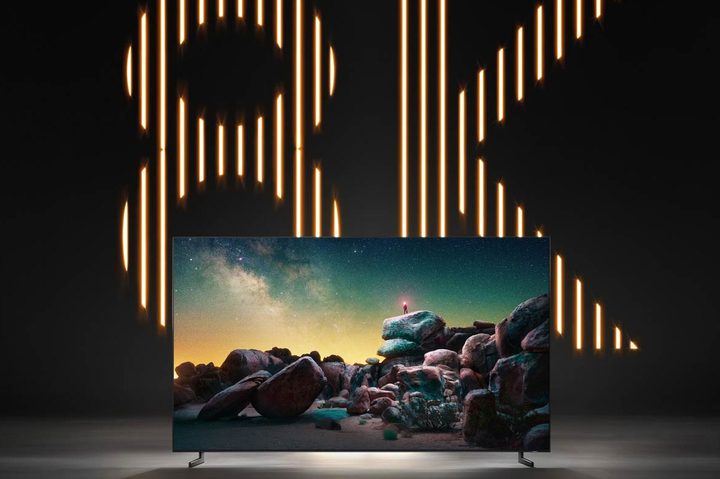
What’s the hottest TV tech around? Ask anyone and they’ll likely mention 4K TVs and high dynamic range (HDR), a one-two punch that turned ordinary high-def TV into a cinematic experience – or should have, anyway. Ask that same person about the last 4K show they watched and they’ll pause, mutter something about Netflix, and quickly change the topic.
Millions of people bought 4K TVs, thinking the content industry would catch up. Let’s be honest, it largely hasn’t, save for the biggest streamers, which is one reason we’re seeing a huge uptick in cord cutting. One recent analyst concluded that the cable industry is losing 14,000 subscribers every day. So why am I gung-ho about 8K sets, when you’re more likely to find a Windows Mobile user than a 4K broadcast? One word: gaming.
8K + gaming = a reason not to leave your house for the weekend.
I spoke earlier this week with one of the world’s largest TV manufacturers, who has yet to announce an 8K set for the U.S. market. The company is holding out for next year, when we’re likely to see two new game consoles and a slew of games launch all supporting 8K. 8K + gaming = a reason not to leave your house for the weekend. 8K + gaming = I forgot to eat dinner and breakfast. 8K + gaming = mind blown.
Stop for a second and think about where you saw 4K and HDR adoption. Good Morning America? Hardly. Game makers were most eager to ensure that players had an experience that matched their visions, rapidly patching and upgrading existing games to brighten the colors, darken the shadows, and sharpen the edges. Today there’s a wealth of games for the PS4 that support HDR and 4K, and since the Xbox One S and X support high dynamic range, there’s a variety of HDR games for the Xbox platform as well.
Next year will probably see the launch of the Playstation 5, the next and possibly last generation of consoles from Sony. Some analysts have even pinned a date against it: November 2020, just in time for the holiday season. And Sony has already promised support for 8K, thanks to next-gen AMD chips.

Then there’s the next gen Xbox, code-named Scarlett. While Microsoft has released few details, it too will base its hardware around AMD chips, running on custom processors that makes use of Zen 2 and Navi technology – just like the PS5. A reveal trailer from E3 2019 explicitly mentioned planned support for 8K content at frame rates up to 120 fps.
Gamers care more about high resolution than anyone, which is why we were gushing over The Witcher at 8K well over a year ago. CD Projekt Red, the game’s developer, is hard at work on its next epic, Cyberpunk 2077. At a 2018 conference in Bergen, the studio heads gave a presentation about the game which included a slide with the phrase “rich, true-to-life visuals built on current and next-generation technology.” That could mean a lot of things, of course, but you’ve got to think they’re working on an 8K version. Red Dead Redemption 2 is reportedly coming in 8K as well. I’m sure a ton of developers are thinking about this right now.
Gamers care more about high resolution than anyone.
At the end of the day, better quality televisions bring us closer to the vision of the artist, whether that’s a scene from a video game, TV show, or movie. That’s why “The Long Night” – that super dark episode of Game of Thrones – was such a game changer. Sure, it looked terrible on your TV. The show exposed in a glaring way a struggle many TVs suffer, with the challenge of reproducing low-luminance video content. With this episode, HBO’s visual artists said screw it: If you want to watch this stuff, and you want it to look good, go get a new set. (To be fair, HBO should support its visual artists and move the Go and Now platforms to 4K and HDR. What’s the holdup here?)
I think game developers will make a similar choices around next-year’s platforms, and I think gamers are quick to understand. But not everyone is.
Two months ago I moderated a panel at CE Week featuring several leading TV manufacturers, all of whom gushed about the quality of their 8K sets. If you want the best quality television, they argued, you’ll want an 8K TV. Sure, but didn’t they make the same argument about 4K sets? The combination of HDR and 4K is what sold us all on upgrading our newly purchased HD sets; making the same argument for 8K won’t work on a jaded public. We need something new.
So give us God of War in 8K and we’ll lock the doors. Give us Sekiro in 8K and we’ll bring down the house. Hell, bring us anything. Just make it 8K, m’kay?