Even though Alienware’s vision for what a pocketable gaming PC with a form factor like Nintendo’s Switch had come and gone without the concept UFO going into production, the reality of having a gaming rig that you can take and play anywhere is getting closer to becoming reality. Following the Alienware UFO at last year’s CES, Lenovo partnered up with NEC at this year’s CES to showcase the LaVie Mini PC. Like the Switch and the UFO before it, the LaVie Mini PC come with detachable gamepads that can transform the 8-inch convertible PC into a handheld gaming console that’s powered by Intel’s 11th-Gen processor and integrated Xe graphics.
Related:
Though the future of concepts like the Alienware UFO seeing the light of day is still uncertain, we’re beginning to see enterprising companies, like GPD, bring their concepts to life through crowdfunding campaigns on Indiegogo. Best known for its line of miniature UMPC — known as Ultra-Mobile PC — GPD’s take on the Switch-like gaming PC involves creating a UMPC with non-detachable gaming controllers on the side. The company claims that its Win3 handheld gaming PC is capable of playing AAA PC titles.
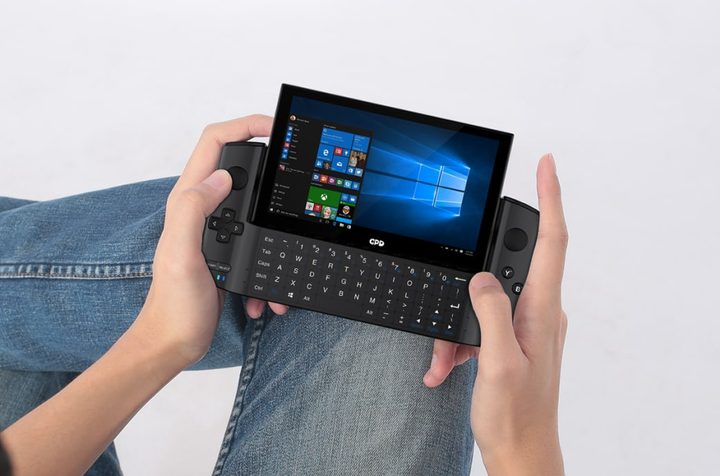
Unlike the Lenovo LaVie, which has a convertible hinge and attachable side controllers, the GDP Win3 relies on a screen that slides over the backlit keyboard, and the company claimed that it took its inspiration from Sony’s now discontinued UX series of UMPCs. When opened, the Win 3 doesn’t look like a larger version of T-Mobile’s defunct Sidekick.
“However, many users did not like the combination of keyboard + clamshell, and strongly asked us to launch a unibody type handheld game console,” GDP said on its Indiegogo crowdfunding page for the Win3. “For our users, after exploration, we referred to the design of the sliding mechanism of the Sony UX series, incorporated the new backlit touch keyboard, and finally designed the WIN 3. It allows us to renew the design of our Win original handheld game console and break the boundaries with the common clichés of clamshell form factor devices.”
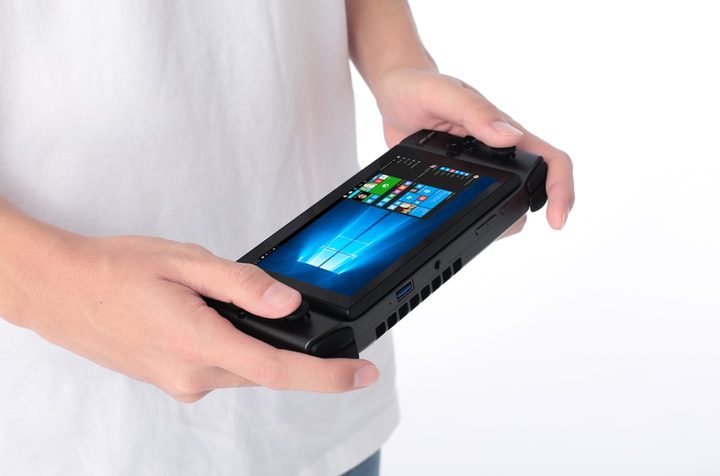
While GDP is turning to Indiegogo to crowdfund its Win3, the company has already exceeded its modest goal of $25,795 at the time of press by attracting 2,086 backers who have collectively put nearly $2 million into the project.
The highlight of the Win3 is that it comes with an array of USB-A and Thunderbolt 4 over USB-C ports. And like Lenovo’s LaVie concept, you’re getting the latest Intel 11th-Gen Tiger Lake processor with integrated Xe graphics, but you can also add an eGPU for even more robust discrete graphics performance through the Thunderbolt 4 port or by adding the optional dock, which gives you access to even more ports.
Essentially, with specifications that include 16GB of RAM and a 1TB solid-state drive, you’re getting the power of a thin and light notebook inside the form factor of an 8-inch slider complete with a battery and gaming control. GDP stated that battery life should go up to 11 hours for light computing tasks, or 2 to 3 hours for gaming.
Funding for the project starts at $799, and GDP anticipates a shipping date of May 2021. However, as with all crowdfunding campaigns, plans can radically change or get canceled before the product ships, so there is some risk involved.
A Ryzen-powered PC Switch
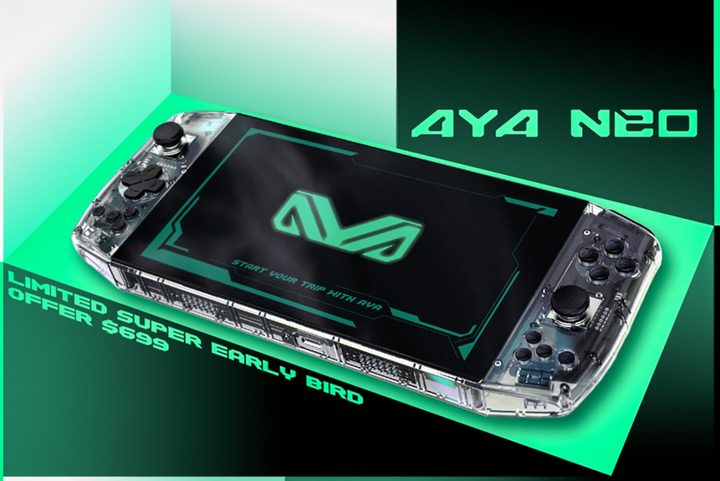
And if you’re a Team Red gamer who prefers AMD’s silicon over Intel’s 11th-Gen processor, Aya’s Neo is another handheld to keep an eye on, according to The Verge. With an early bird pricing offer of $699 once it goes live on Indiegogo, this one looks and feels more like a Switch — it’s not encumbered by the thickness of a sliding or transforming keyboard mechanism like some competing PC handhelds — and is powered by AMD’s six-core, 7nm Ryzen 5 4500U processor and integrated Vega graphics. The Aya Neo comes with a slightly smaller 7-inch display, but the company also promises smooth AAA gaming, like its competitor.
Gaming battery life is rated for approximately 5 hours on average with gaming.
One big difference — especially where enthusiasts are concerned — between the Neo and the Win 3 is that the Neo only supports USB-C connectivity, which could limit its appeal with serious gamers. Whereas Thunderbolt 4 allows gamers to upgrade their graphics when docked at their desk with an eGPU, USB-C doesn’t offer the same flexibility.
Still, both handhelds are a promising look at the future of portable, ultra-mobile gaming PCs if they ever come to the market.