1. Home
  2. Computing
  3. Legacy Archives

Cisco Valet Wants to Simplify Home Wireless

Add as a preferred source on Google

Networking giant Cisco has decided to nudge into the world of consumer Wi-Fi gear, today announcing its new Valet line of home Wi-Fi routers. The idea behind the Valet brand is to create simple Wi-Fi routers that everyday computer users can install and set up without any high-end technical knowledge: just pop the USB Setup Key into their PC or Mac, answer three questions, and the wireless service is ready to go. Cisco cites an IDC study that finds only about one third of US households are set up for wireless Internet—and that low rate of adoption is due in part to the complexities of setting up wireless networks.
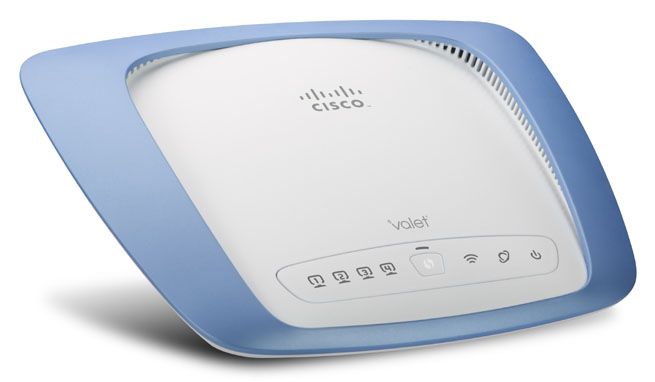
Image used with permission by copyright holder

“Valet is home wireless made easy,” said Cisco consumer products senior VP and general manager Jonathan Kaplan, in a statement. “With complementary backgrounds and expertise, our Cisco and Flip teams have combined forces to change the rules for home wireless with a product line that empowers consumers to easily set up, enjoy, and manage all of their wireless devices anywhere in their homes.”

Recommended Videos

Cisco says the Valets are so easy to set up that all users have to do is pop the included USB Setup Key in their PC or Mac, and the Valet software does the rest. Cisco says its Valet system takes the 20 or 30 steps normally involved in setting up a wireless network down to just three steps, and users can then move the USB Setup Key to additional home computers to painlessly get them up and running on wireless. Included Cisco Connect software then makes it straightforward to add more devices to the network (think iPhones, game consoles, etc.), set up a separate network for guests, establish parental controls, and customize security settings.

Cisco is initially offering two models of Valet routers: the Valet and Valet Plus. The Valet offers 802.11n Wi-Fi networking and four 100 Mbps Ethernet ports for connecting to a wired network, where the Valet Plus steps up to four gigabit Ethernet ports. The Valet is priced at $99.99; the Valet Plus goes for $149.99. Cisco is also offering a $79.99 USB Valet Connector that brings 802.11n Wi-Fi connectivity to older machines by popping into a free USB port.
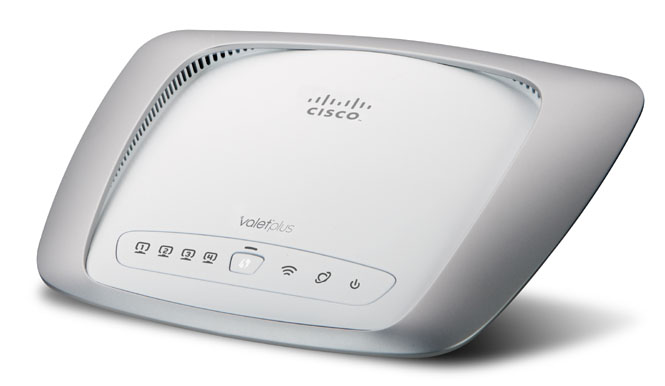
Image used with permission by copyright holder

The Valet move is a curious one for Cisco: the Cisco brand is more familiar to computer users through its high-end router and switch products that are commonly deployed in enterprises and data centers to manage large volumes of Internet traffic. Cisco also owns LinkSys, which has specialized in consumer-oriented routers and switches for years, and recently acquired Flip Video, makers of those inexpensive handheld digital camcorders.

Image used with permission by copyright holder
Geoff Duncan
Former Contributor
Geoff Duncan writes, programs, edits, plays music, and delights in making software misbehave. He's probably the only member…
AI is finding Apple security flaws faster than Apple can sort through them
Apple has limited how many bug reports researchers can keep open as AI tools produce both genuine Mac vulnerabilities and a flood of questionable submissions
Lighting, Architecture, Building

Apple has capped the number of security reports researchers can keep open at once after AI bug hunting put its review process under pressure, according to the Financial Times.

Some submissions describe hallucinated or purely theoretical risks. Others uncover vulnerabilities serious enough to require patches. Bynario told the FT that it found more than 50 possible macOS flaws in three weeks, including a privilege-escalation chain that could give an attacker full control of a Mac.

Read more
Anthropic is paying $1.5 billion over pirated books, but it can still legally cut up purchased ones
The settlement addressed unauthorized ebook downloads, not the destructive scanning of lawfully bought physical copies, a distinction now alarming booksellers
Book, Publication, Indoors

A federal judge has approved Anthropic’s $1.5 billion settlement over nearly half a million pirated books. The same litigation also protected a more physical method of feeding its AI systems. Anthropic bought print books, removed their bindings, scanned every page and destroyed the originals.

The legal divide came down to acquisition. The settlement covers books downloaded from LibGen and PiLiMi, while the court treated Anthropic’s one-for-one conversion of purchased books into private digital files as fair use. Training AI models on lawfully acquired material was also considered transformative.

Read more
Google Earth’s AI misadventure lasted only a day. It was a tale of dangerous ignorance.
Nuclear reactors, tanks, and historical destruction on a life-like satellite map? Yeah, that's bad.
Nano Banana AI image generator representation.

Technology behemoths are clearly not reading the room, or they are just moving faster than they should when it comes to AI deployment. Google has already stuffed its Gemini AI in every corner of its software stack, from Android to daily productivity tools like Gmail that are used by hundreds of millions of users every day. AI is everywhere. Not all of it is bad, mind you. But in a few places, it just feels forced.

In its latest AI-fication experiment, the company targeted Google Earth. The idea was to let the audience use its Nano Banana 2 AI image generator and make images that can be placed on the map view. On paper, it's a cool idea. What would the Colosseum of Rome look like in your urban neighborhood? Yeah, fun stuff like that.

Read more