  1. Home
  2. Computing
  3. Legacy Archives

Apple’s Safari beats Chrome’s growth in July

Add as a preferred source on Google
Safari-logo high res
Image used with permission by copyright holder

New figures from Net Applications show that July was a strong month for Apple’s Safari: the browser jumps from a 7.48 percent share of the worldwide browser market in June to 8.05 percent in July. Safari was one of only two browsers to gain ground during the month: the other was the traditionally fast-expanding Google Chrome, which went from a 13.11 percent share in June to 13.45 percent in July.

Net Applications’ figures also show Microsoft’s Internet Explorer (all versions) took a dive during the month, dropping to 52.81 percent—a nearly nine-tenths of a point drop since June. If Internet Explorer continues its share decline at its current rate, it could drop below the 50 percent threshold by the end of 2011—which would certainly mark a victory for all other browser makers.

Recommended Videos

Firefox—which just rolled out Firefox 5 as part of its new rapid release methodology—saw its share dip from 21.67 percent in JUne to 21.48 percent in July.

Microsoft has been urging people to stop using the compatibility- and security-deficient Internet Explorer 6 in favor of more modern browsers, and that effort may be paying off: Internet Explorer 6 has seen its share of the global browser market decline from 15.5 percent in September of 2010 to 9.24 percent in July 2011. However, it remains the second most-common browser in Microsoft’s stable, exceeded only by Internet Explorer 8, which accounted for a 29.30 percent share in July—that’s more than all versions of Firefox combined. Folks running Windows XP (which Microsoft would also like to see go away) can’t upgrade to the latest Internet Explorer 9, so they may be sticking with IE8 or trying out browsers like Chrome and Firefox that will still run on XP.

Microsoft has been pushing Internet Explorer 9 as the way forward for Windows 7 users, and that argument may be working: if results are isolated to just Windows 7 users, Internet Explorer 9 saw an increase of 3 percent between June and July.

Geoff Duncan
Former Contributor
Geoff Duncan writes, programs, edits, plays music, and delights in making software misbehave. He's probably the only member…
Topics
The maker of ChatGPT wants to make open-source projects less of a security bargain
OpenAI launches Patch the Planet for open-source security, with over 30 open-source projects on board.
openai-chatgpt-os

OpenAI has launched Patch the Planet, a new initiative aimed at fixing one of the internet's quietest problems – the chronically underfunded security of open-source software.

Patch the Planet pairs OpenAI's most security-capable AI models with Trail of Bits, a security firm that has committed its entire research organization to the effort, alongside support from HackerOne and Calif.

Read more
I sifted through the Prime Day chaos to find the best Apple deals actually worth buying
Apple's about to hike prices. Prime Day 2026 is your last chance to save up to $150 on MacBooks, AirPods, and iPads.
Prime Day Deals on Apple Products

Apple is set to increase the prices for its upcoming iPhones and MacBooks, as the company can no longer offset the rising RAM and storage costs. That means, if you are looking to upgrade your aging device, you should buy the current-generation Apple products rather than wait for the new ones.

And since Amazon Prime Day is offering good discounts on the latest iPhones, iPads, MacBooks, and other Apple accessories, this is the perfect time to buy them. Here are my favorite Amazon Prime Day deals for Apple products. 

Read more
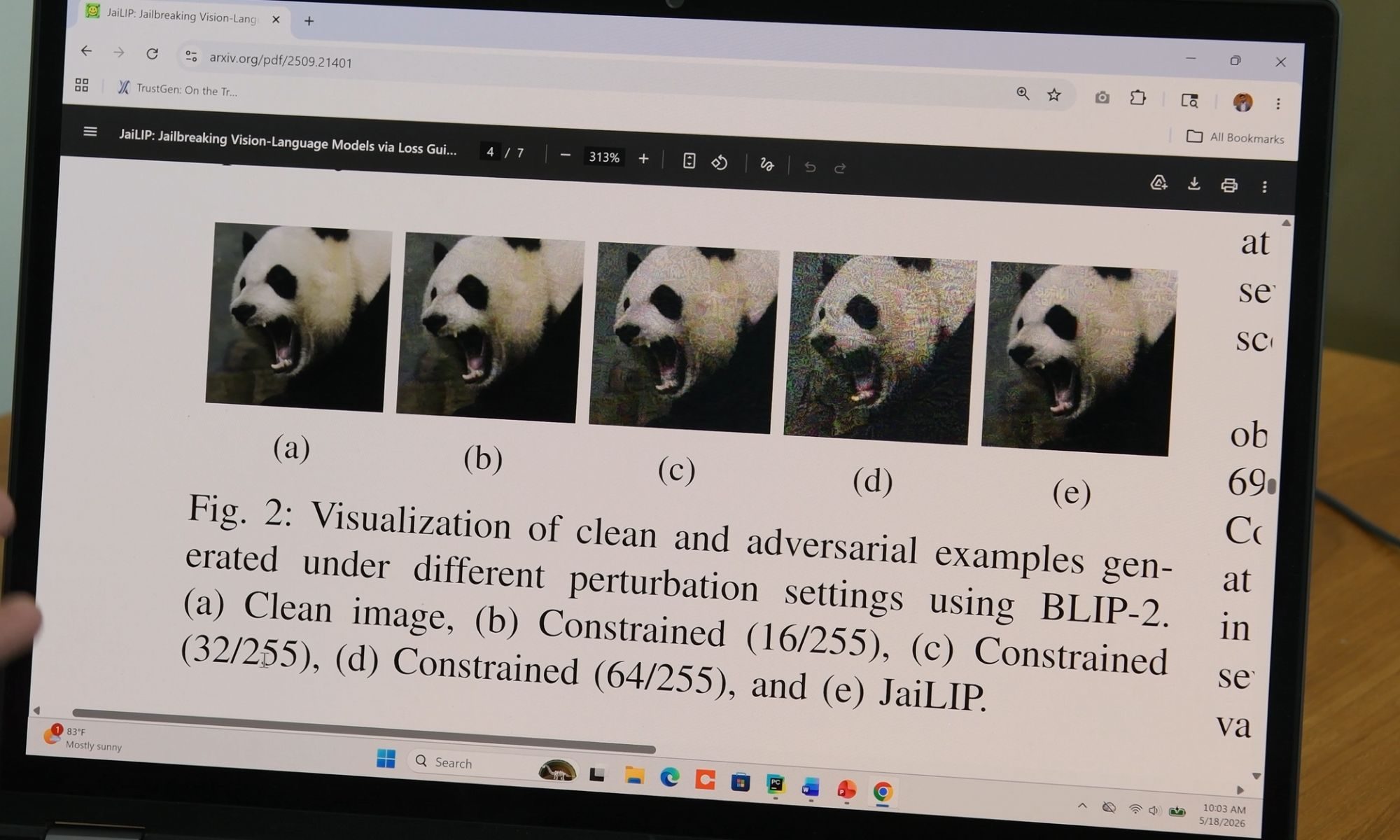
This sneaky photo trick gets AI chatbots to ignore their safety rules
Florida International University researchers built a method that nearly doubled the rate of harmful responses from a tested AI model using nothing but pixel-level edits in an image.
JaiLIP AI chatbot exploit image

A photo that looks completely ordinary to you could carry a hidden instruction to trick an AI chatbot into ignoring its safety rules, according to new research out of Florida International University. The study found that pixel-level alterations in an image that are invisible to the human eye can be enough to confuse the model reading the image and lead it to generate responses it would normally block.

Hacking what the AI sees

Read more