“Alexa, how’s my vision?”
Amazon recently announced that for Prime Day, it’s discounting the Echo Frames, the company’s smart glasses wearable, to just $100. In addition, you’ll be able to get a prescription-ready version of these glasses or a shades variant for only $20 more. Seeing that the original price of these frames starts at $250, it seems like a great deal. The real question is if they are worth even $100 of your hard-earned cash.
The Echo Frames are Amazon’s latest in smart wearable technology, although they are a couple of years old. They are another product to have Alexa with you everywhere you are. One of the most significant benefits of these glasses is that they aren’t entirely useless when the battery dies, unlike your smartwatch or earbuds. Yet, is that a good enough “feature” to buy a pair for yourself?
Only one look?

Glasses are a great accessory to add to your everyday outfit and to show off your personality. You see this when you go to any Sunglass Hut, clothing store, or even gas station. There are various styles, colors, and sizes to choose from within glassware. Unfortunately, you only get one utilitarian, primarily glossy black, squared design with Echo Frames. This style choice makes it much easier to manufacture from Amazon’s standpoint but gives you fewer options to match your glasses with the occasion.
There are now two different shell colors and multiple other lens options for Echo Frames, but the design is still the same. Luckily, the newest generation of Frames is light and relatively slim on the face. There is a choice between standard blue-light filtering lenses, prescription lenses, and sunglasses. This gives any pair of Frames you buy a bit more utility.
If you’re OK with not having a rounded pair of glasses or one that will work with your active lifestyle, then keep your wallet out a little longer.
How’s Alexa?
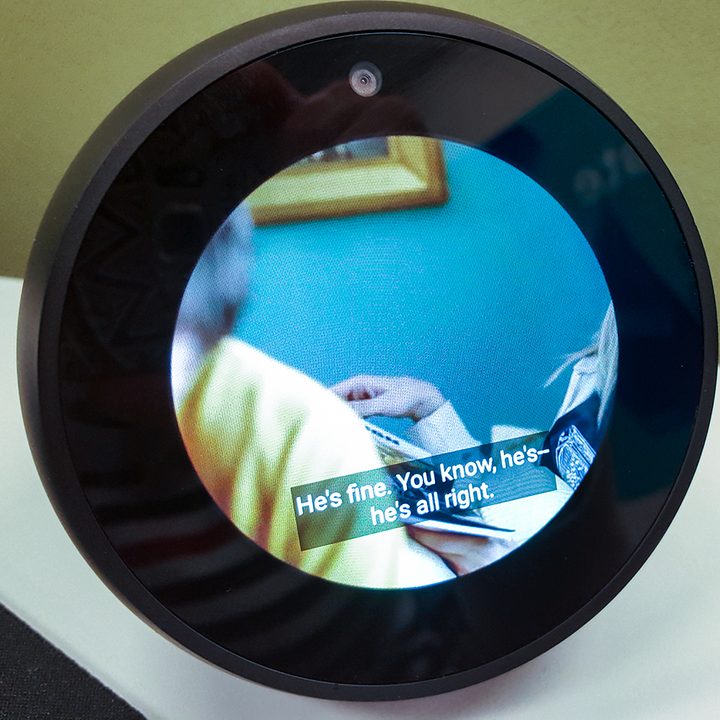
However, the primary purpose of buying these spectacles is for consistent Alexa access and usage. You can ask Alexa questions, issue commands, and hear notifications that come through your phone. Of course, you can already do this with your earbuds or smartwatch, but you don’t need to lose both hands trying to interact with it. Getting quick access to notifications from apps that you can customize and manage yourself can be pretty convenient.
Battery life is the main detractor from that convenience, though. Interacting with Alexa and your notifications on a full battery will only get you about 14 hours of use. If you constantly listen to music, you’ll get less than five hours of battery life. We’re used to five hours of battery life from our earbuds, but those come in a convenient case that will recharge them, and some have fast-charging features.
Speaking of audio, don’t expect the sound to blow your mind. Instead, consider the audio you’ll get as background noise or useful for vocal-focused media, such as phone calls or podcasts. The audio is decent, considering it comes from a pair of glasses, but you should not purchase it for an audio-exclusive experience.
Next up, with Alexa on your Echo devices, your thermostats, your phone, and potentially your watch, do you need another source for the smart assistant? With notifications coming from your phone and watch, do you need another source for those? There can be a thing such as notification overload, and adding another smart device may be the tipping point.
Lastly, the smart functionality of the Echo Frames is purely auditory; there’s no AR or display portion. There’s also no camera to the glasses. If you’re not bothered by having things in your ears, you can get the same experience with wireless earbuds.
But what about the deal?

The real catch is the fantastic deal that Amazon has put forth — practically 60% off the retail price. Designer glasses and shades definitely ask for more money than the Echo Frames’ sale price, though standard blue-light glasses can easily be found cheaper. So, honestly it depends on your use case for them.
To go back to the initial question of whether these are a gimmick, I would say the technology is not. But at the same time, I don’t think most people should buy this product. If you already wear glasses, are heavy into the Alexa ecosystem, and like the design, then you can buy these while they are on sale. Know that battery life can be sparse; this will be another nightly thing to charge. For the rest of us, though, just buy earbuds or wait until the next generation of glasses comes. Hopefully, Echo Frames’ third generation will include features that other devices can’t easily replicate.