When I was a kid, I wasn’t exactly tuned into politics. I wrote it all off as boring adult stuff, focusing my attention on important things like games and edgy humor. What I didn’t realize at the time is how much the tense political climate happening in the late 1990s and 2000s was quietly shaping me. I may have been too young to full understand the War on Terror when it began, but many of my views would end up shaping around it. I formed an anti-war stance and a distrust of authority thanks to then president George W. Bush. Had I simply spent my teen years buying into American nationalism, there’s a chance my views could have looked very different today.
Newly released indie game I Was a Teenage Exocolonist perfectly captures that experience. Developed by Northway Games, the narrative RPG tells the tale of a pack of human survivors who have fled a dying Earth and are attempting to colonize an alien planet. The story follows a child in the colony through 10 years of their life, from age 10 to 20. The player’s job is to guide them to adulthood as they navigate the political turmoil of their colony.
It may not nail every nuance, but I Was a Teenage Exocolonist doesn’t set out to reinforce player’s own beliefs with an obvious anti-capitalist critique. Instead, it’s focused on exploring how a political landscape shapes a child in their most malleable years. That’s all accomplished through thoughtful RPG and deck-building systems that reflect how kids absorb every little detail around them, even when we think they’re not paying attention.
I guess this is growing up
I Was a Teenage Exocolonist begins with some key setup. A spaceship full of humans is in the midst of a 20-year journey to find life on a new planet due to the Earth’s environmental collapse. The game’s main character is born onboard, prompting players to customize their identity. While players select a few personality traits upfront that will influence their stats, they’re largely a blank slate when the humans land on an alien planet dubbed Vertumna. Over the span of 20 years, players will guide their character to adulthood.
The game accomplishes that with a number of smart systems. At its heart, this is a true RPG with a list of stats to grow like empathy, perception, biology, and more. The core loop has players progressing a month at a time (there are 13 in a year in this reality, marked by different season cycles on the planet). Each month, players pick one activity to complete that will boost specific stats. When I’m 10, the options are limited. I can play some “sportsball” with friends to raise my bravery or take classes to increase some mental skills. Each option also increases my character’s stress level, so I need to take a rest every once in a while to recharge their batteries. As a player’s stats rise, they’ll gain access to more options that can broaden their horizons.
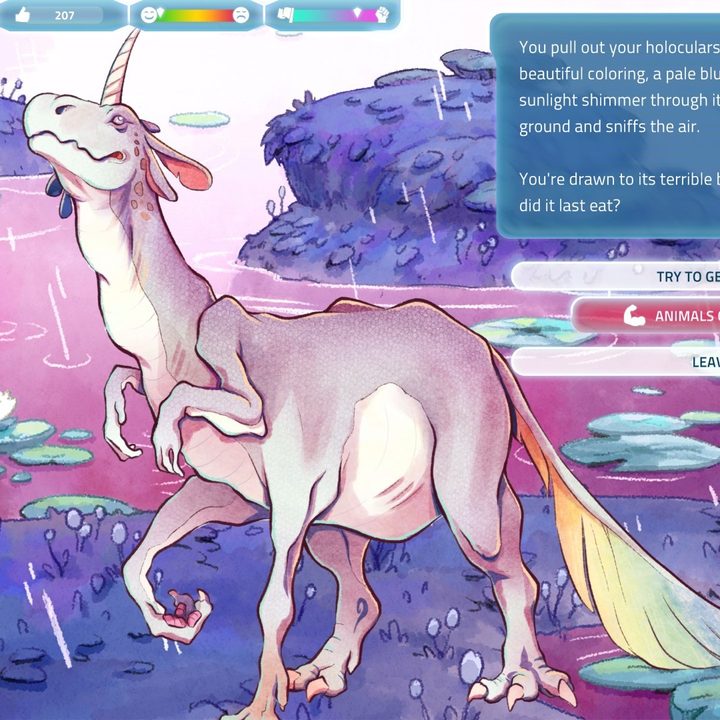
It’s an addictive loop that calls to mind Persona’s social link system. The game notes upfront that players won’t be able to max everything out by age 20, so they’ll need to think hard about who they want their character to be. I experimented early on, trying to settle on my future, before naturally gravitating toward a bolder child who wasn’t afraid to explore the world outside of the colony walls. Dialogue options can shape stats too, as well as increase my friendship with the few other kids in town (there’s a romance aspect too once you’re old enough).
What’s incredible is that I could really feel that gradual growth — it wasn’t just reflected in vague RPG numbers. At the start of the game, I played as a sweet kid that obeyed their parents and had a loyalty to authority. Everyone seemed well intentioned, so I had no reason to question them. That shifted radically, but naturally, by age 20. When my biologist parents revealed that they’d been hiding a serious food shortage from the colony, I started forming a distrust of the adults around me. I could see my real feelings reflected in the UI’s loyalty versus rebellion bar; it started sliding farther and farther to the right as I personally started questioning the structures of power I’d found comfort in initially.
When the game reached its conclusion, that blank slate was entirely filled in. My naïve 10-year-old who loved sports was now an adventurous 20-year-old who respected nature and understood that the people in charge aren’t always right. I could see my own journey through their eyes.
Memories as cards
There’s another layer on top of all that: the game’s deck-building heart. Each activity plays out as a quick card game where players need to reach a number goal by placing a series of cards from their hand down in a specific order. Each card has a number value on it, but extra points will be awarded for creating straights or placing pairs side by side. It’s essentially a puzzle minigame where players need to find a solution for the challenge with a handful of cards.
But what’s significant about the system is the cards themselves. These aren’t your standard-issue cards — each one is a physical manifestation of a memory. A memory of your character crawling for the first time might be a strength suit with a zero value, while one of eating cotton candy for the first time is worth 2. Throughout the 10 years, player’s decks grow larger and larger as they have more complex interactions with the world. A traumatic run-in with a shadowy stranger gives me a high-value card that’ll add 10 stress to my bar when played.
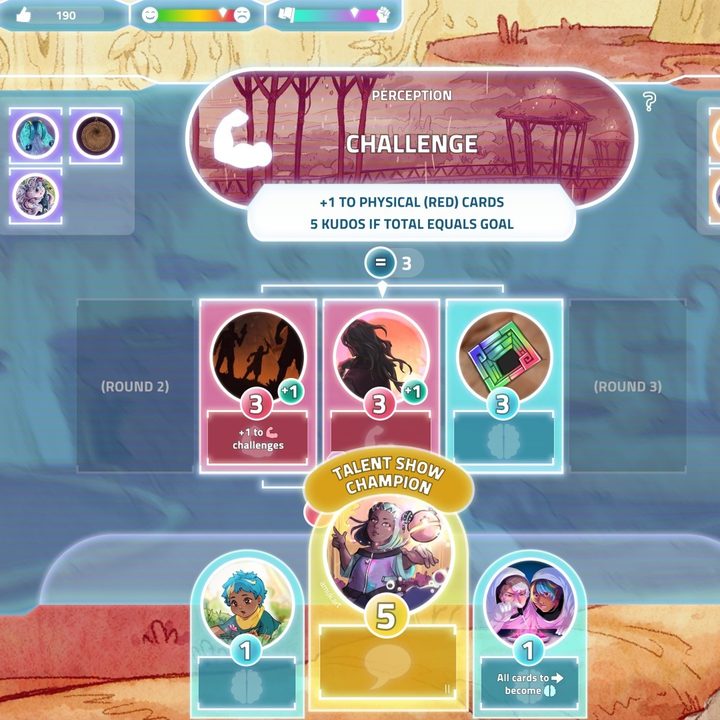
Cards, like memories, can be a curse. The game doesn’t exactly want players to curate a perfectly synergized deck. By the end of the game, mine was a bit of a mess as I lived with the baggage of my past. Resting gives players the option to delete a memory from time to time (I cut my less-valuable early memories first, mimicking how many of my own earliest moments are lost), but you’ll likely end the game with dozens of complicated cards that can make it harder to focus in the late game.
It’s another way the game brilliantly translates the feeling of growing up into mechanics. Everything in I Was a Teenage Exocolonist is a puberty-induced juggling act. Players are exposed to a constant stream of information, and each piece of it becomes a physical part of the character and their ability to navigate the world. Success comes from learning to live with that educational overload and mentally organize it. Turning a stream of memories into a functional deck is the key to creating an adverse human who’s prepared to deal with life’s unpredictable hurdles.
The limits of choice
As the game’s title suggests, this is a loaded game about colonization. Humans come to a planet, start leeching off its resources, and go to war with its wildlife. There’s no ambiguity about which side of the political spectrum its creators likely fall on, but the game isn’t an overbearing parent. Instead, it’s up to the player to decide how their character will respond to their political environment.
I Was a Teenage Exocolonist understands how people’s worldviews are byproducts of their environments.
Like many games that emphasize choice, that puts I Was a Teenage Exocolonist in a tricky spot. Whenever you allow a player to guide the narrative, you’re forfeiting some level of authorial intent. The game can’t exactly take a matter-of-fact stance on capitalism if it wants to give players the option to embrace it. Considering that the game features dozens of endings, over 800 unique story events, and a narrative setup that encourages players to live their life again, it’s hard to mine a universal truth from it all without undermining the premise.
The game seems to understand those limitations, which is its secret weapon. Rather than trying to make a grand commentary, it’s squarely focused on exploring how politics factor into a child’s development. How does a distrust of the adults in your life affect how you view authority figures? How does buying into nationalistic camaraderie cloud your judgement later? If the game’s beliefs seem naïve at times, it’s because we’re always looking at the world through the still-developing eyes of a kid — something that’s emphasized by characters often responding to situations with snarky meme-speak rather than enlightened monologues.
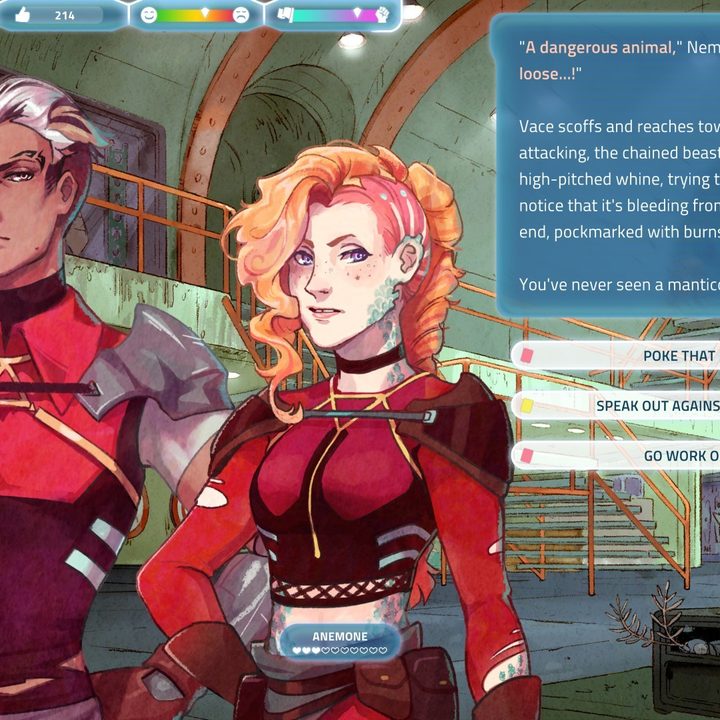
In one particularly effective scene, I was tutoring a younger child who asked what happened to the Earth. My directive was to lie, which would hide the fact that humans destroyed the planet. Instead, I chose to rebel and tell the truth. I never see how that plays out down the line, but I recognize it as a pivotal learning moment in that child’s life because I’ve had plenty like it before then.
I Was a Teenage Exocolonist understands how people’s worldviews are byproducts of their environments. Rather than lecturing players, it urges empathy and patience for those who are trying their best to untangle decades of ingrained beliefs. Sometimes I wince at the edgelord I was in my teen years, but I’m ultimately proud of how I shuffled all the cards I was dealt growing up.
I Was a Teenage Exocolonist is available now on Nintendo Switch, PS4, PS5, and PC.