1. Home
  2. Audio / Video
  3. News

Digital Trends may earn a commission when you buy through links on our site. Why trust us?

Sling TV increases prices for everyone as it adds more subscribers

Add as a preferred source on Google

Sling TV — the third-largest streaming provider of live TV in the U.S. — today announced across-the-board price increases. Starting after December 3, 2022, the base Sling TV service will cost $40, up $5 from the previous price. That’s for a single subscription to either the Sling Orange plan, or the Sling Blue plan. If you want both, it’ll now cost $55 — another $5 increase.

And that means you might well be on the lookout for a Sling TV alternative.

Recommended Videos

The price increase — which applies to new and current subscribers — comes on the heels of parent company Dish’s third-quarter earnings announcement, which saw Sling TV add about 214,000 subscribers for the three months ending September 30, 2022. That gives Sling TV a total of 2.411 million subscribers and snaps a six-month streak of subscriber losses.
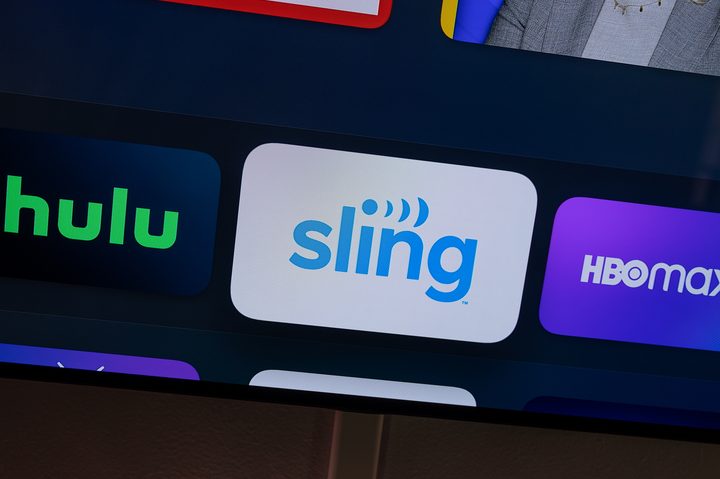
Sling TV logo on Apple TV.
Phil Nickinson / Digital Trends

Sling TV Group President Gary Schanman explained the price increase in an early-morning blog post.

“Sling doesn’t own the networks you watch — we pay programmers for their channels, and the price of programming continues to rise,” Schanman wrote. “We’re deeply committed to keeping costs low and continually work with programmers to provide service you can rely on, which is why we haven’t raised prices in nearly two years, maintaining a generous cost advantage compared to our competitors.”

Schanman also noted that Sling TV plans to add more than 150 new channels through 2023, new user profiles, and “Auto Bing Watching capabilities.”

Sling TV is as close as you can get to true a la carte TV, in which you theoretically would pay for only what you want to watch. Sling Orange and Sling Blue each have a relatively small number of channels compared to the more expensive YouTube TV or Hulu With Live TV, both of which have a single plan with upwards of 100 channels each. Sling Orange and Sling Blue have some overlap in channel listings, but the idea is that they’re different enough that you’d probably want both. From there, you’d augment your lineup with Sling “Extras” — additional add-ons that augment channels in categories like sports, news, and entertainment.

With the price increase, Sling TV edges slightly closer to the competitors it’s chasing, but its subscriber count also remains pretty stagnant at roughly the same number as it sported at the end of 2018. By comparison, YouTube TV has more than 5 million subscribers as of June 2022, and Hulu With Live TV last announced 4 million subscribers. (Hulu’s parent company, Disney, will update those numbers on November 8, 2022.)

Sling TV remains available on every major streaming platform, including Amazon Fire TV, Roku, Apple TV, Android TV, Google TV, web browsers, smart TV platforms, and gaming consoles.

Phil Nickinson
Former Section Editor, Audio/Video
Phil spent the 2000s making newspapers with the Pensacola (Fla.) News Journal, the 2010s with Android Central and then the…
Stop joining group projects with a blurry laptop webcam and buy one of these instead
Your laptop webcam is sabotaging your first impression. These five can fix it
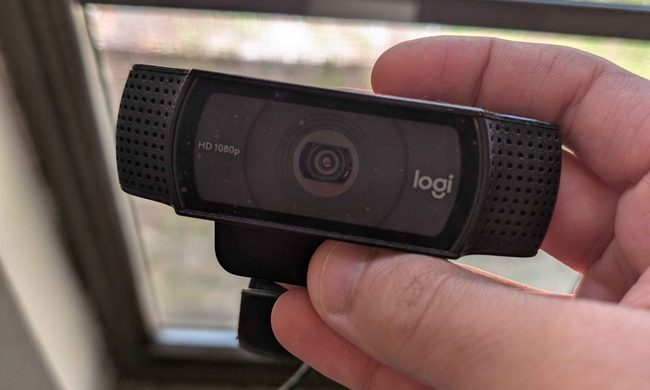
I'm holding my Logitech C920 1080p webcam in my hands.

The webcam built into your laptop might be good enough for a quick call with friends and family. But its shortcomings become much harder to ignore when you are presenting a semester project, interviewing for an internship, or maybe if you're planning to stream for fun.

Laptop cameras also tend to sit far too low, especially when the computer is placed directly on a desk. Meanwhile, a dedicated webcam lets you position the camera closer to eye level. This improves the framing and brings larger sensors, better microphones, and more effective low-light processing.

Read more
I desperately want a new classic Walkman, but Sony probably can’t give me one
Tech minimalism is begging for a new Walkman. Though rebuilding it may be close to impossible
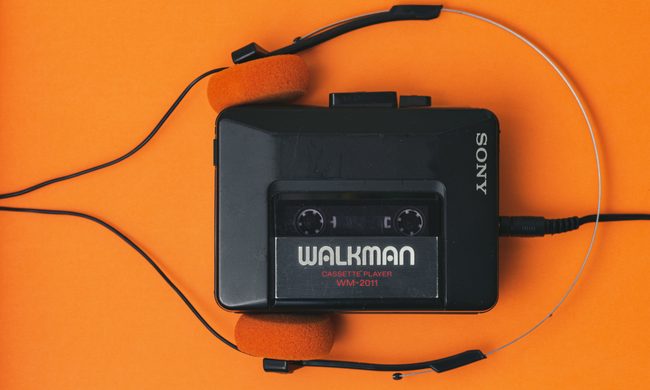
Sony Walkman WM2011

Every few months, another piece of tech that seems obsolete crawls out of a drawer and becomes cool again. The age of minimalism has revived the popularity of iPods among younger buyers. Dumbphones have become an escape hatch from endless notifications. Similarly, digital cameras are dangling from bags again. Physical media keeps attracting people who want something they can actually hold instead of another frustrating subscription.

All of this makes it the perfect time for Sony to bring back the classic Walkman, which was a phenomenon during the 80s and 90s. I would love one. Give me a compact cassette player, physical buttons, and wired headphones. Keep the apps, notifications, and algorithms that shape your taste of music. No more AI assistants or personalzied feeds, just you and your Walkman. There is only one problem though. Recreating the Walkman that people love and remember, would be far harder than putting an old design back into production.

Read more
Proton reveals how smart TVs track you and the escape situation is pretty grim 
Modern smart TVs fingerprint your screen content at the chipset level.
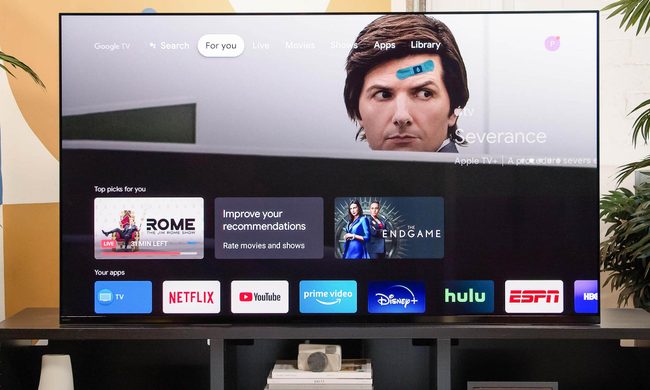
Google TV applications on the Sony A95K TV.

Your smart TV may know far more about your viewing habits than you realize, even if you rarely use its smart features. In a new privacy explainer, Proton warns that many modern TVs quietly collect data about everything displayed on the screen and share it with manufacturers, advertisers, and analytics companies.

The worrying part is that escaping this tracking is becoming increasingly difficult because many privacy controls are buried deep in settings or enabled by default. Proton argues that buying a smart TV today often means accepting a level of surveillance that most people never knowingly signed up for.

Read more