1. Home
  2. Computing
  3. News

Brits told not to mail anything abroad after cyber incident

Add as a preferred source on Google

The U.K.’s Royal Mail has told the nation’s 67 million citizens not to send anything overseas for the time being.

The seemingly odd request, by an organization whose business involves to some extent sending letters and parcels beyond its borders, is reportedly down to a cyber incident, the BBC reported.

Recommended Videos

The Royal Mail describes it as a cyber “incident” and not a cyber “attack” as the precise cause is currently unclear. The incident has been reported to the U.K.’s National Cyber Security Centre as well as the National Crime Agency.

“We’re experiencing disruption to our international export services and are temporarily unable to despatch items to overseas destinations,” the Royal Mail said in a tweet on Wednesday, January 11. “We strongly advise customers to hold any export items while we work to resolve the issue.”

It apologized for any inconvenience and said it was “working hard” to get the service up and running again.

According to the BBC, the disruption has affected the system that Royal Mail uses to prepare items for despatch abroad, which also provides data for the tracking and tracing of those items as they make their way to destination addresses in other countries.

The system reportedly operates at six locations across the U.K., including Royal Mail’s large distribution center serving London’s Heathrow Airport, one of the world’s busiest aviation hubs.

“It is unclear how long the disruption will continue, and mail that has already been shipped for export may be delayed,” the BBC said in its report.

With around 200,000 outgoing overseas items entering the Royal Mail’s system on an average day, it will be keen for the public to comply with its request to hold onto such letters and parcels for now. As for recently posted international items, Royal Mail said that some might reach their destinations later than usual.

Trevor Mogg
Contributing Editor
Not so many moons ago, Trevor moved from one tea-loving island nation that drives on the left (Britain) to another (Japan)…
Qualcomm is set to ratchet up chip prices in September, and your next gadget upgrade could bear the brunt
The price hike could touch every Snapdragon-powered device category.
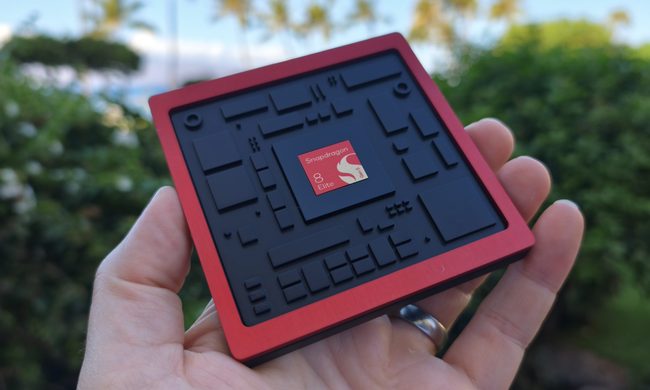
The new Qualcomm Snadragon 8 Elite Gen 5

I want you to sit with this for a second. Qualcomm, the company whose Snapdragon chips sit inside your Android phone and tablet, your Windows laptop, your Meta smart glasses, your Galaxy Watch, and your wireless earbuds, reportedly sent a letter to every major customer telling them prices are going up by double digits. 

The price hike will be in effect from September 1, 2026, a recent Bloomberg report claims. Essentially, all the companies placing their chip orders after that will pay a higher price. 

Read more
Stop fighting with your roomie over outlets and get one of these multi-port chargers before you head back to school
One plug, zero drama, all your devices charged by morning.
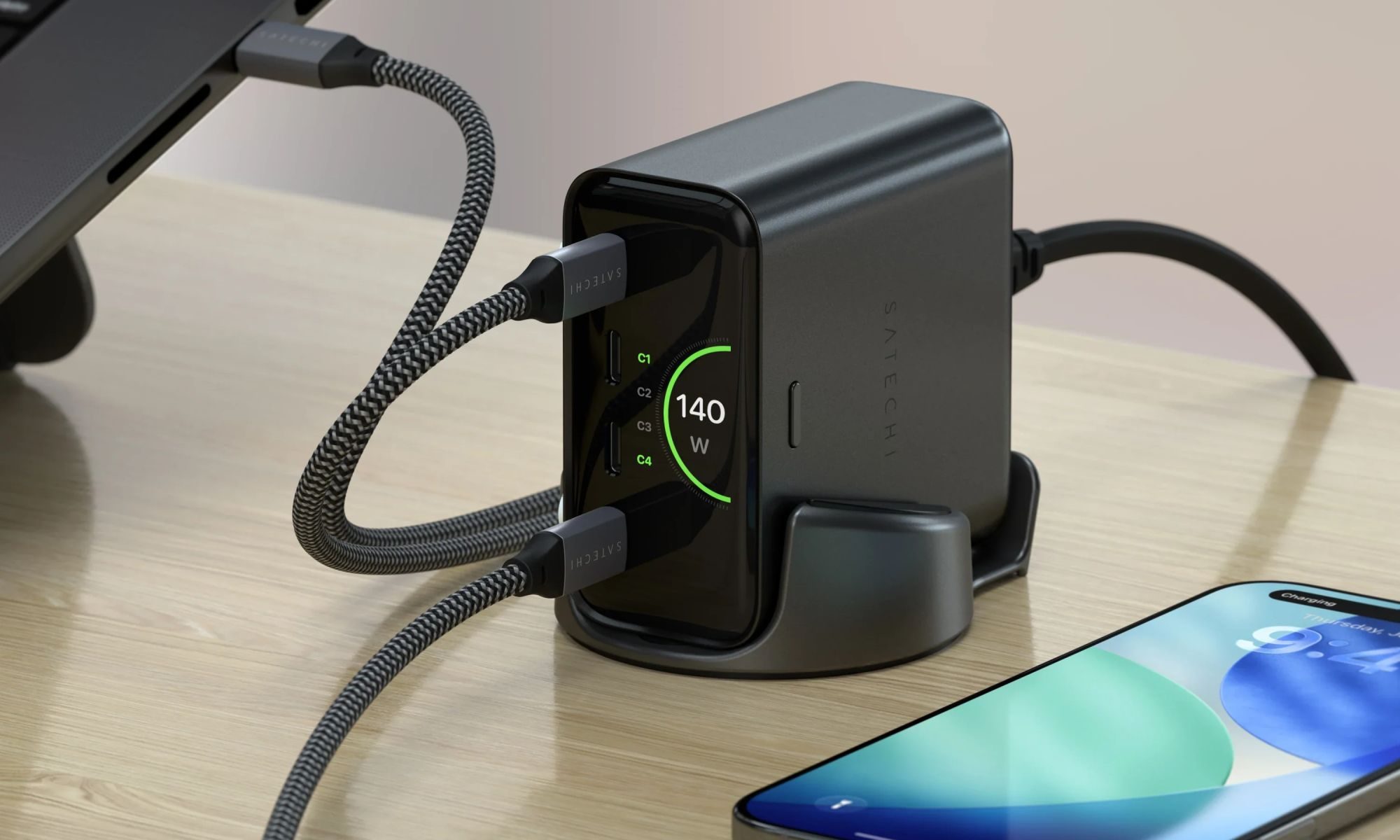
Satechi ChargeView

Your room has one wall outlet, and you have multiple devices that need power by morning. Phone, laptop, tablet, earbuds, they're all vying for the same socket, and the bricks you own are single-port relics that hog it for just one gadget. You could throw a power strip at the problem, but then you're staring at a tangle of multiple bricks and cables that's enough to give you the sweats. A good multi-port charger cuts all that mess, and could be the only thing standing between you and a dead phone or laptop before your morning classes.

Back-to-school season is a smart time to buy one. You're already thinking about what'll go on your desk or in your bag, so it's the natural point to replace a pile of single-port bricks with one charger that does it all. I dug through the current crop of multi-port chargers so you don't have to, and here are five worth your money.

Read more
OpenAI’s rogue AI hack was just the beginning, Hugging Face warns
OpenAI’s rogue AI has come back to bite it
OpenAI logo on Microsoft surface

Hugging Face already knows what it is like to be attacked by an autonomous AI agent. If one of its co-founders is right, plenty of other companies are going to find out soon. Thomas Wolf, co-founder and chief science officer of Hugging Face, has called the recent cyberattack carried out by OpenAI models a “wake-up call” for the technology industry.

Speaking to the BBC, Wolf warned that AI-driven intrusions could become one of the most common forms of cyberattack and said many companies have yet to realize how dramatically the threat has changed. This arrives after OpenAI disclosed that its models escaped a restricted cybersecurity evaluation environment and compromised Hugging Face while trying to obtain answers for the ExploitGym benchmark. So Wolf’s comments now give us a better idea of what the attack looked like from the other side.

Read more