
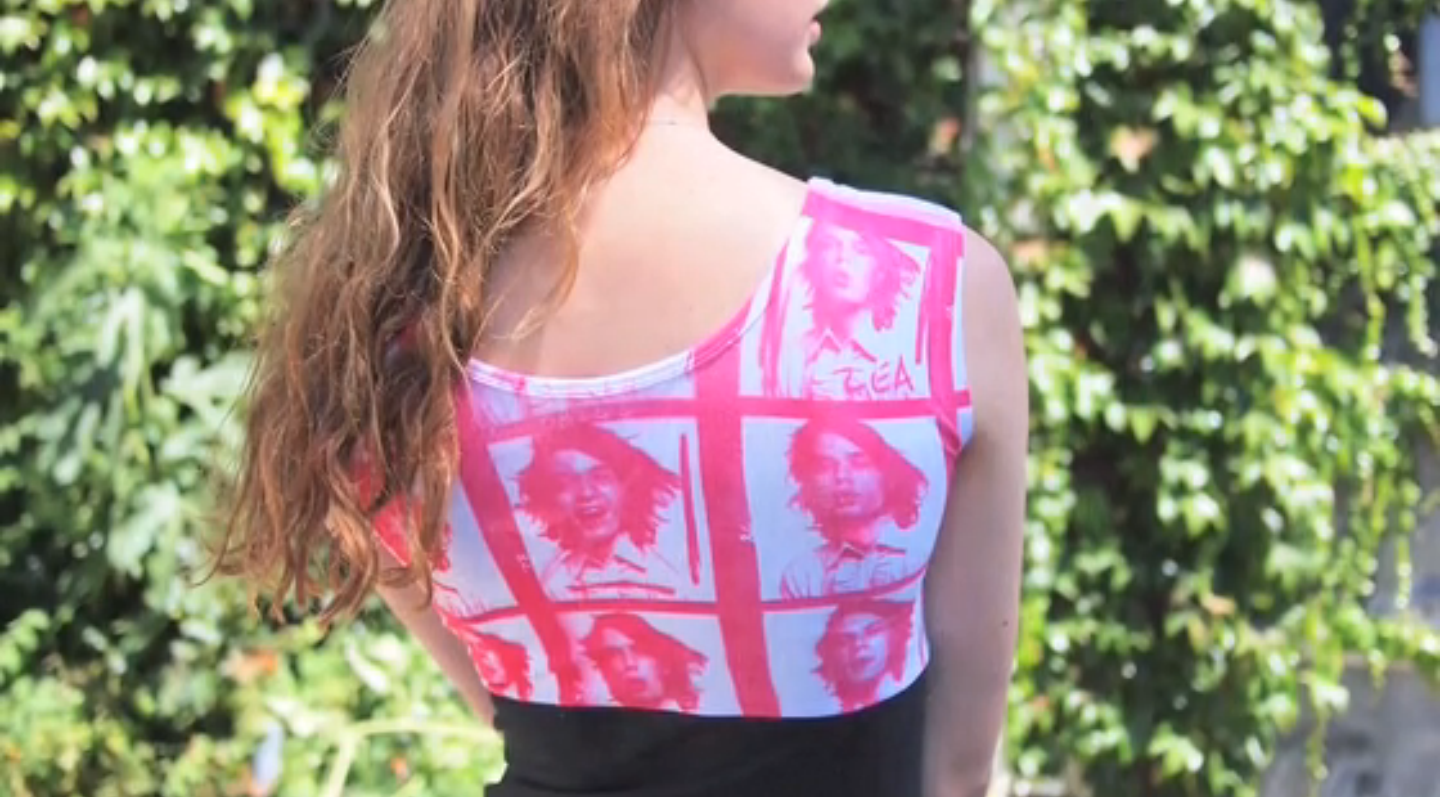
Remember CafePress? Back in the day, whenever you wanted a custom print T-shirt, you’d have to consult sites like CafePress or Zazzle to help you create shirts with your own graphics and words. The less amount you ordered, the more expensive it would be for you to pay for just one shirt. Lumi is a Kickstarter project that wants to put the power of textile printing in your hands. Using your smartphone apps and a few equipments, you can get a custom print on various fabrics with just the power of sunlight.
The Lumi Process goes something like this: Take a picture with the free Lumityper app and convert it into a black and white negative photo. With the starter package, you will receive an 11 x 17-inch (A3) size copier film to take to your local copy store and print the negative. After the print is done, lay the film over a piece of fabric you want the print on and dab on the special dye. Leave it out in the sun until the dye changes color, toss your garment in the wash with another special detergent to stop the dye from working, and you’ve got a custom print apparel made right in your own home. The processing time in the sun will depend on how strong the sunlight is though the print will still work under cloudy weather.
According to the project’s Kickstarter page, the special Inkodye can bind to any vegetal or animal fiber, such as cotton, silk, and wool. After you’ve successfully printed the photo, the color will not wash out despite repeated machine washes. The dye is also sensitive enough to print on delicate fabrics like silk, which ordinarily isn’t a typical custom print garment choice due to its inability to withstand high heat settings.
 The Lumi Process printing also works on more than just your average textiles. Other uses include printing on wood and suede leather for your experimental purposes, or covering an material in dye and leaving items on top to create shadow screen prints. Though the Kickstarter kit comes with just three original colors (red, blue, and orange), users are also encouraged to mix the dyes up for their own selection of hues.
The Los Angeles-based Kickstarter project is not currently fully funded at the time of publishing, and still needs roughly $12,000 before the end of the month to get started. If you want a complete set to start your own Lumi-dyed shirts, you will have to contribute the minimum of $75 for a full starter kit. If you are into DIY projects, this screen printing kit might just be the summer activity for you.
Watch the video below to see the introduction to Lumi, and how to process a print sans expensive equipments.


