AMD’s RX 9070 XT is the new king of AMD’s hill and that goes for almost everything that came before, too. Although AMD didn’t market its new card as a high-end option, it might as well have, because it can beat almost any other AMD graphics card you pit it against. Even potentially the AMD RX 7900 XT.
But that last-gen card does have more memory, compute units, and RT accelerators — even if it’s an older design. Let’s see how these two cards compare.
Pricing and availability
The AMD RX 7900 XT launched in December 2022, with a price tag of $900. It was an odd choice at the time, as AMD’s much-faster 7900XTX was only $100 more, but as prices came down over its generation it became a great 4K value buy towards the end of its lifecycle. It can currently be found for around $900 again, after recent GPU price gouging sent it back up.
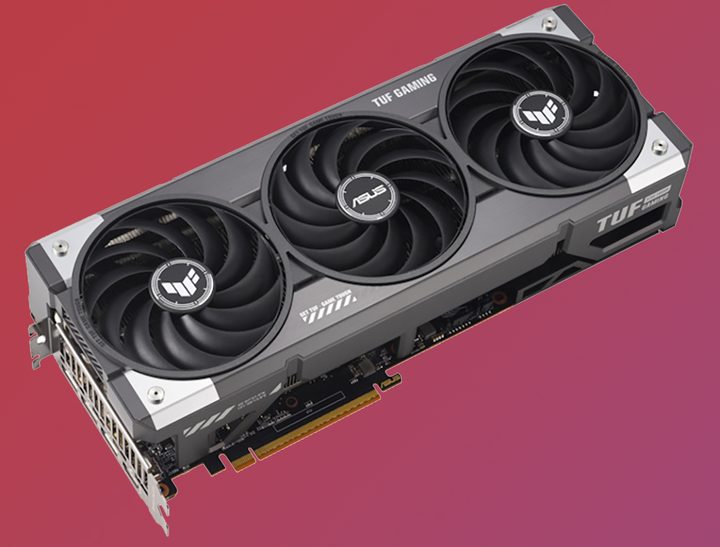
The 9070 XT launched in March 2025 and quickly went out of stock just about everywhere. Although its suggested retail price is just $600, its price quickly shot up after launch due to scalping, tariffs, and third-party manufacturer’s boosting their standard pricing. If you can find the 9070 XT in stock it’s often priced around $700-$900.
Specifications
| AMD RX 9070 XT | AMD RX 7900 XT | |
| Transisitors | 53.9 billion | 57.7 billion |
| Die size | 357mm squared | 529mm squared |
| Compute units | 64 | 84 |
| Ray accelerators | 64 | 84 |
| AI accelerators | 128 | 84 |
| Shader units | 4096 | 5376 |
| Game clock | 2400 MHz | 2025 MHz |
| Boost clock | 2970 MHz | 2394 MHz |
| Memory | 16GB GDDR6 | 20GB GDDR6 |
| Memory speed | 20 Gbps | 20 Gbps |
| Memory bus | 256-bit | 320-bit |
| Total board power | 304W | 300W |
On paper, there are many reasons why the 7900 XT might be considered high-end, and the 9070 XT might not. The newer card has fewer compute units, fewer transistors (albeit on a much smaller die), and fewer ray accelerators. It also has less memory, and a narrower memory bus, meaning weaker overall bandwidth.
But the 9070 XT has a much, much higher clock speed, and more new AI accelerators, opening up the option of FSR4 frame generation. This comes at a slight power draw increase, but it’s only just over 1% so won’t be noticeable for most users.
Performance
What’s impressive about RDNA4 is how dense it is. AMD has packed almost as many transistors as the 7900 XT into a much smaller die size, all while giving it more AI accelerators and enhancing the clock speed dramatically. This means that performance is strong, despite the claw back of on-paper specifications.
Unfortunately, we haven’t had a chance to fully test the 9070 XT yet, but we do have third-party results to look to for performance comparisons. Take famed overclocker der8auer’s results here, where he overclocked a 9070 XT to offer performance in excess of an RTX 5080, a card that blows about the 7900 XT.
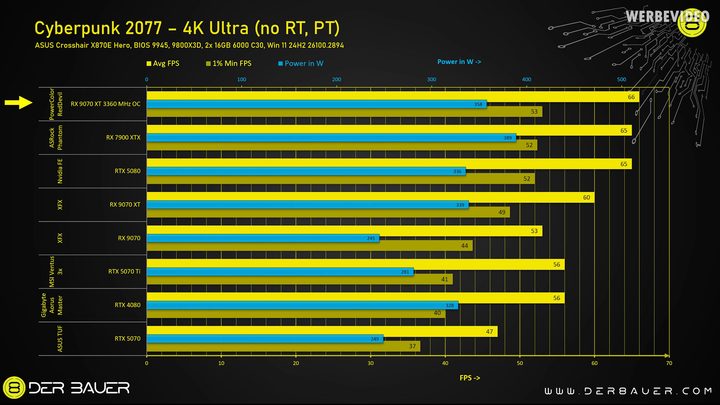
Just as notable, though, is the stock performance of the 9070 XT, here. In it, we can see it is only a handful of frames per second behind the 7900 XTX, a card that is far more powerful than the 7900 XT. And it’s without ray tracing.
GamersNexus performed some pretty in-depth testing of the new AMD card and found that in many games it could out perform the 7900 XT by up to 15%, even without raytracing. In games where raytracing is a major component of the GPU load, the 9070 XT blows away the last generation option.
Throw in frame generation, too, and there’s no denying that the 9070 XT is by far the faster card. While its 16GB of VRAM might mean it loses out on some visual features in future games, for now it’s the better option by a country mile.
The 7900 XTX still holds the crown as the best AMD graphics card, but not by much, and its lack of the newer raytracing and AI performance even means it lags behind in certain games.
The 9070 XT is much better, wait for it
The one frustration with the 9070 XT at the time of writing is pricing and availability. If stock is there, the 9070 XT, even at an inflated $700-ish price tag is the best graphics card you can buy for 4K performance in 2025. It has fantastic ray tracing capabilities, strong rasterization performance, support for new frame generation technologies, and enough VRAM to support the most demanding games.
Don’t spend $900 on it — it’s not that good — but the more modest versions are certainly worth buying.
While the 7900 XT is still a strong card, and if you have one of get the chance to buy one for cheap that you know hasn’t been run into the ground mining cryptocurrency, then it’s still worth considering. It’s good enough, too, that it’s not really worth upgrading from yet — especially if you’re mainly looking at AMD alternatives.
But if you’re considering buying one new? Stop. The 9070 XT or even the 9070, would be a far better place to put your money.