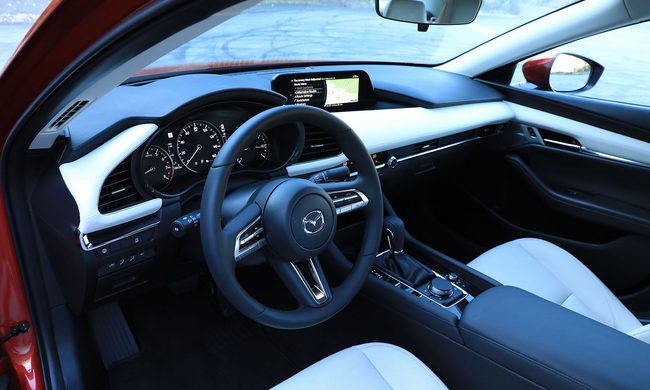


Welcome to Digital Trends’ weekly recap of the revolutionary technology powering, connecting, and now driving next-gen electric vehicles.
If you’re hesitant about electric vehicles (EV), it’s likely that your top concerns include how far you can drive in a single charge, how long it takes to charge the battery, and how much this advanced tech will cost you. And you’re not alone.
According to Deloitte’s 2025 Global Automotive Consumer Study, nearly half of U.S. consumers (49%) still say that available battery driving range is their biggest worry about EVs. That’s followed closely by the time required to charge (46%) and the lingering cost premium (44%) associated with battery electric vehicles.
But that narrative may finally be flipping. Just this past week, two developments showcase how much EV technology has evolved over the past decade: China’s BYD is breaking new grounds on just how far you can drive an EV on a single 12-minute charge. Meanwhile, the Nissan Leaf, seen as the first mass-market EV in 2010, is getting an impressive upgrade even as it remains one of the most affordable options on the market.
BYD’s bold battery bet
Chinese auto giant BYD, already the world’s top-selling EV manufacturer, may have just redrawn the limits of battery performance. According to Chinese media, and other reports, the company is testing a new solid-state battery that can add 900 miles of range in just 12 minutes of charging.
Let that sink in. That’s nearly four times the range of many current EVs—enough to drive from New York to Chicago —and charging that’s as fast as a coffee stop.
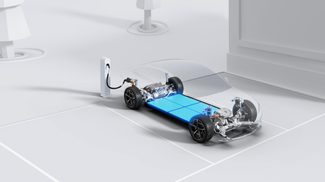
The battery in question is being trialed in a prototype vehicle reportedly based on BYD’s Seal sedan, and one model even achieved over 1,000 miles of total range in early tests. It uses solid-state battery chemistry, which replaces the liquid electrolyte found in traditional lithium-ion cells with a solid electrolyte, improving safety, energy density, and—clearly—charging speed.
Unlike conventional lithium-ion batteries, solid-state variants are less prone to overheating, can be charged at higher rates, and take up less space, allowing more energy to be packed into a smaller space. Toyota, QuantumScape, and others have been developing this tech for years, but BYD’s real-world trials might give it a huge first-mover advantage.
This leap in performance doesn’t just make EVs more appealing—it threatens to make current battery standards obsolete.
Nissan’s Redemption Arc
If BYD represents the future, Nissan is hoping to reboot its own place in the EV conversation by reinventing the car that started it all: the Nissan Leaf.
When the Leaf debuted in 2010, it was a revolutionary moment—the first mass-market electric vehicle. With a 24 kWh battery and a real-world range of about 75 miles, it wasn’t meant to cross continents but to commute quietly and cleanly. And at around $32,000, it was seen as an affordable gateway into a gas-free lifestyle.
Still, it didn’t take long for Tesla to steal the spotlight. By 2012, the Model S had arrived with 265 miles of range, but it came with a far steeper price tag—between $57,000 and $87,000—and didn’t exactly cater to the average buyer. The Leaf had affordability; Tesla had performance. But over the next decade, Nissan stopped investing in EV tech and the Leaf barely improved, while competitors caught up.
Now, Nissan’s finally stepping back into the ring.
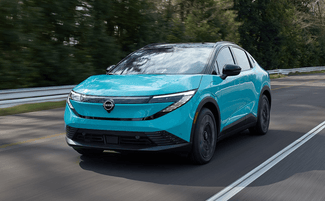 The 2026 Nissan Leaf has shed its econobox styling in favor of a sleek new hatchback body, powered by a liquid-cooled battery and equipped with Tesla’s NACS charging port—meaning it can now plug directly into Tesla’s Supercharger network. Range? Up to 300 miles. That’s a fourfold improvement from the original.
The new Leaf also comes with a revamped infotainment system featuring native Google Maps with EV route planning, a wireless charging pad, and a suite of driver-assistance tech under the umbrella of Nissan ProPILOT. Using sensors and cameras, it enables semi-autonomous driving, helping the Leaf catch up to the competition.
Here’s the kicker: despite the upgrades, Nissan aims to keep the price roughly in line with the original—which means we’re likely looking at something around $32,000–$35,000 before tax credits.
For a tech-packed EV with 300 miles of range and Supercharger compatibility, that’s an aggressive play. It repositions the Leaf not just as a nostalgic nameplate, but as a genuine competitor for entry-level EV shoppers.
The Road Ahead
The EV world has changed dramatically since 2010. What started as a slow, expensive, and often uncertain journey into electrification has accelerated into a global arms race for innovation.
On one end, you’ve got BYD pushing technological boundaries that could make 1,000-mile EVs as common as V6 engines once were. On the other, Nissan is trying to rewrite the Leaf’s history, proving that affordability and advancement don’t have to be mutually exclusive.
For consumers, the message is clear: those early concerns—range, charging, and cost—are being directly addressed.