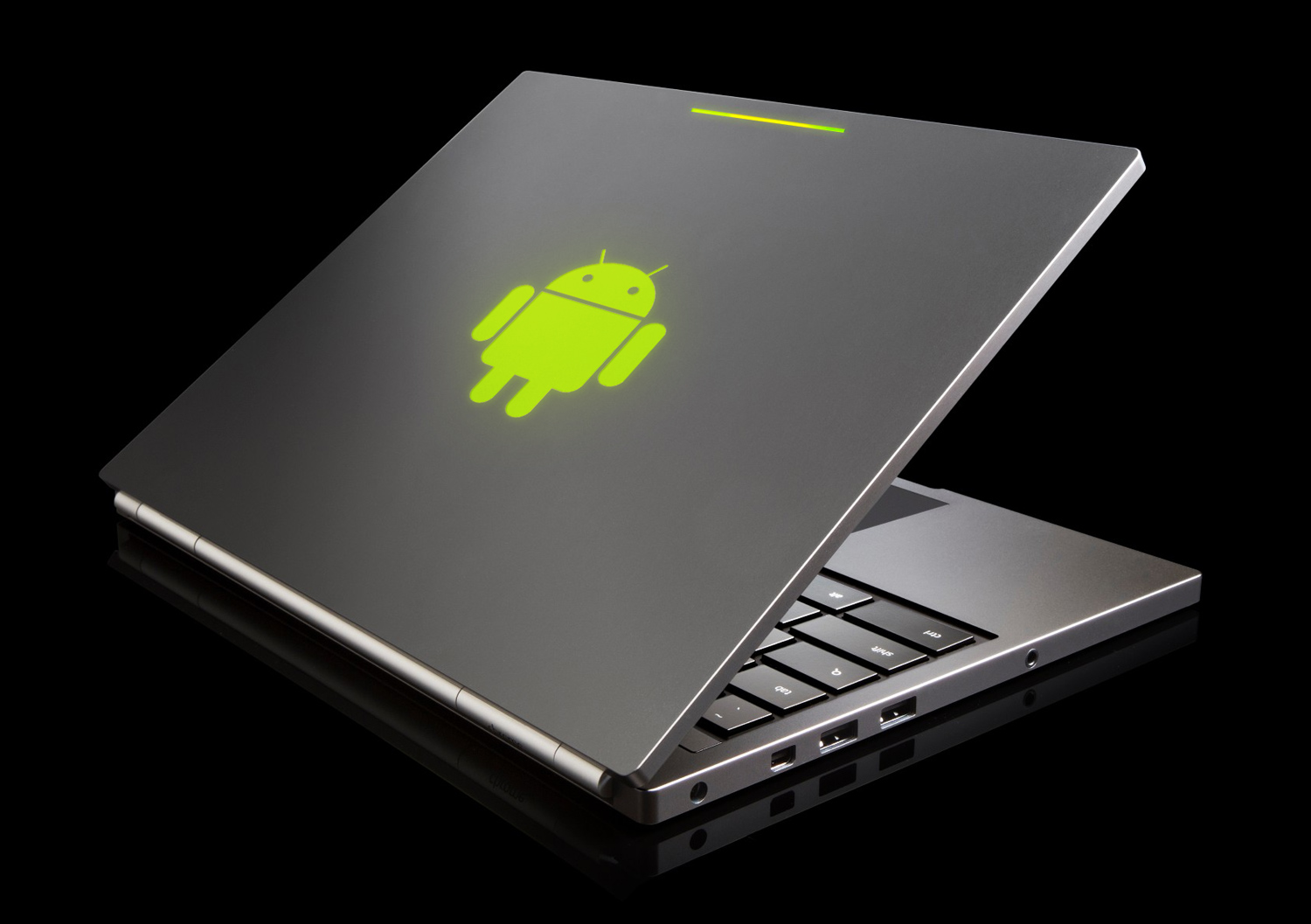
Last week, we heard talk about impending Android laptops powered by Intel’s upcoming “Bay Trail” Atom processor. With a $200 price tag, they’d go head-to-head with Android tablets. According to Dadi Perlmutter, Intel’s executive vice president and chief product officer, it looks like those rumors are true.
During Intel’s first quarter earnings call, CEO Paul Otellini first touched on the possibility that laptops with the next-gen Atom processor could be as budget-friendly as $200, though he made no mention what operating system those devices would run. We assumed the cheaper laptops would use Windows 8, but it turns out Intel has something else in mind.
It looks like these $200 Atom-based laptops will be running Android instead of Windows, Perlmutter told CNET yesterday. While Intel would like to see some lower-end laptops with Windows on the market, he said it “depends on how Microsoft prices Windows 8. It may be a slightly higher price point.”
Although Perlmutter didn’t talk about what these Android laptops will look like, according to DigiTimes’ laptop vendor sources, Intel has apparently been working on Android-based convertible laptops that can transform into a tablet.
While Bay Trail processors are designed for tablets, they also make a lot of sense inside a laptop as they have the same x86 architecture as Intel’s higher-end Core processors, which means you can use most of the software you already own with a dedicated keyboard (rather than with a third-party keyboard as with the case with most tablets). Atom-based devices should be much thinner (as thin as 0.3 inches) and have all-day battery life and weeks of standby.
Clearly, Android has laptop ambitions now that Sundar Pichai, an ex-Chrome OS and browser head, is in charge of Android development.
It’s no question that Android smartphone and tablet users will be excited at the thought of using the same apps they’re already familiar with on an Android laptop with decent computing power – Window 8’s comparatively weak app store has been a difficult sell to consumers. But beyond the convenience of playing the same Angry Birds across devices, the Android operating system will have to be optimized for the keyboard and mouse environment of a laptop, even a convertible one with a touchscreen.
After all, DT’s own Matt Smith thinks that the entire interface would have to be revised. “Multi-tasking would have to work well with a mouse, the homescreen would have to work better in landscape view, and a competent dock or taskbar would have to be introduced,” Smith said in his piece on why an Android laptop wouldn’t be worth buying. “Android doesn’t even have windows, so that too would have be introduced along with snap and resize functionality.”
As we’ve seen with Microsoft’s Windows 8 attempt to unify the interface for various devices, this won’t be an easy transition even for an OS as popular as Android.
Does an Android laptop stand a chance against a similarly priced Android tablet? How would you spend your $200?