
  1. Home
  2. Cars
  3. Legacy Archives

Big wireless slot cars? ‘AnkiDrive’ game hints at how autonomous driving could become a reality

Add as a preferred source on Google
ankidrive
Image used with permission by copyright holder

An early presentation at Apple’s World Wide Developers Conference (WWDC) on Monday featured a cool car game that may have immediate implications on the future of autonomous driving in the real world.

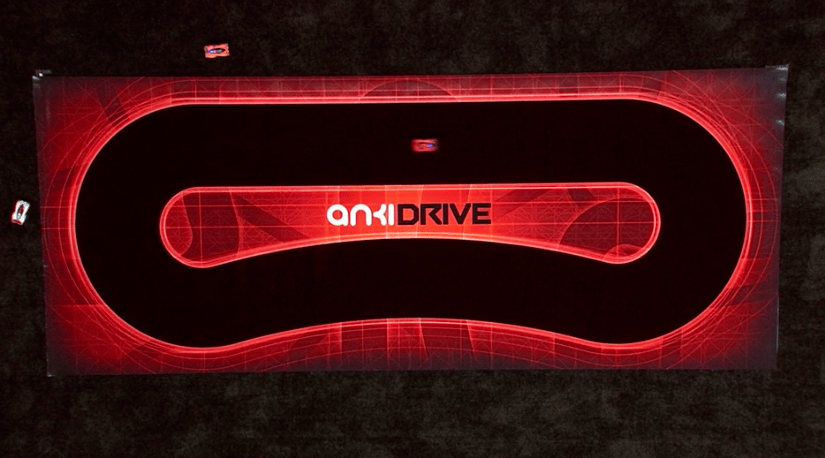
The team from Anki debuted a slot-car type game called “AnkiDrive” that featured three – and after a few hiccups – then four cars (real, physical little cars, not cars on a screen) on a small track (above) that rolls out like a big poster. Except the little battery-powered cars didn’t adhere to any slots and were controlled wirelessly by AI-type software on Apple computer products operating nearby. Anki’s co-founder stated “We’re using iOS devices not just as remote controls, but as the brains behind autonomous devices.”

Recommended Videos

As the cars zoomed around the track, the computers automatically sensed their locations and (usually) kept them from colliding. And they weren’t exactly creeping along, either. Watching them slow, turn, speed up, give space and pass – all on their own – was enthralling.

A “special” fourth car was introduced and the Anki developers instructed the other cars to try and block it’s progress, while the fourth car worked to get around them – all autonomously and while staying on the track. What was special about the red fourth car? This was a game, of course, so it had been “weaponized” and proceeded to blow the other cars off the track using virtual missiles.

But watching the game play out, it was tantalizing to imagine the action on a much larger scale, say that of a city, and the cars full of people chatting on phones and otherwise riding along without a care because the car was being controlled by a wireless network and a pumped-up version of the intelligence program.

Combined with improved versions of in-car technologies now available including automatic braking, rear-end collision avoidance, pedestrian/cyclist collision avoidance, lane departure warning (with automatic steering), blind-spot detection, automated parallel parking abilities, adaptive cruise control – and so on – the little racing game’s technology could be one more missing link in bringing safe, reliable autonomous driving to congested cities.

Bill Roberson
Former Video Producer / Photographer
I focus on producing Digital Trends' 'DT Daily' video news program along with photographing items we get in for review. I…
GM is giving OnStar AI smarts and a new way to monitor your parked car
GM's 2027 OnStar overhaul will introduce an AI assistant for natural-language vehicle controls and a new camera feature that records certain incidents around parked cars.
GM OnStar featured

Update (October 22 23:54 PT): In response to our query, GM clarified that offline recording support is already available on eligible vehicles. Like Tesla's Sentry Mode, it requires owners to connect a USB drive to save incident recordings, which can be viewed on the vehicle's infotainment screen. The upcoming Connected Cameras feature will build on this by giving owners remote access to these recordings via the revamped OnStar app, allowing them to check footage without walking out to their car.

General Motors has announced plans to add a new Connected Cameras feature to its OnStar service starting next year, giving drivers a way to monitor parked vehicles remotely and capture footage of certain incidents.

Read more
Musk says you can’t just buy the Cybercab. It’s primarily for Tesla-owned cab service
Plan on riding a Cybercab, not parking one.
Tesla Cybercab at night

Missing out on the self-driving future is a tough pill to swallow, especially as a car enthusiast. But that is what Tesla handed us on Wednesday, without a hint of mercy.

During its October 21, 2026 earnings call, Elon Musk told investors the Cybercab is meant mainly as a ride service. Further, nearly all of them will be owned and managed by Tesla.

Read more
Tesla will let you add your Model Y to its Robotaxi fleet with the FSD V15 update
Tesla is targeting the second quarter of 2027 for owner-operated robotaxis, though earnings, insurance, and eligibility remain unclear.
Tesla Model Y on road with red brick building in background

Tesla is making steady progress toward letting owners turn their idle Model Y vehicles into a source of passive income. The automaker provided a concrete timeline during its latest earnings call and stated that the first customer cars could join its Robotaxi network in the second quarter of 2027.

FSD V15 will bring unsupervised driving to customer cars

Read more