

It was the year 2000 and the height of Pokémania. Hudson Soft launched a Pokémon game that felt wonderfully familiar, but put its own unique spin on what was quickly becoming an established formula. Pokémon Trading Card Game is a Game Boy Color title that brings the uber-popular trading cards to a single-player, portable format — and I think it’s long overdue for a new entry.
Pokémon Trading Card Game took the core concepts of the mainstream Pokémon games (at that time, Pokémon Blue and Pokémon Red) and gave them the ol’ switcheroo. Instead of catching Pokémon in the wild, players traveled around an island and battled other “trainers” in card duels. If you won, you received booster packs that let you improve your deck.
Over the past couple of weeks, I’ve been cleaning out a room in my house that acted as my game room (to make way for a nursery). In doing so, I came across my collection of Game Boy Color games, and Pokémon Trading Card Game was one of the first ones I saw. It made me wonder where there wasn’t another in the franchise, or a more modern version of the game.

Sure, we have Pokémon Trading Card Game Pocket, but that’s sort of a gacha-style multiplayer title. There’s also the Pokémon Trading Card Game app, but again, it’s multiplayer only; there are little to no single-player elements to it. What made the Game Boy Color’s Pokémon Trading Card Game so different is the fact it was a fully-fledged RPG.
It boasted an entire world to explore, a wide number of foes to battle, and an interesting variety of decks to build. And again, like the mainstream games, there were eight different Club Masters to defeat. Once you beat all eight, you had the chance to go up against the four Grand Masters, and finally, the champion — who, unsurprisingly, ends up being the rival you’ve battled throughout most of the game.
It was true to the real-world TCG
At one point, card-based RPGs were everywhere. There are at least a dozen different Yu-Gi-Oh! games that have at least some RPG elements, although many of them introduce rules that aren’t found in the real version of the games. Pokémon Trading Card Game was different; for the most part, its rules were the same as the tabletop version, and it was a decent way to learn how to play the game.

That said, the game did have a few cards with abilities that just aren’t feasible in the real world. For example, there’s a Ditto that can transform into another basic Pokémon from your deck. It’s chosen at random, though, so that means you would have to sort through your entire deck, pick out all the basics, let your opponent see them, and figure out some way to select one randomly. And after all that, you’d have to reshuffle. That’s a lot for a single card.
But in a video game? That work is done instantly. There are three Game Boy Color-exclusive cards: the aforementioned Ditto, a Dragonite with the Healing Wind power, and an Articuno with the Quickfreeze power.
Besides that, the game was a near-perfect match to the first three sets of the physical TCG. There are 226 cards in total in the game, with only two removed from the physical card game (but replaced with the game-exclusive cards above).
25 years ago was a lot longer than it seems
Unfortunately, Pokémon Trading Card Game shows its age. The game isn’t fast or smooth, but modern emulation helps. Pokémon Trading Card Game is available as part of the Nintendo Switch Online service, and it’s a fun way to dip your toe in and explore some of the earliest Pokémon games.
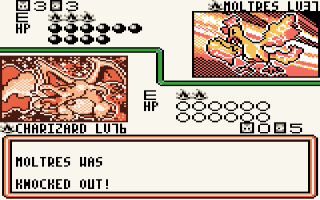
Before diving in, you should know a few things. The RNG in this game hates you, and it wants to hurt you. The coin flip system feels rigged towards your opponent, and there’s a luck factor involved in obtaining the cards you want that will have you sitting in a ring of horseshoes and four-leaf clovers while you play.
And if your primary exposure to the Pokémon Trading Card Game is modern packs, toss out everything you know. The early version was what we might describe as “slightly unbalanced.” And that would be a wildly generous description.
Energy Removal was a card that cost nothing to play and let you take an energy away from your opponent. Professor Oak let you draw seven cards. Cards like those are practically unheard of today, unless an additional cost is incurred. It’s possible to build immensely broken decks and allow you to cheese your way through the game, but that’s part of the fun in itself.
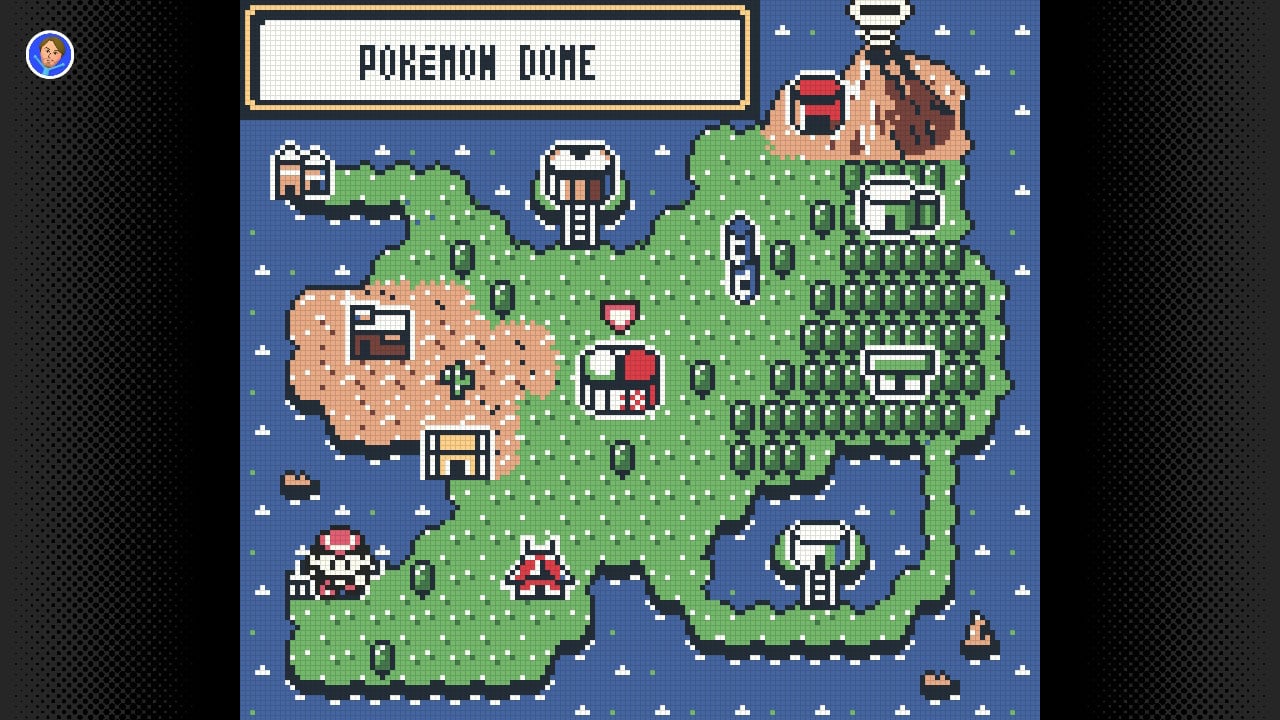
Nintendo is missing a major opportunity. The Nintendo Switch 2 is fertile ground for a card-based RPG, and I think it’s well past time that Pokémon Trading Card Game received a proper sequel (that actually comes to the US) that incorporates modern cards. After all, no one has the money to drop on tons of boosters these days, but there’s something about cracking open a pack, virtual or not, that’s enormously satisfying.
It’s an easy game to picture. It could be made in the same style as Pokémon Scarlet and Violet, but instead of battling with actual Pokémon, it’s just cards. It could incorporate the modern sets (and have a few battles that forced players to use classic cards), especially since those mechanics already translate well to the online version of the TCG.
Of course, players want to show off these days. Battles and trades could take place online, and there could be a showcase function for players to exhibit full-art cards and other rare finds. Pokémon Trading Card Game is one of the most popular card games out there, so throw in a limited-edition card that can only be obtained by purchasing the game, and it practically sells itself.
Maybe it’s a pipe dream. Trading card games (and card games in general) have always been my jam, but I have fond memories of long card rides spent playing Pokémon Trading Card Game and trying to build the perfect deck. The game holds a special place in my heart, but I also think it’s a gap in the market that is sorely overlooked at the moment.
It boils down to this: give me less battle royale and more TCG.


