1. Home
  2. Computing
  3. Legacy Archives

Microsoft Opposes Google-DoubleClick Merger

Add as a preferred source on Google
Microsoft Opposes Google-DoubleClick Merger
Image used with permission by copyright holder

In an ironic twist, Microsoft general counsel Brad Smith testified before the Senate Judiciary Committee yesterday in opposition to the proposed merger between Internet titan Google and online advertising giant DoubleClick. The proposed deal is facing antitrust scrutiny as competition heats up in the Internet advertising arena. While acknowledging the industry is very fluid with companies like Yahoo, AOL, and even Microsoft (which just paid over $6 billion for aQuantive) making large moves in recent months, Smith still told the Committee that Google’s acquisition of DoubleClick poses "an imminent risk of giving a single company the degree of market power that could foreclose competition."

The concern is that if a single player were to become dominant in the online marketing world, it could set arbitrary prices for online advertising without fear of being meaningfully undercut by competition: advertisers would have no choice but to pay whatever exhorbitant rate the market leader demanded, or (essentially) no one would see their ads. A study just published by the AEI-Brookings Joint Center on Regulatory Studies—and partially funded by Microsoft and AT&T—suggests a combined Google/DoubleClick would do so. The report’s authors, Robert Hahn and Hal Singer, conclude: "A combined Google-DoubleClick would have greater incentive to increase the price of DoubleClick’s advertiser tools relative to a standalone DoubleClick."

Recommended Videos

Smith also speculated that a Google/DoubleClick merger could have negative impacts on Internet users’ privacy, especially of Google and DoubleClick were to pool their respective databases of user demographics and behaviors.

Microsoft and—by proxy—AT&T citing antitrust concerns before a Senate Committee is ironic, since both companies have been found to have abused monopoly power in their markets.

Google downplayed concerns over the merger, and promise to address privacy issues by enabling users to opt out of usage and behavioral tracking. In a letter read by Senator Charles Schumer (D-NY), Google CEO Eric Schmidt said Google was exploring the idea of enabling users to disable Google’s tracking cookies.

Google also believes the acquisition does not raise any antitrust concerns, arguing on its public policy blog that Google’s and DoubleClick’s businesses are complementary rather than competitive, since DoubleClick is primarily an advertising distributor and does not buy or sell ads or advertising space.

Geoff Duncan
Former Contributor
Geoff Duncan writes, programs, edits, plays music, and delights in making software misbehave. He's probably the only member…
How to install macOS 27 Golden Gate public beta on your Mac?
From a smarter Siri to a more reliable Spotlight, here's your full walkthrough for installing macOS 27 Golden Gate's public beta today.
macOS 27 Golden Gate

Along with iOS 27’s public beta, Apple has also released macOS 27 Golden Gate’s public beta build, so that early adopters can get their hands on the new features, including Siri AI, and provide timely feedback to help ensure a stable iOS launch in September. 

If you’re sold on all the new features but don’t want to put your faithful MacBook through developer beta duty, a public beta offers a much more refined experience. To install macOS 27’s public beta, follow the steps given below. 

Read more
Microsoft is finally fixing the worst thing about Windows Search, but you can’t try it just yet
Windows Insiders in the Experimental channel are getting a Search experience that finally feels less of a billboard and more of what users actually need.
Page, Text, Person

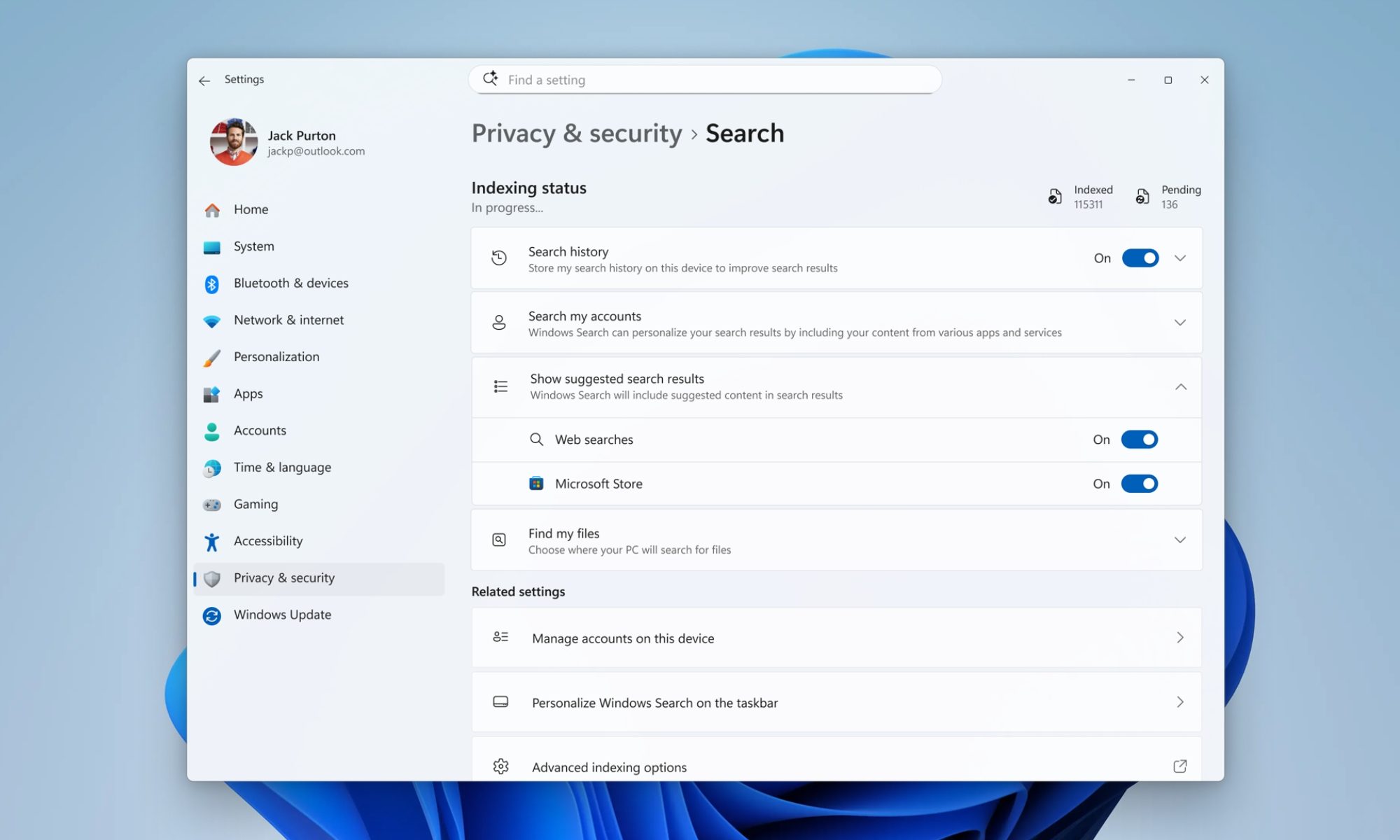
Windows Search has been a mess for years, and I do not use that word lightly. Open it to find a file, and you get trending Bing topics, Microsoft Store promotions, and an AI tools tile that just opens a browser. 

That is changing, but not immediately for all users. Microsoft is rolling out a batch of Windows Search improvements to Insiders in the Experimental channel, and for once, this isn't just a fresh coat of paint.

Read more
Apple doesn’t want to share this AirPods feature with Meta, but the EU may force its hand
Spring 2027, EU only, built under DMA pressure.
The front of the Ray-Ban Meta smartglasses.

I’ve been an AirPods user for the last four years, and one of the things that makes it genuinely hard to leave behind is the seamless, almost magical pairing experience across devices. Open an AirPods case near your iPhone, and a pop-up appears within seconds. Switch to your Mac and the audio follows. 

However, the experience is limited only to Apple devices. Doesn’t matter whether you have one of the coolest pieces of tech on the market right now; if it’s not Apple, it won’t get the same treatment. However, that might change for the Meta Quest or the Ray-Ban Meta glasses, thanks to pressure from the EU. 

Read more