1. Home
  2. Computing
  3. News

ChatGPT now has a Lockdown Mode, but should you enable it?

A digital safe mode that prioritizes caution over convenience.

Add as a preferred source on Google
chatgpt-chat-history-feature
Solen Feyissa / Unsplash

ChatGPT has a new security feature called Lockdown Mode, but OpenAI is clear about one thing from the start: most people don’t need to turn it on.

The new mode is designed for users who face unusually high digital risk, such as journalists, activists, or people working in sensitive environments. For everyone else, OpenAI says the standard protections built into ChatGPT are already enough.

What is Lockdown Mode in ChatGPT?

Lockdown Mode is essentially a high-security setting that restricts what ChatGPT can do. When enabled, the system behaves more conservatively to reduce the risk of exploitation, manipulation, or unintended data exposure. OpenAI describes this as shrinking the product’s attack surface, even if that means limiting useful features.

One of the biggest changes affects web access. Web browsing is restricted to cached content only, which prevents ChatGPT from pulling live information from the internet. That reduces the risk of sensitive data being transmitted, but it also means search results can be incomplete or outdated.

Recommended Videos

Image handling is also tightened. ChatGPT can no longer include images in its responses, although users can still upload their own images and continue using image generation tools.

Deep Research, which allows more complex multi-step analysis, is disabled entirely, as is Agent Mode, which would otherwise allow the system to carry out more autonomous actions.

Other restrictions focus on networking and files. Canvas-generated code cannot be approved to access the network, and ChatGPT cannot download files for data analysis. It can still work with files you manually upload, but it won’t fetch anything on its own.

Together, these limits are meant to reduce how much the system can reach outward or act independently.

Who can use Lockdown Mode right now?

Lockdown Mode is currently available to ChatGPT Enterprise, Edu, ChatGPT for Healthcare, and ChatGPT for Teachers. OpenAI says it plans to roll the feature out to consumer and team plans in the coming months.

For organizations, Lockdown Mode is managed at the workspace level. Admins can create a custom role specifically for Lockdown Mode and assign it to selected users, allowing tighter controls without changing settings for everyone.

In other ChatGPT news, the platform recently added the ability to steer Deep Research using content from your own sites and apps, giving more control over how results are gathered. At the same time, changes to ad settings for free accounts mean you can avoid ads, but your usage limits may shift.


Manisha Priyadarshini
Manisha Priyadarshini is a tech and entertainment writer with over nine years of editorial experience.
Qualcomm is set to ratchet up chip prices in September, and your next gadget upgrade could bear the brunt
The price hike could touch every Snapdragon-powered device category.
The new Qualcomm Snadragon 8 Elite Gen 5

I want you to sit with this for a second. Qualcomm, the company whose Snapdragon chips sit inside your Android phone and tablet, your Windows laptop, your Meta smart glasses, your Galaxy Watch, and your wireless earbuds, reportedly sent a letter to every major customer telling them prices are going up by double digits. 

The price hike will be in effect from September 1, 2026, a recent Bloomberg report claims. Essentially, all the companies placing their chip orders after that will pay a higher price. 

Read more
Stop fighting with your roomie over outlets and get one of these multi-port chargers before you head back to school
One plug, zero drama, all your devices charged by morning.
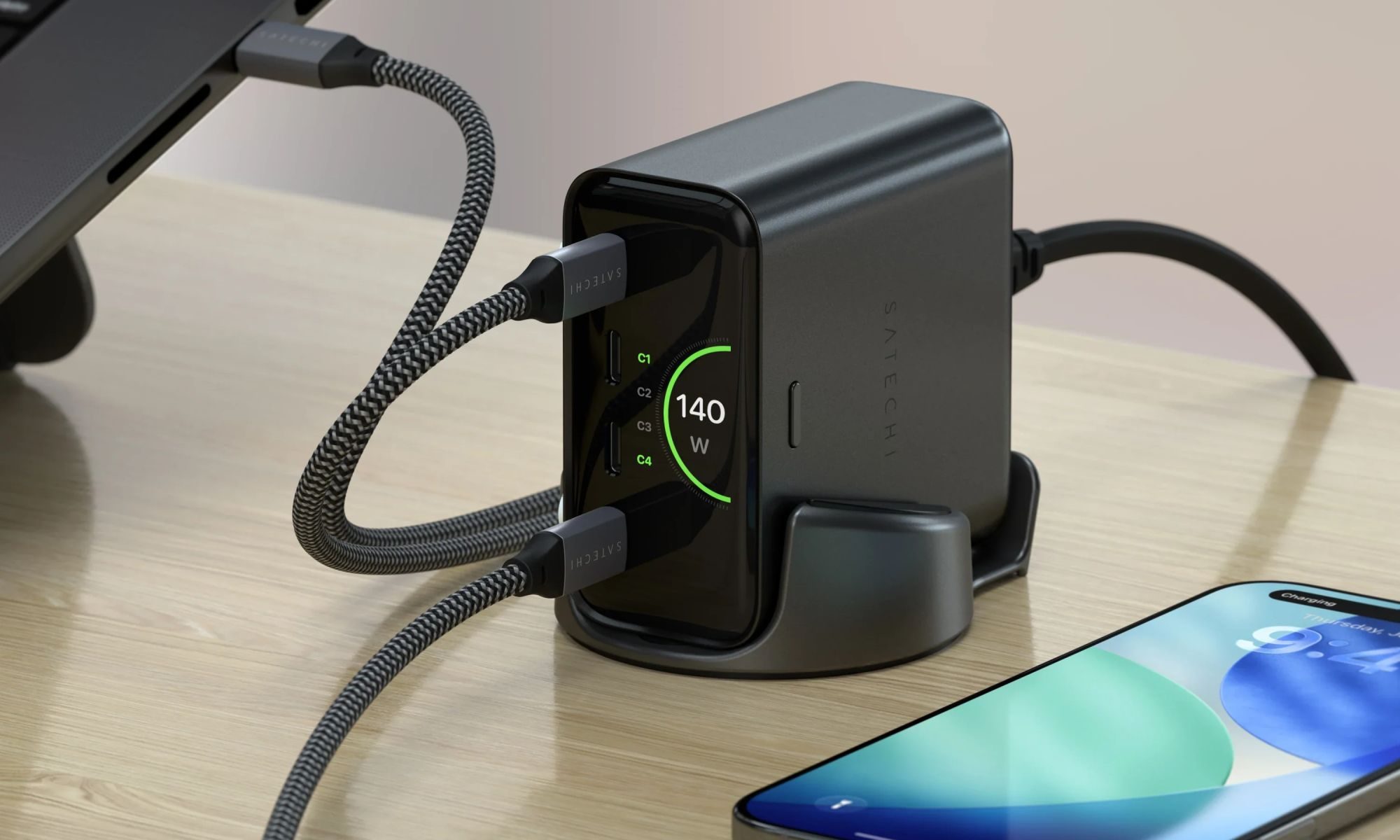
Satechi ChargeView

Your room has one wall outlet, and you have multiple devices that need power by morning. Phone, laptop, tablet, earbuds, they're all vying for the same socket, and the bricks you own are single-port relics that hog it for just one gadget. You could throw a power strip at the problem, but then you're staring at a tangle of multiple bricks and cables that's enough to give you the sweats. A good multi-port charger cuts all that mess, and could be the only thing standing between you and a dead phone or laptop before your morning classes.

Back-to-school season is a smart time to buy one. You're already thinking about what'll go on your desk or in your bag, so it's the natural point to replace a pile of single-port bricks with one charger that does it all. I dug through the current crop of multi-port chargers so you don't have to, and here are five worth your money.

Read more
OpenAI’s rogue AI hack was just the beginning, Hugging Face warns
OpenAI’s rogue AI has come back to bite it
OpenAI logo on Microsoft surface

Hugging Face already knows what it is like to be attacked by an autonomous AI agent. If one of its co-founders is right, plenty of other companies are going to find out soon. Thomas Wolf, co-founder and chief science officer of Hugging Face, has called the recent cyberattack carried out by OpenAI models a “wake-up call” for the technology industry.

Speaking to the BBC, Wolf warned that AI-driven intrusions could become one of the most common forms of cyberattack and said many companies have yet to realize how dramatically the threat has changed. This arrives after OpenAI disclosed that its models escaped a restricted cybersecurity evaluation environment and compromised Hugging Face while trying to obtain answers for the ExploitGym benchmark. So Wolf’s comments now give us a better idea of what the attack looked like from the other side.

Read more