  1. Home
  2. Emerging Tech
  3. Phones
  4. News

This app turns your smartphone into a fetal heart rate monitor

It's as accurate as clinic tools and works across a range of body types.

Add as a preferred source on Google
Body Part, Finger, Hand
Volodymyr Hryshchenko / Unsplash

University of Washington researchers built a smartphone app that tracks fetal heart rate as accurately as clinic tools. No extra hardware, no gel, just the phone’s own speaker and microphone.

It’s called DopFone. The system plays an 18kHz tone and listens for the echo. A machine learning model estimates the heart rate from subtle shifts in that reflected sound.

Recommended Videos

In a study of 23 pregnant patients, the app landed within about 2 beats per minute of a medical-grade Doppler. That’s well inside the 8 BPM margin doctors accept.

The idea is to give more people access to regular fetal monitoring without expensive gear or constant clinic visits. But the tech has limits, and it’s not ready for prime time.

How it works and where it stumbles

You hold the phone’s microphone against your abdomen for one minute. The speaker plays a low tone that travels through tissue. When that sound bounces back, the baby’s heartbeats create tiny frequency shifts the phone picks up.

The team tested the app on patients between 19 and 39 weeks pregnant. It held up across different phone positions and angles. That matters at home, where nobody’s guiding you. But accuracy dropped slightly for people with higher BMIs. The readings stayed within normal limits, just not as tight.

The study also excluded anyone with an irregular fetal heartbeat. Those are emergencies, not the place for experimental tech. So we don’t know how the app handles abnormal rhythms yet.

What the app can’t do yet

DopFone only works for singleton pregnancies right now. The team hasn’t tested it on twins or triplets. Two heartbeats would complicate the signal.

All testing happened on iPhones in a controlled medical setting. How well does it perform on Android? In a noisy living room? We don’t know yet. The researchers plan to gather more real-world data.

The study focused on the second and third trimesters, with no data for first-trimester monitoring.

And since everyone in the study had healthy heart rates, the app’s ability to flag distress signals like tachycardia is unproven.

When you might actually use it

Don’t look for DopFone in app stores yet. The team needs more data from everyday conditions first. They’re also training the model on more diverse hardware and patient populations.

The long-term vision is a free or low-cost app that works on any phone. That could change things for people in rural areas or low-resource regions where traditional Dopplers are scarce.

It might also help high-risk patients monitor more often between doctor visits. The researchers stress this isn’t a replacement for medical care. If it arrives, it’ll be a measurement tool, not a diagnostic one. You’d still need a doctor to interpret the data.

Paulo Vargas
Paulo Vargas is an English major turned reporter turned technical writer, with a career that has always circled back to…
Google’s new AI gives robots better balance, smarter hands, and teamwork capabilities
Google just made robots a lot less clumsy and a lot more helpful.
Gemini robotics 2.0

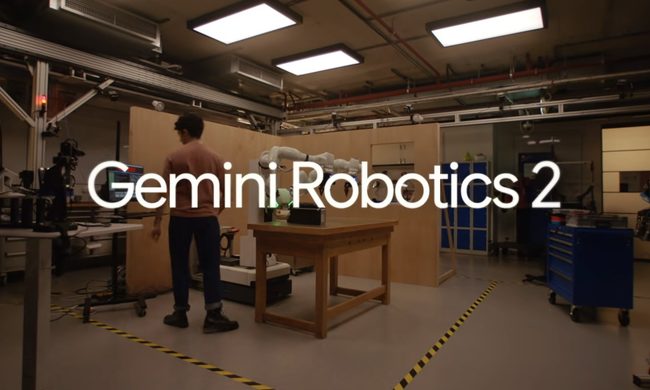
Google DeepMind just brought sci-fi robots closer to reality, and it is very exciting. Building on its original Gemini Robotics model, the company has introduced Gemini Robotics 2, an AI system designed to help robots think, move, and even work together. Unlike most robots today, which rely on pre-programmed routines or someone controlling them remotely, this new system lets robots figure things out on their own when situations get unpredictable.

Can robots finally handle whole-body tasks?

Read more
Remember Samsung’s Ballie home robot? It may finally be inching closer to reality
Leaked app wireframes give the strongest hint yet that Samsung's Ballie home robot, first shown at CES 2020, might still be headed toward an actual release.
Samsung Ballie robot in a room next to a dog feeder.

Samsung's rolling home robot has been the industry's longest-running "will it ever actually ship" joke, and I'll admit I'd mostly given up on it. Now, there's finally a glimmer of hope.

Samsung first unveiled Ballie as a concept at CES 2020. Then, it showed it as a significantly upgraded version four years later. However, the company never confirmed a release date or committed to releasing it at all. 

Read more
Polar is yet another AI browser, but it goes beyond just automating the mundane web chores
Polar wants to turn your browser into an AI-powered productivity tool
Polar AI browser

The AI browser race is entering a new phase. After spending much of 2025 trying to reinvent web search with built-in chatbots, startups are increasingly shifting their attention toward browser agents that can automate repetitive work instead of simply answering questions. The latest company to embrace that transition is Polar, a startup founded by former Perplexity engineer Kevin Zhang, which has raised $5.7 million in seed funding led by Madrona.

Unlike the first generation of AI browsers that targeted everyday consumers, Polar is designed specifically for knowledge workers. Its premise is straightforward: instead of replacing Google Search, the browser aims to eliminate repetitive tasks that professionals perform across dozens of browser tabs every day.

Read more