  1. Home
  2. Emerging Tech
  3. News

Amazon Leo will challenge Musk’s Starlink with in-flight Wi-Fi for Delta airlines

Add as a preferred source on Google
Aircraft, Flight, Transportation
Amazon

Amazon is clearly done watching from the sidelines. With its latest deal with Delta Air Lines, the company is bringing its Leo satellite network into the skies, and yes, this puts it in direct competition with Elon Musk’s Starlink. Starting 2028, Delta will begin equipping around 500 aircraft with Amazon Leo-powered connectivity. The promise is simple but ambitious: fast, reliable, low-latency Wi-Fi that actually works from gate to gate. And like Delta’s current approach, it will remain free for SkyMiles members.

Finally, in-flight Wi-Fi that might actually work

Now, if you’ve ever tried using in-flight Wi-Fi, you already know the reality. It’s slow, inconsistent, and often just about good enough for sending a text, if that. Amazon is trying to change that by using low Earth orbit satellites, which sit much closer to the planet than traditional systems. That shorter distance means lower delay and better speeds, at least on paper.

Recommended Videos

Delta says passengers could see download speeds up to 1 Gbps, which, if it holds up in real-world use, would make streaming, uploading, and even working mid-air feel far less frustrating than they do today. But this isn’t just about faster internet on planes. It’s also about Amazon expanding its footprint. Delta already relies heavily on Amazon Web Services for its backend systems, and this new agreement deepens that relationship. The two companies are also talking about bringing in AI and other Amazon tools to improve the overall travel experience, not just what happens once you’re on the plane.

The Starlink rivalry is getting interesting

At the same time, it’s hard to ignore the bigger picture. Starlink has already been making moves in aviation, and Amazon’s entry with Leo makes this space much more competitive. It’s now more about who can make in-flight connectivity actually usable. For us passengers, if this works the way Amazon and Delta say it will, flying might finally come with internet that doesn’t feel like a compromise.

Shimul Sood
Shimul is a contributor at Digital Trends, with over five years of experience in the tech space.
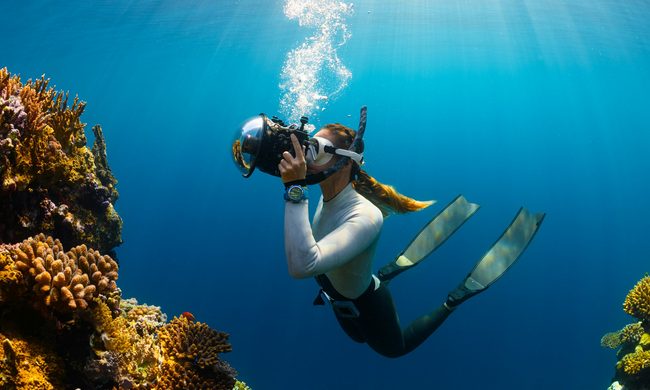
AI can turn a cloud of scuba bubbles into an early warning for divers
An underwater robot can estimate breathing rates from video, although the research stops short of proving that it can diagnose stress or distress
Nature, Outdoors, Water, Scuba

University of Minnesota researchers have taught an AI underwater robot to estimate a diver’s breathing rate by watching the bubbles released with each exhalation.

The contactless system, detailed in a peer-reviewed study published in The International Journal of Robotics Research, works with ordinary camera footage. Divers don’t need to squeeze another sensor into an equipment loadout that is hardly lacking for accessories.

Read more
Microsoft wants AI to catch hackers before they even attack
Red team, blue team, green team: Microsoft just gave its AI a full security squad.
Microsoft Project Perception

With AI now capable of writing exploits and running attacks at machine speed, the security tools built for a slower, human-paced world are starting to show their age. Microsoft thinks it has the answer, and it's calling it Project Perception.

So what exactly is Project Perception?

Read more
Nike’s new slide is basically a spa day for your feet
Nike and Hyperice built a slide that literally heats up and vibrates your feet back to life.
nike-air-zoom-hyperslide

Nike just teamed up with Hyperice again, and this time they've built something that feels more like a wellness gadget than a shoe. Meet the Nike Air Zoom Hyperslide, a slide that not only cushions your feet but also heats and vibrates them back to life. It's made less for lounging by the pool and more for helping you recover after training, travel, or just a long day spent standing around.

What is the Nike Hyperslide?

Read more